Thursday, 3 August 2023

Order 'Terror Tales of the Mediterranean'

Today, I’m delighted to present you with details of this year’s volume in my folk horror-themed anthology series, TERROR TALES. In 2023, as you can see, it will be TERROR TALES OF THE MEDITERRANEAN, which, as of today, is available for pre-order right HERE.

This is always one of my favourite parts of the anthology-creation process, hitting you with Neil Williams’ amazing artwork and listing the stories, both fiction and non-fiction, that you’ll find inside, and of course, teasing you with a few brief snippets from some of the incredible tales that will be gracing the new book’s pages.

I’ve made no secret that this year, for the first time ever, we’d be venturing into countries outside the United Kingdom, a potential sign of things to come. But more about that later, along with lots more concerning the contents of this year’s volume.

When it comes to this week
’s book review, alas, I’m unable to maintain synchronicity, as I haven’t got a Mediterranean-themed novel to hit you with. But, seeing that the TERROR TALES books primarily contain new horror stories of British origin, it’s probably (vaguely) thematic to pull in a British author who was very famous in his day for writing short, sharp shockers: Bernard Taylor. As such, I’ll also be offering a detailed review of Taylor’s recently republished 1980 horror novel, THE REAPING.

As usual, if you’re only here for the Taylor review, feel free to scurry on down to the bottom of his column, where you’ll find it in the Thrillers, Chillers section.

And now, today’s main event …


I reiterate that TERROR TALES OF THE MEDITERRANEAN can now be preordered HERE. It will only be published in the autumn, but if you want to reserve your copy for the very first day of its actual existence, why waste time?

If that doesn’t persuade you, here, for your delectation, is the back-cover blurb, followed by the full Table of Contents:


The Mediterranean. Sun-bleached ruins, azure seas, foaming wine. But history’s cruellest tyrants reigned here, delighting in blood and torture. Myths tell of snake-haired harridans and one-eyed giants, of humans cooked on spits, of curses, scourges, and devious deities who played with men’s souls like pawns in chess …


The poison apples of Aegle
The human sacrifice on Crete
The beautiful predator of Palermo
The damned souls on Poveglia
The evil artefact at Koyuluk
The blood-drinking baron of Emporda
The demon attack in Vatican City

Includes terrifying tales by Jasper Bark, Simon Clark, Steve Duffy, Paul Finch, Sean Hogan, Carly Holmes, David J Howe, Maxim Jakubowski, Gary McMahon, Mark Morris, Reggie Oliver, Peter Shilston, Don Tumasonis and Aliya Whiteley.


TABLE OF CONTENTS

The Catacomb by Peter Shilston
Duo of Darkness
On Our Way to the Shore by Maxim Jakubowski
Belmez
Meet in the Middle by Aliya Whiteley
Island of the Damned
The Lovers by Steve Duffy
When Madmen Ruled the Earth
The Wretched Thicket of Thorn by Don Tumasonis
The Blue Room
This Haunted Heaven by Reggie Oliver
Born of Blood and Mystery
The Quiet Woman by Sean Hogan
Holy Terrors
The Teeth of the Hesperides by Jasper Bark
Cyclops
Reign of Hell by Paul Finch
In Human Guise
Mistral by Mark Morris
Ghosts of Malta
Mammone by Carly Holmes
Extinctor Draconis
Vromolimni by David J Howe
The Other Devils
Gerassimos Flamotas: A Day in the Life by Simon Clark
Lord of the Undead
Should Not Be by Gary McMahon

And while we’re at it, why don’t I try and tempt you with some juicy snippets:

There was a girl-child whose clothing looked at least two hundred years old, but who from her skin and hair might just have fallen asleep; but beyond her a man in priestly robes had lost his nose and his cheeks, and his eyes had decayed to blank milky globules; and further on the soldier in the chased steel breastplate, who was perhaps a mercenary from the Renaissance period, had lost his flesh entirely, and now grinned mindlessly with a naked skull …

Peter Shilston – The Catacomb

The shirt ripped and the boy’s knees gave out, he crumpled, and the man still did not stop. He hunched over, arranged the boy, stretching out his arms and legs, then reached into the boy’s stomach. His hand was in the boy’s stomach, material was pulled out, something wet, it separated into strands. The man put the strands into his mouth and chewed, he put more into his mouth, he kept chewing …

Aliya Whiteley – Meet in the Middle

The water bulged. Something vast was coming up from deep below, and the sound was that of a wellington boot being slowly lifted from a pool of thick, gelatinous mud. The lake sloshed around the edges as the thing heaved itself out, and when it fell back, the water level dropped by at least a foot. Sally took a step back, her eyes not quite comprehending what was in front of her. It was dark and seemed to suck the light into it. The redness from the lowering sun cast shadows over the creature, and it glistened as the water fell from it in sheets …

David J Howe – Vromolimni

Why the Mediterranean?

I’ve already been asked that a couple of times, even though I haven’t talked a great deal about this anthology yet. It’s a very good question. After all, there are several locations in the British Isles that we haven’t yet visited, the South Coast being one, the Midlands, the Northeast, etc. Why are we suddenly venturing so much farther afield?

Well, I’ve never made any pretence that TERROR TALES was first inspired by the Mary Danby-helmed Tales of Terror series, most frequently edited by R. Chetwynd-Hayes, which came out from Fontana Books in the 1970s. They followed a similar format to ours, but tended to cover broader regions than we do. However, they didn’t stop at the shores of Great Britain. Tales of Terror from Outer Space was a very popular title of theirs, along with European Tales of Terror and Oriental Tales of Terror.

Now, I’m not following that series religiously. I’m not here to ape everything that Mary and Ron did, great ambassadors for British horror though they were, but if the TERROR TALES series is to have real longevity, it can’t just pour out spooky tales gleaned from a single country. 

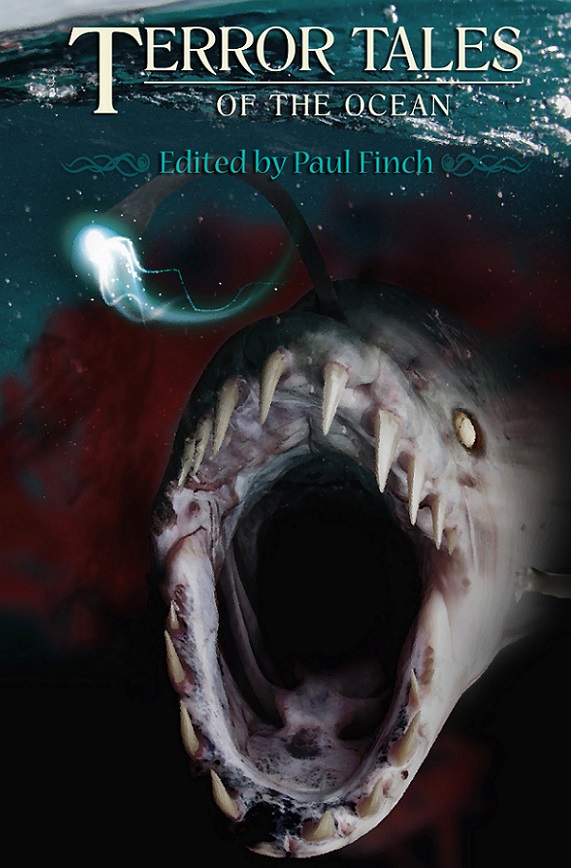
We’ve already branched out a little. TERROR TALES OF THE SEASIDE (2013), for example. Okay, it solely featured folklore and fiction from the British coastline, but it was all corners of the country, from Scotland to Kent, while TERROR TALES OF THE OCEAN (2015), which won considerable praise, ranged widely across the Seven Seas.

But the truth is that, though I’m very keen to complete our own TERROR TALES tour of the United Kingdom, and will be doing exactly that, I’m now looking more and more overseas, taking regular deep dives into the mythic and folkloric culture of lands far away.

Of course, we can’t do every country on Earth. There are various reasons for this, not least that I only have time to edit one of these books per year, and so that would be an impossible target. But we can do regions, and TERROR TALES OF THE MEDITERRANEAN will be the first.

What may follow from that in the future is anyone’s guess, though I’m pretty sure I’ve stated in an earlier blogpost that some corners of the world, while they are rich in tales of mystery and magic, and are planted thick with homegrown authors, would be difficult territory for me to venture into. TERROR TALES OF THE CARIBBEAN, for example, would be a perfect fit for this series. What greater source for this kind of material could there be than the land of hoodoo. But the Caribbean has a wealthy literary tradition of its own and boasts numberless talented writers, many of whom are unknown to me. The same would apply, sadly to Central and South America, to those various regions of the United States, to the Far East, even to Ireland. All those titles would be well worth including in this series, but our readers would be much better served by editors homegrown in those lands, who wouldn’t miss a trick in pulling the absolute best scare fare they could from their native soil.

This applies less to regions like the MEDITERRANEAN, which so many of us are already very familiar with. So, while TERROR TALES OF THE MEDITERRANEAN is an exciting new venture, and there are others in a similar vein that we can do in the future, it’s not possible yet to put together a full list of prospects. 

But never fear; there are lots – and I mean lots – of other subjects we can tackle: TEROR TALES OF MONSTERS … of the SUPERNATURAL  … the OCCULT … the mind truly boggles.

Just keep watching this space. Who knows what we’ll hit you with next. 

But for the meantime, one final reminder that TERROR TALES OF THE MEDITERRANEAN, which on its own will throw you in the path of numerous horrific entities, both real and imaginary, is out in the autumn, and ready to pre-order. Get it HERE.


THRILLERS, CHILLERS, SHOCKERS AND KILLERS …

An ongoing series of reviews of dark fiction (crime, thriller, horror and sci-fi) – both old and new – that I have recently read and enjoyed. I’ll endeavour to keep the SPOILERS to a minimum; there will certainly be no given-away denouements or exposed twists-in-the-tail, but by the definition of the word ‘review’, I’m going to be talking about these books in more than just thumbnail detail, extolling the aspects that I particularly enjoyed (I’ll outline the plot first, and follow it with my opinions) … so I guess if you’d rather not know anything at all about these pieces of work in advance of reading them yourself, then these particular posts will not be your thing.

THE REAPING
 
by Bernard Taylor (1980)

Outline
Family man, shopkeeper and wannabe artist, Tom Rigby, is your archetypal suburbanite. He’s suffered grievous losses in the past, his wife and several children having died in a terrible accident, but he is positive about life, he works hard and does what he can, mainly with the assistance of his caring older sister, Em, to look after his remaining brood, in particular his youngest son, Simion, with whom he is very close.

While, by his own admission, he is not exactly handsome, Rigby has a certain ‘everyman’ charm, which has attracted a new girlfriend, Ilona. She is younger than he is by several years and has a well-paid job as a makeup artist in the film industry. The downside of this is that Ilona is frequently away on location, meaning that she and her beau spend long periods apart, able only to communicate by letter. To cope with this, Rigby throws himself into his painting, which is not of such quality that it’s likely to make him a fortune, though at least it keeps him happy.

Then something happens that has the potential to change everything. After a local art exhibition in which his recent canvasses play a prominent role, Rigby is approached by a Mrs Weldon, a pleasant, efficient woman, who explains that she is housekeeper for a Miss Stewart, an elderly spinster who occupies a large country house down in Somerset, and who would like to hire an artist to paint a portrait of her niece, Catherine. Significant money is offered, but at first Rigby resists because he is planning to go on holiday with Ilona. Then, at the last minute, when Ilona has to cancel, work again getting in the way of their relationship, Rigby accepts the commission.

When he arrives at Woolvercombe House, where he expects to be spending the next few weeks, it isn’t an especially shabby place, but it isn’t modern, and there is an air of remoteness. Only a handful of staff keep things running: Miss Weldon herself, who retains an aura of firm control, a burly Cockney handyman, Hathaway, and a German-accented manservant and chauffeur called Karl, whose manner Rigby finds deferential but also strangely mocking. There is also Dr Macintosh, a Scottish-born medical practitioner, whose regular presence at the house is never really explained.

When he is introduced to Miss Stewart herself, who otherwise he is told he will rarely meet, she is extremely aged, a hunched, veiled and odorous figure, who occupies a shadow-filled garret in the upper echelons of the house. While Rigby doesn’t take an instant dislike to her, he doesn’t find her a warm presence. She is particularly dismissive of the job she has hired him to do, and speaks disparagingly of her niece, leaving him mystified about why he is being paid so much money.

More mysteries follow. When Rigby spies women in monastic robes and cowls walking in the manor house gardens, he is advised that they are novice nuns, who, by some agreement made in the distant past, are lodged at Woolvercombe in the days prior to their travelling out to the missions, though he likely won’t meet them. They never, for example, come into the main part of the building, not even to eat, as they have their own quarters and refectory, and are here basically to spend their time in contemplation. So, if the guest would oblige everyone by treating the nuns’ small corner of the property as private, all will be well.

Rigby has no intention of getting to know the nuns. As far as he’s concerned, he is here to do a job, one that he hopes will only last a couple of weeks, and when it’s done, he’ll take the money and cheerfully head back to Ilona. But Mrs Weldon, for one, appears surprised that he expects his time here to be short, and encourages him to take as long as he needs. Rigby still intends to get this over and done with, but then he meets Catherine, the niece, an ethereal beauty in her late twenties, who is quietly spoken and makes for enchanting company.

She sits for Rigby often, though not as often as he’d like. Several times, things happen – either she is unwell or has had a minor accident – to prevent her attending his studio, which threatens to extend his stay. At the same time, the manor’s other curiosities pile up.

One night Rigby hears female screaming somewhere on the property, which Mrs Weldon dismisses as unimportant. On another occasion, while walking in the grounds, he accidentally comes close to several of the young nuns and is astonished to hear most irreverent language. He also detects, in a very overgrown section of the estate, a mysterious stone tower, which stands to considerable height. Whether it’s a folly, or something of functional significance he can’t say, though it’s an extravagant item. On yet another occasion, probably more disturbingly than anything he has dealt with up to now, he must rebuff an unexpected homosexual advance from Karl.

However, things take a turn for the really strange, when, later that same night, he hears Catherine out on the darkened landing being menaced by Hathaway. On offering her sanctuary in his room, he is shocked to learn that the apelike handyman has been a continual threat to her all the time she’s been here. When he advises her to complain either to her aunt or Mrs Weldon, she explains that Hathaway has been employed at Woolvercombe a long time and so nothing will happen. In fact, she regards Rigby’s room as the only possible place of refuge, and as such, the inevitable happens. She falls into his arms and they become lovers.

Despite this pleasant interlude, Rigby still wants to leave Woolvercombe as soon as possible to resume his own life (suffering no inconvenient guilt about having several times bedded the innocent Catherine!), but his departure is repeatedly hampered.

First of all, there are the endless delays with the painting. Then, when it is almost complete, his car breaks down for no obvious reason, Hathaway explaining that he’ll need to send away for a new part. After that, as if the breakdown isn’t enough, Karl loses the car keys.

Rigby is furious, especially as there is so little he can do. Increasingly, it feels as though he isn’t going to be allowed to leave Woolvercombe House …

Review
Back in the 1970s and 1980s, Bernard Taylor earned himself a reputation as one of the quiet men of pulp fiction, a professional author of high talent who could turn his hand to almost anything – and indeed he did, his output ranging from horror to murder mystery to romance.

These days, it is probably his horror range that is best remembered. Even there though, Taylor was something of an enigma, specialising in creating contemporary tales that proceeded at their own pace, were subtle rather than gory, but were so intriguing that they’d draw you in anyway, often only hitting you with the horror element late in the day (and usually, they were all the more effective for that).

A master of the slow-burn then, Taylor became a household name among the horror aficionados of his era, though it’s probably true to say that, in terms of sales, he never really rose to the topmost rank. And if he ever did, he didn’t stay there for long, inevitably succumbing, as did so many others, to the downturn of interest in horror from mass-market publishers in the 1990s.

If for no other reason than this, it’s great to see this fine author being given a new lease of life by Valancourt Books who, yet again, are here unearthing for us another half-forgotten gem.

For all this, The Reaping is very much a book of its time. We are firmly in occult-related territory, the eerie presence of nuns, an unexplained building deep in overgrown woodland, the matriarchal nature of the Woolvercombe estate, and explicit sex, of which there is quite a bit, all hinting at devilry of the old school.

Does it all work?

Well, it’s an involving mystery, for sure. As per the author’s normal style, it doesn’t shower us with blood at every turn, or hit us with jump-scares and other fleeting terrors, but the more that is revealed about the increasingly macabre Woolvercombe House, the more we invest in it.

As we approach the grand finale, we find ourselves deeply engrossed in the story and very eager to know what kind of ritual nastiness lies at the heart of it. And you can’t ask for much more than that with a thriller.

If there’s any weakness with The Reaping, I think it lies with the main character, Tom Rigby. Yes, he’s an ordinary bloke, who has almost wandered into this tale of terror off the street, but there’s a degree of self-absorbtion that makes him a little unattractive, not to mention a tad unbelievable. A case in point is the moment when he queries the sounds of female distress that he’s heard late at night: evidently something unpleasant is happening, and yet he is very easily fobbed off. In addition, he becomes trapped at Woolvercombe House because he is told that his car has broken down … and because he doesn’t investigate it himself or attempt any repairs off his own bat.

These are minor quibbles, of course, but later on it gets a little more serious. When Rigby leaves the property having completed the painting, he is not impeded by anything as bothersome as feelings for Catherine, the vulnerable young woman he has been sleeping with, which feels like a glaring flaw in his character in 21st century eyes. More serious yet, potentially very serious actually, is his failure to contact the police when, quite late in the tale, it is reported that a girl he recognises as having been one of the nuns on the estate – a person he found very distressed at one point – has been discovered dead.

In fact, Rigby’s unwillingness to contact the police at any stage in this story did become quite irksome for me, because he isn’t at Woolvercombe long before he uncovers evidence of quite significant law-breaking. Again though, I suspect this owes more to the period in which the book was written rather than any kind of flaw in the narrative. The 1970s was not a decade in which personal responsibility was encouraged.

All that aside though, this is a neatly packaged little horror novel, with a very different (albeit in some ways, quite Gothic and traditional) concept at its heart, which, perhaps if the mechanics of it aren’t as fully explained as I would like, still leads us to a grotesque, visceral and very unexpected denouement. It also contains one slam-bang twist in the tail, which I for one never saw coming and which is almost worth the admission price on its own.

Check out The Reaping if you can. It’s a great example of the criminally underrated Bernard Taylor working at the peak of his powers, uninterested in the ‘one death every three or four pages’ thing that seems to be a requirement of much modern horror, hitting us instead with an effective slow-burn mystery-thriller that rises to a spectacularly chilling climax.

And now, as always, I shall endeavour to cast this tale in eager (maybe rather hopeful) anticipation of its adaptation for the screen. They wouldn’t come and ask me, obviously, but we can still have a bit of fun with it, can’t we:

Tom Rigby – Matthew Macfadyen
Catherine – Thomasin McKenzie
Ilona – Gemma Arterton
Mrs Weldon – Sophie Okonedo
Hathaway – Paul Anderson
Karl – Reece Shearsmith 
Dr Macintosh – Ken Stott

Monday, 17 July 2023

Sun, sea, sex ... and horrors that defy myth


A bit of a taster blogpost today. A few thoughts in advance of any real announcements concerning TERROR TALES OF THE MEDITERRANEAN, which hopefully will be published by TELOS in the autumn. From my point of view, the book is almost now complete, so in this installment I thought I’d throw out some crumbs to whet your appetites.

The TERROR TALES books are for the most part folk horror anthologies, so I thought it would also be appropriate today if I offered a detailed review of a short novel that is often considered to be one of the quintessential forays into folk horror from that first wave of interest in the subgenre at the end of the 1960s: John Gordon’s THE HOUSE ON THE BRINK.

If you’re only here for the John Gordon review, that’s absolutely fine. Scroll down to the lower end of today’s blogpost and you’ll find it, as usual, in the Thrillers, Chillers section. Do it straight away. I won’t mind. On the other hand, you might first be interested in, especially as so many of you will likely be going here in the next few weeks …

Terrors of 
the Med

To quickly recap on the TERROR TALES anthology series, it’s mainly focussed to date on the British Isles. So, for example, we’ve had TERROR TALES OF THE COTSWOLDS, the WEST COUNTRY, the SCOTTISH LOWLANDS, CORNWALL, and so forth. There are 14 volumes in total to date, each one containing original horror fiction relevant to the geographic region, interspersed with snippets of real-life terror, folklore, mythology, unexplained mysteries and the like.

With TERROR TALES OF THE MEDITERRANEAN (check out the various pics scattered throughout this post to give clues about what’s coming - see how many you can identify), I’m obviously no longer just focussing on my British homeland, but starting to look a little farther afield. Hopefully readers will enjoy this one just as much as those that have gone before.

I should hasten to point out that, even though for this 15th volume in the series I’ll be throwing my net over most of the Mediterranean Sea and its adjoining lands, I’ll purposely be ignoring the culturally very different region we call the ‘Middle East’ – Syria, Lebanon, Israel, Palestine, Libya, Egypt and so forth – but that’s only because they will hopefully be the subject of a book planned for later in the series called ‘Terror Tales of the Middle East’.

Even then, the Mediterranean will easily be the largest specific geographic region that we have covered in this series to date, comprising much of the south shore of Europe and the north shore of Africa. But it’s a region that is familiar to the majority of us, boasting a benign climate characterised by low rainfall, hot, dry summers and mild winters. As such, its lovely landscapes and flora are instantly recognisable: rocky hills covered in scrub and cacti, arid plains, rich pine and cedar forests, cypress trees, olive groves. ‘The Med’, as we call it, has become the go-to place for the traditional summer holiday, but you won’t need me to tell you there is so much more to this fabled realm than sun, sea and sex.

Its esoteric history is beyond compare with almost anywhere else.

It is commonly regarded as the Cradle of Western Civilisation. David Attenborough called it the ‘First Eden.’ Colossal empires have risen and fallen in this place. Epic wars have been waged. The most ancient cultures flourished here, leading to astonishing advances in human thought, language and artistry. Inevitably though, there is a darker side too.

In the ancient Mediterranean past, fact is much interwoven with fiction, truth with mythology, a confusion of beliefs and certainties that has spawned some of mankind’s most terrifying tales, bequeathing us generations of monsters so unimaginably foul that it took the mightiest heroes to conquer them: everything from Talos to the Minotaur, from the sea-dragon, Cetus, to multi-limbed Geryon, one-eyed Polyphemus and Typhon, surely the most ferocious creature that ever stalked the Earth. The gods themselves were rarely better, unleashing curses and scourges on peoples they deemed to have failed them, sending earthquakes and typhoons to destroy entire cities.

Even lesser deities like nymphs and satyrs were maleficent, playing callous games with humanity, delighting in trickery and deceit, putting their own pleasure (and their lust) first.

There’ve been dark times in real history too: nations enslaved, vast libraries torched, innocents thrown to lions, free-thinkers burned at the stake. Both politics and religion have led to astonishing acts of cruelty in the supposed name of progress. It is little wonder that so many of the Mediterranean’s grand but crumbling ruins echo to the savagery of the past and are now the haunt of tragic ghosts and spirits relentlessly re-enduring their torments.

Any potential readers new to the Terror Tales series should know that, as editor, I tend to favour supernatural horror, and by that I’m talking monsters, ghosts, faeries, demons, witches and all kinds of eerie and unexplained mysteries. Note, I’m NOT stating that this book will only contain fiction underpinned by folklore, mythology or the supernatural – there is as much terror to be found in tales of killers, maniacs and other manmade mayhem – just so long as you know beforehand that anything you encounter in TERROR TALES OF THE MEDITERRANEAN will be as scary and disturbing as possible.

And if you’re looking for specifics – table of contents, artwork, back cover blurb, pre-order details and the like – keep watching this space.


THRILLERS, CHILLERS, SHOCKERS AND KILLERS …

An ongoing series of reviews of dark fiction (crime, thriller, horror and sci-fi) – both old and new – that I have recently read and enjoyed. I’ll endeavour to keep the SPOILERS to a minimum; there will certainly be no given-away denouements or exposed twists-in-the-tail, but by the definition of the word ‘review’, I’m going to be talking about these books in more than just thumbnail detail, extolling the aspects that I particularly enjoyed (I’ll outline the plot first, and follow it with my opinions) … so I guess if you’d rather not know anything at all about these pieces of work in advance of reading them yourself, then these particular posts will not be your thing.


by John Gordon (1970)

Outline
One early summer’s day on the edge of the Wash estuary, the tidal inlet where Norfolk meets Lincolnshire on England’s east coast, a man and a woman are traipsing through the fens when they spy something half-buried in the mud, which looks as though it might be a body. The man investigates and announces that it’s only a rotted old log. The woman is not placated; she feels certain there’s something evil about it.

A few days later, a reserved but smarter-than-average schoolkid, 16-year-old Dick Dodds, attends his Literature Class’s end-of-term party at the lonely riverside house of his wealthy widow teacher, the neurotic Mrs Knowles, who comments that she recently spotted a horrible human-shaped lump of wood on the edge of the fens and concludes that her house has two sides to it, a good side, from which she can often see the distant ‘silver fields,’ and a bad side, the side that faces onto the river, and the mud, where everything is ‘contaminated’.

These are strange comments, which no one present at the party knows how to take, though Mrs Knowles, who is now romantically involved with a local solicitor, Tom Miller, though only a few others are aware of this yet (and even fewer would approve, given that Knowles and Miller are polar opposites) has a reputation for being eccentric, and many put this down either to her unfortunate bereavement so early in life, or her isolated existence in the marsh-side house, or both.

Dick walks home after the party, somewhat cowed by the vast emptiness of the summer holidays stretching ahead of him. Wondering how he’s going to pass his time, he suddenly, in a characteristic impulse, helps himself to a moored rowing boat, and sets off for an impromptu trip down the darkened river. The folly of this quickly becomes apparent. Dick isn’t much of an oarsman, and in any case, he soon loses the oar, and finds himself drifting deep into the fens, beyond which lies only the open sea.

However, the following day, we learn that Dick survived his escapade. The tide pushed him ashore and he had to plough his way back through deep mud. He now returns with close friends, Jim and Pat, insisting that he needs to recover the abandoned boat, but at the same time, he recalls seeing something strange on his way back inland: an unnatural hollow on the water’s edge, almost as if something large had recently dug its way out, and then unidentifiable tracks trailing away through the mire. He says that when he tried to follow the trail, he felt inexplicably frightened. When he locates the trail again, neither Jim nor Pat see anything curious about it, but Dick still feels frightened and disoriented, putting on such a show that his friends decide he’s making it up and trying to scare them.

Dick goes back to the trail on his own later, following it across the marshy land until it passes close by a farmhouse, which he’s never visited before. While he’s there, a girl of his own age comes out, and tells him that her name is Helen.

They aren’t natural allies, Dick, who lives in the town and is firmly middle-class, Helen, who lives out here on the open country and whose father is a farm-labourer, but for some reason Dick confides in her, Helen, in return, admitting that, on the night of his river-adventure, she too saw something strange, the indistinct shape of a hideous limbless figure gliding along the trail.

Dick is inevitably drawn to Helen, and she to him, not just because they find each other attractive, but because both of them can sense the mysteriousness of the trail when apparently no one else can. The other kids still don’t know whether to take them seriously, but Pat suggests they go and speak to a certain Mrs Shepherd, a local water diviner, to see if she can cast light on the matter.

Mrs Shepherd, who is quite elderly and grandmotherly, confirms that both Dick and Helen are also water diviners, in other words they are sensitive to the presence of water sources below ground – which might, Dick supposes, explain their odd feelings when they are following the trail. However, for no obvious reason, the woman takes a seeming dislike to Dick, warning him not to take the path of other folk in the vicinity, who have used divination for the wrong purposes.

Feeling better now that they have a possible benign explanation for the trail, Dick and Helen relax a little, only to then speak with Mrs Knowles, who, as jumpy as ever, confesses that she fears a local legend about a walking corpse in the fens, the rotted remnant of a medieval warrior who was left behind to guard the site where King John famously lost his jewels in 1216, and was charged with killing anyone who attempts to rediscover them.

Though Dick and Helen now share a budding romance of their own, Dick, who is fond of Mrs Knowles (she was his favourite teacher, after all), is angry and suspects that her mental deterioration is being exacerbated by the presence in her life of Tom Miller, a shrewd but rather cold man whom the boy is convinced is wrong for her. As for her story about the body in the bog, well, Mrs Knowles is clearly going mad.

The boy doesn’t want any more to do with this, except that he feels drawn to investigate further, finally persuading Mrs Shepherd to talk some more. She admits to him that, whatever force lurks in the marshes, guarding the last resting place of the royal gold, there has never been any danger from it previously because the amateur treasure-seekers who hunt through the fens every weekend never get anywhere near. However, she – a genuine dowser – was recently paid by an influential local man to find it, and she got very close before deciding to back off, and it’s this, she fears, that has awakened the guardian of the trove. Mrs Shepherd won’t admit that the guardian is a millennium-old corpse preserved and in fact mummified in the fens, but she tells Dick firmly to stop looking into the case. She also names Tom Miller as her recent employer.

Despite this, Dick and Helen find themselves following the trail again, attempting to dowse with their own homemade rods. Nothing happens and they are ready to chuck it in, when they are led to a gate in a hedgerow out in the middle of nowhere. They’re about to go through but suddenly sense an unhealthy presence.

Any suspicion that this whole thing is down to their overactive imaginations leaves them at this point, when they spy something waiting in the gatepost greenery: ‘a black bald head, faceless’. And ‘a claw, lifted from the gate’.

It’s real after all, the thing from the mud …

Review
The House on the Brink
started life as a YA novel, though interest in the book and the author has expanded far beyond those boundaries in the 50+ years since it was published.

At first glance, it certainly looks as though it belongs in that milieu. In fact, it almost seems to predate the YA era: a bunch of intrepid youngsters – the Famous Five or the Secret Seven – skirting around the edges of the ever-mystifying adult world while spending their school holidays investigating a seemingly supernatural mystery. But in truth there are all kinds of things going on in this novel that are nothing whatsoever to do with that, and which have guaranteed its lasting popularity among much older readers.

To start with, there is undeniably a vibe of MR James.

Montague Rhodes James wrote most of his now near-mythical short stories in the first three decades of the 20th century and focussed primarily on antiquarian scholars searching out age-old artefacts, subsequently triggering curses or awakening terrifying revenants. He is still regarded as one of the world’s foremost ghost story writers, and massively well-read even today, thanks partly to his witty, lyrical and succinct style, but also for his ability to evoke a genuine atmosphere of dread.

The House on the Brink is cut from similar cloth, not just in terms of its subject-matter, but in its style, which is very quick and to-the-point, with scarcely a word wasted, and its setting: the bleak eastern edge of England, an empty, sea-begirt landscape, where the wind sighs constantly through the reeds, and forgotten ruins stand lonesome on the distant mudflats. It’s a richly atmospheric location, and dare I say it, John Gordon works it as effectively as Dr James used to, taking his characters, some of whom live in the town, far out of the normal world into a silent wilderness of wildwood, grassland and black, rippling waterways.

The scene at the gate – ‘a gateway to nowhere,’ as the author himself says (gates, edges and brinks being at least as important in this book as they are in MR James) is particularly frightening, coming upon us unexpectedly and yet written in such concise, matter-of-fact fashion, again as Dr James so often did, that mundane normality and supernatural horror are blended together with shocking effectiveness.

Another reason why The House on the Brink is a must-read today, despite being half a century old (and this may be one of the reasons why Valancourt have brought it back, though whatever the actual reason, I’m glad they have), is our recently rekindled interest in folk horror.

Superficially, there is lots of evidence that The House on the Brink was written at the end of the 1960s. The kids are as inquisitive as their predecessors, yet a tad more streetwise. At the same time, though, they are still polite to adults (imagine that!). They do lots of old-fashioned things, like have picnics and ramble around the countryside on pushbikes. They feel bad when they do the wrong thing, rather than object to being reprimanded for it. One of the girls in the group, Pat, still wears a skirt. Jim, the team joker, given to ribbing Dick at every opportunity, does so in a fashion that is almost genteel. But 1970, when this book first hit the shelves, was also the height of the Age of Aquarius. The counterculture of the ’60s was fading fast, but a desire for unorthodox spirituality remained, and with this came a wave of interest in folk horror. You’ll remember the movies of that era, Blood on Satan’s Claw (1971) and The Wicker Man (1973). TV shows like Robin Redbreast (1970), Penda’s Fen (1974) and Children of the Stones (1976). Even Dr Who got in on the act with The Daemons (1971). Then there were public safety films like Lonely Water (1973), some of which took place in those spooky locations where town met country, where children were suddenly beyond adult supervision, where threats to life and limb often took the form of grim entities.

But this genre was also a celebration of Britain’s landscape and its forgotten cultures and beliefs, the relics of which were scattered across the deceptively tranquil georama of British folklore, and that’s particularly the case in this novel.

I’ve already mentioned the gate to nowhere, the mysterious trail or ‘track,’ as John Gordon calls it, which ostensibly is the route taken by the mummified single remnant of King John’s army, though it’s not actually visible, and may indeed be an ancient route traversed by many strange energies, a ley line or whatever. Then there are the ‘silver fields’ as referred to by the disturbed Mrs Knowles; when Dick finally travels out to them, they are little more than a floodplain lying ankle-deep in seawater and thus reflecting the sky, but in Mrs Knowles’s mind, what we’re really talking about here is a near-but-distant magical realm, occasionally visible but always unreachable (Faerie Land, if you like). Mrs Knowles’s weather-beaten house serves a similar purpose. To the calculating Tom Miller, it’s nothing more than a refuge for his troubled sweetheart and also, probably, a key part of the lucrative future he plans for himself, but to Mrs Knowles it’s a border stronghold, the first (and last) human habitation before the vast sweep of the unknown.

But perhaps the most obviously grown-up part of The House on the Brink is the coming-of-age story.

So many horror and fantasy writers over the decades have trodden this path, reliving their own experience of the transition from childhood through the prism of the scary story, their adolescent unease about the years ahead dressed up as monsters or demons. This is very much the case in The House on the Brink.

Dick Dodds is 16, and in 1970 that meant that his next step was adulthood. Few people then had time for kids who didn’t really know what they wanted, or who were looking for ‘a year out’ or who just wanted to keep on being students. But because attitudes were different, that didn’t mean it was easier for the youngsters. There are times when Dick feels lost in the mysterious emptiness of the landscape, even though he has grown up here. Is this a metaphor for the uncertainties ahead? It’s the same with his and Helen’s relationship. They are still too young to be proper boyfriend and girlfriend … so much so that they’re embarrassed to admit this is what they are, and don’t like it when adults make that assumption. They kiss but there’s not much amorousness there. They’re stuck at that midway stage, on the edge-land. It’s no wonder everything is confusing, particularly the behaviour of the adults in the book, who they no longer view as distant, omnipotent controllers of all their lives, but as near-equals, flawed and troubled themselves, yet whose moods and motivations they still can’t read properly.

All that said, I don’t want to make The House on the Brink sound as if it’s heavyweight stuff. It actually isn’t. At heart, it’s a gentle if very eerie, but also rather straightforward ghost story. It also only runs to 161 pages, so it’s an easy and accessible read. And yet it’s successful at every level. It has well earned its reputation as a classic slice of supernatural nostalgia, which will frighten and delight in equal measure.

And now, for once, I’m not going to bother trying to cast this beast in the event it ever gets adapted for film or TV. This one is all about the young leads, which means it would need genuine teenage actors, and I don’t know enough about the younger end of the current acting market to offer any kind of valid opinion.

Friday, 23 June 2023

Key moments that steered me into writing


I hope you can forgive me a few personal moments this week. For some time now, I’ve been pondering an occasional series of articles about those events in my life, those key moments, that steered me towards the writing profession. I held back for a little while. Would it be too personal, too introspective? Or would it be interesting? Well, you guys can judge, because I’m taking a chance and getting that ball rolling today.

In addition, I’m taking this opportunity to remind everyone that about my upcoming two-hander event with my fellow thriller-writer MW Craven in the very near future (it’s only 11 days away, in fact), in Cumbria. So, I’ll be chatting at little about that too.

On which subject, and on a not unrelated note, today would also seem an opportune time to offer a detailed review of Mr Craven’s latest masterwork, FEARLESS, an all-out action thriller set out in the sun-blistered wastes of the Chihuahuan Desert (so, a particularly good one to read this flaming June).


If you’re only here for the Craven review, I’ve no problem with that. You’ll find it as usual in the Thrillers, Chillers section at the lower end of today’s column. Before then, here’s the other stuff ...

Meeting our public

A quick reminder that on Tuesday July 4, MW Craven and I will be chatting to our public in the Kendal branch of Waterstones, and event running 6.30 to 9pm. Mike will be talking about FEARLESS, his explosive new action thriller, and very likely the commencement of a brand-new series, while I, briefly, am veering away from the world of guns, armed robbers and terrorists, to discuss USURPER, my most recent novel, which is also an action adventure, but this one set 1,000 years ago at the height of the Norman Conquest of England.

The overlap is the full-blooded action, folks. Don’t be fooled into thinking that these two books are a mismatch. All that really matters, though, is that we’ll both be there to chat and answer questions about our methods and motivations, any plans we may have for the future and so on, and to sign every book that are put in front of us, not just the new ones. (I also hear that anyone there who buys both books will receive a £5 discount on the total cost!)

Here’s a shot from last year’s event, when Mike was presenting THE BOTANIST and I was presenting NEVER SEEN AGAIN. You’ll notice that my dogs, Buck and Buddy, also got in on the act.


Anyway, Feel free to pop along to the next one, folks. Get your tickets HERE. I guarantee a fun evening.

And now, something else that yet again is not entirely unrelated ...


MOMENTS THAT MATTERED


What on earth is it that could make you want to be a writer?

I suppose on one hand, you could argue that the most basic requirement is to be pompous enough to believe yourself so important that others will pay to read your words.

To be honest, that’s pretty undeniable.

But on the other hand, joining the writing profession is also quite a laudable act. 

Firstly, because it means you’re seeking to share wisdom, learning, expertise and even personal interest in a manner that you hope will entertain and inform others. Secondly, because you attach such value to this prospective profession that you are prepared to put in the hard yards, in exchange for rewards which, at best, can be variable and uncertain, and at worst, non-existent. In other words, you’re undertaking a vocation that you really believe in – and that’s surely a good thing, but the fact that you’re doing something ‘good’ may be the best you ever get out of it.

But of all the writers I’ve met during my life, I can’t name one who ever told me that he or she came into this world with this ambition already hardwired into them. So many, if not all, seem to have muddled their way into the profession.

Even those among us who toyed with the idea of becoming writers when we were young often had other careers to take care of first. Some of these we might have enjoyed a great deal. Others we merely tolerated because we had to get the money in. Either way, they filled our time and thoughts. 

But every one of us, I’m certain, has also experienced ‘Damascene moments,’ in other words has suddenly been struck by an astonishing revelation or motivation that we never saw coming, and which, while it might not have jolted us into the world of authorship at that very moment, became a persuasive factor as we continued forward in life.

Was the spur in fact, that would drive us on towards a very different future.

So … I thought it might be fun over this blogpost and several in the future, to highlight a few of these seminal moments in my own life when the die was indisputably cast, when I realised that there was something vastly more satisfying I could be engaged in.

Now before we start, what I am NOT talking about here is the actual, physical moment when I moved into full-time writing. In my case that was something beyond my control. It involved a series of unexpected redundancies, which, ultimately, though none were welcome at the time, removed that very difficult decision about whether or not to pack my day job in. But that’s not a particularly exciting story. The moments I’m looking for in this new occasional series are those instances of divine inspiration. Those moments when your vision clears, everything falls into place, and your reason for existing in this world is suddenly made very plain to you …
  

SPUR #1 – GRANADA TELEVISION


One of my greatest inspirations, and I’m aware that I’ll need to explain this, was Granada Television.

My father, Brian Finch, was a screenwriter with a career that spanned four decades, his CV ultimately containing a wealth of successful programmes: Coronation StreetThe Tomorrow PeopleCaptain ScarletMurphy’s MobBergeracHunter’s WalkPublic EyeAll Creatures Great and Small, among many others, culminating of course in the BAFTA he won in 1999 for Goodnight Mister Tom.

Yet, this wasn’t the whole story.

As I grew up in Wigan in the 1960s and early 1970s, my father was a local news reporter and a wannabe writer who was still jobbing his talents around. The earnings weren’t particularly great, of course. 

Though I’ve undoubtedly led a mostly middle-class existence, we were a working-class family by origin, my two grandfathers a coal miner and a gasworks foreman. I myself spent my formative years living in a terraced house. I only mention this to show that, as a youngster, I had a very conventional experience of the industrial northern town that was Wigan. 

And yet, somehow, as we progressed into and through the 1970s, my father’s writing career blossomed, and more and more celebrities came in and out of our lives. (The image right shows my Dad at a Coronation Street party with Violet Carson, aka Ena Sharples, some time circa 1969/1970).

I honestly could spin a hundred anecdotes relating to this.

For example, when the phone rang one evening and my mother answered, a boomy and distinctive voice asked: ‘Is Brian there?” When my mother replied, “I’ll just get him for you, Frankie,” the voice said, “How did you know it was me, dear?” My mum: “There’s only one Frankie Howerd.” The voice: “Ooooo!”

Then, there was the script-meeting in our front room for my Dad’s Rugby League drama, Fallen Hero, where the ever-lovely Wanda Ventham (Benedict Cumberbatch’s mum), had to eat some of the most appalling looking cheese sandwiches, which my Dad had just made, and did so without complaint because they’d been working all day and were starving.

In a similar, informal way, my Dad introduced me to Del Henney and Ken Hutchison, two screen hardmen so convincing in those roles that you’ll probably remember them playing the two lead villains in the movie thriller, Straw Dogs, but a couple of actors who were also so versatile that they’d play good guys in my Dad’s dramas.

I could go on and on about this, but it would get boring.

The point is that it was all so gradual a process that I wasn’t aware of it being anything unusual. If my Dad casually mentioned that he’d just been speaking on the phone for half an hour to Boris Karloff, it meant nothing to me. These were the sorts of people my Dad knew.

Which brings us back to Granada Television, the home of Coronation Street, and umpteen other shows my Dad worked on.

Granada TV was the brainchild of media mogul, Sidney Bernstein, and one of the original four independent television franchises created in 1954. It covered Manchester, Lancashire, Merseyside, Cumbria, Cheshire, North Wales and parts of Yorkshire, and was praised by TV critics for the distinctively northern and ‘socially realistic’ nature of its programming.

My Dad considered it the thumping heart of independent television in that era. I visited the studio with him again and again over many years, to drop scripts off, to watch the filming of Sherlock Holmes (and get to shake hands with Jeremy Brett), or to stand quietly by while he discussed potential new children’s shows with such diverse TV personalities as Ken Dodd and Charlie Caroli.

When it came to widespread family entertainment, Granada TV was unbeatable. And yet, it never felt like a privilege being there and interacting with those who were integral to it.

Until the early 1980s, when I left civilian life and joined the Greater Manchester Police.

You may wonder, given the background I’ve just outlined, what the hell possessed me.

Well, ever since I was a lad, I’d always wanted to be a copper. Even though I’d been a dab hand at writing stories while at school, in my early adulthood I had no interest in that. I wanted to go out and lock up villains. Even when I was being interviewed for the job at Chester House, the chief superintendent on the other side of the desk said something to the effect of: ‘Your father’s a well-known television writer. Do you not want to do the same thing?’

I gave what a thought was a very honest answer, perhaps riskily honest. I said: ‘I may do at some point, but I’ve no interest in that yet.’

To which he smiled and said: ’Well, if nothing else, we’ll certainly give you lots of grist for that mill.’ (And how prophetic that turned out to be).

But the yearning to write didn’t come yet. In many ways, the job completely absorbed me, left its mark even when I was off-duty. You worked long and difficult hours, were in constant high stress situations, and spent almost every shift dealing with people who were having the worst day of their lives. The difference between dreaming about the police and policing for real is an abyssal gulf.

Some of it was terrifically exciting, but some of it was more than a little bit depressing.

For example, when you went into rooms, often in the most desolate parts of town, that you would never forget as long as you lived ... rooms you would keep on revisiting in your dreams.

On one such occasion, after I’d discharged all my duties as a first responder, I remember stomping up the stairs to the roof of the high rise in question, and gazing bleary-eyed across the silent, benighted cityscapes of Salford and Manchester, finally focussing on that distant neon sign, shimmering cherry-red: GRANADA TV.

A rush of happy memories came back to me. For half a second, at that terrible time in that terrible place, I was relocated back to my early life, when I’d been surrounded by these stars of stage and screen without really knowing it, when I’d been immersed in that atmosphere of entertainment and creativity, which I’d so taken for granted at the time.

I knew there and then that I didn’t just want to go back to that world, I had to.

That was where I belonged. Not this one, as personified by that room downstairs, now in a state of chaos, the world and his brother having arrived (all too late, of course, as we nearly always were).

I’m not sure why my ambition suddenly came alive at that moment. I’d seen the Granada TV sign many times during my police service and thought nothing of it. Yes, I had vague memories of those heady days, but always considered them the distant past, a fantasy childhood that could never have meaning for me long-term. And yet somehow, that night, that sign became the most potent lure.

I signed off at the end of that shift with one objective in mind. I was leaving the cops, and by hook or by crook, I was going to worm my way into my Dad’s world … or something close to it.

(To be continued ...)  


THRILLERS, CHILLERS, SHOCKERS AND KILLERS …

An ongoing series of reviews of dark fiction (crime, thriller, horror and sci-fi) – both old and new – that I have recently read and enjoyed. I’ll endeavour to keep the SPOILERS to a minimum; there will certainly be no given-away denouements or exposed twists-in-the-tail, but by the definition of the word ‘review’, I’m going to be talking about these books in more than just thumbnail detail, extolling the aspects that I particularly enjoyed (I’ll outline the plot first, and follow it with my opinions) … so I guess if you’d rather not know anything at all about these pieces of work in advance of reading them yourself, then these particular posts will not be your thing.

FEARLESS 
by MW Craven (2023)

Outline
Ben Koenig is a US Marshall with the Special Operations Group. Or rather, he was. At present, he’s dropped off the grid. Six years ago, he shot dead a suspect while closing in with his team on an isolated ranch where a particularly loathsome bunch of deviants were making ‘toddler versus attack dog’ movies. The deceased suspect happened to be the son of a leading member of the Russian Mafia. The Russian mob themselves were not involved in the vile racket, in fact they deplored it, but rules are rules, and as such, Koenig was marked for death.

He’s been on the run and lying low ever since.

We join the narrative with Koenig in Wayne County, New York, where, as usual, he is minding his own business. Until he is bewildered to learn from watching TV in a bar that he has made the US Marshals’ ‘Most Wanted’ list.

Even Koenig, skilled as he is, finds it difficult to disappear again when his face is suddenly on every TV screen, and he is subsequently arrested by local cops. However, this is only a ruse. In reality, US Marshals Service director, Mitch Burridge desperately needs to make contact with him. They are old mates who go way back, and Mitch would normally respect Koenig’s desire to stay out of sight, but a very serious situation has now arisen.

In short, Mitch’s pre-grad daughter, Martha, has been abducted. Inevitably, a range of security services are already on the case, but Mitch wants Koenig involved too. Not just because he’s a human bloodhound – the Devil’s Bloodhound, as some crims have come to refer to him – but because at present he’s an unofficial asset. He’s also an apex predator. If Martha Burridge is dead, as her father fears, he wants Koenig to kill those responsible.

Koenig is certainly ideal for this kind of work. Earlier in his career, a raid went south, and he was shot in the head. He survived it, but during the subsequent operation, the brain surgeon discovered that he was suffering a rare degenerative condition called Urbach-Wiethe disease, which normally causes an abnormal fear of just about everything, though in some cases, exactly the opposite can result: the patient finds that they have no fear of anything at all.

In Koenig’s case it’s the latter, which officially at least meant that further service in the field would be problematic. A man without fear could pose a high risk, not just to himself, but to his colleagues. Not wishing to lose a talented operator like Koenig to permanent deskwork, the Service responded by sending him off to train with some of the world’s most elite spec ops, the SAS, the Navy SEALS and so on, where he would compensate for his lack of fear by learning how to make professional judgements based on knowledge and acquired skill. It also meant that, when he finally got back in the field, he was by far the deadliest man in the US Marshals.

Living up to this reputation, Koenig guarantees Mitch that he will find Martha, or discover what happened to her, and will do whatever it takes to make this happen.

The first part of Koenig’s investigation takes him to DC, and Georgetown Uni, where Martha was studying. Her academic supervisor, Robin Marston, is a Marxist professor who regards it as his civic duty to impede law enforcement wherever he can. Koenig has no time for this, and gets rough with Marston, leading the frightened academic to admit that he hasn’t given all of Martha’s files to the Washington PD. However, before Marston can retrieve the info he has held back, he is shot and killed by an unknown female assassin, who takes out a campus cop at the same time.

Perhaps inevitably, Koenig, who’s already knocked Marston around, is blamed, and finds himself back in custody, in a local holding cell. While he’s in there, on suspicion that he’s just another crazy shooter, two white supremacist hoodlums are put in with him, clearly under orders to finish him off. The resulting fight is violent, but it leaves one of the neo-Nazis dead and the other badly injured. Frustrated, the cops look to charge Koenig with murder anyway, only for one of their senior ranks to engineer his escape from the precinct.

Increasingly suspecting that this whole thing is a set-up, and that somehow or other, there is official involvement in the kidnapping of Martha Burridge, Koenig has no choice but to accept the cops’ escape route. At which point he is confronted by an old colleague of his, Jen Draper, a top agent who also happens to hate him. Unsure what to make of this, Koenig stumbles to a halt.

Draper meanwhile, raises her pistol. And fires …

Review
In my opinion, the acid test for any thriller is whether or not it thrills. Does it intrigue you? Does it excite you? Does it keep you hooked? It’s not a genre for which great writing and unforgettable characters are often considered essential ingredients, which makes MW Craven’s work all the more impressive. Because if there is one thing Mike Craven is, it’s a hell of a writer across the board.

First of all, let’s deal with the thriller aspects of Fearless, because they are here in abundance.

A few reviewers have suggested that Ben Koenig will be the new Jack Reacher. At first glance there are undeniable similarities. Like Reacher, Koenig is a drifter out there in the vastness of the US. Also like Reacher, he has a law-enforcement background but is also highly trained in the skills of violence. In addition, though he’s as rough and ready as they come on the outside, he also has a deep moral sense and innate hostility to those who do wrong, at whatever level of society they predate on the innocent. And again, pretty much like Jack Reacher, he encounters these warped individuals plenty often during his ramblings.

But here, to be honest, the similarity ends.

Koenig is not a physical giant who can knock six guys out with a single punch. By the same token, he is still, officially at least, a cop rather than a vigilante, and the investigations he often undertakes are official, albeit the legalities are clouded by the sort of uncertainties that only black ops can generate. (All this said, it would be remiss of me not to mention the amusing moment in the novel, when Mitch Burridge remonstrates with Koenig for going ‘all Jack Reacher’ on them).

If anything, for me, there are probably more links between Ben Koenig and one of Craven’s parallel characters, Washington Poe. At first glance, you might disagree. Poe, you’d rightly argue is a regular police officer based in the north of England, and he is governed by the numerous controls that prevent British cops using extreme methods. But Poe, who also has a military background, resents that. He can function inside the framework, but he doesn’t like it. He’ll readily strongarm villains if it’s required, because he sympathises with the law-abiding public ahead of them. On top of that, he’s an arch-cynic, and displays this attitude with just about everyone, friend and foe alike, and definitely to his superiors. In all these ways, and others, he is similar to Koenig, though Koenig, by the nature of who he is and what he does, and because he has almost no limits imposed on him in his efforts to secure justice, is the next stage along in terms of ferocity.

Koenig also has the fearlessness factor, which is an ingenious way of explaining the recklessness he displays in his pursuit of the novel’s antagonists (and also a good way for the author to make him seem unreliable to his superiors without calling his abilities into question).

If I was to liken Ben Koenig to any other action hero currently bestriding the genre, it would be Robert McCall, as interpreted by Denzel Washington in The Equalizer franchise, because Koenig, while he often keeps tight control of himself, is guaranteed bad news for the opposition in that he’s ruthless and vengeful, and when he tells a bad guy that he’s going to kill him, you know that it’s no idle threat. But also, and this is the most intriguing aspect of Ben Koenig, because he is so amazingly disciplined and methodical.

Because this novel is written in the first person, it’s full of fascinating thought processes, as Koenig makes highly professional assessments of each and every predicament, reminding us constantly about the psychology of the opposition, about the potential of different weapons, about the advantages and disadvantages posed by each new location, about the best vehicles to use, about the distances he’ll need to travel, and the speed he’ll need to travel at, in order to disarm, cripple or kill an opponent, even about the different means available to him, sometimes which he must go out of his way to acquire, to foil sophisticated alarm systems or fox professional security staff.

There is a plethora of such info in Fearless, but at no stage is it intrusive. For me, it illuminates the book, first of all because it assures the reader that our main protagonist is a real professional who knows exactly what he’s doing, and secondly because it offers a full and convincing explanation for why our main hero wins such regular and improbable victories. It absolutely is NOT the case, as we were so used to in Schwarzenegger and Stallone movies, that Koenig just turns up at the crucial moment, often having blundered his way there, and takes out every bad guy either because he has a bigger gun than they do or because they’re just rank poor shots.

And yet this explanatory undertone is all done so succinctly and so interestingly that you can’t help but be seduced by it. And that brings me onto the quality of the writing itself.

Whether he’s describing tense one-to-ones between vividly drawn and distinctive characters (all multi-levelled, not all of them even remotely likeable), whether it’s atmospheric description of the unforgiving badlands or, yes, those frequent, bone-crunching action sequences, Craven hits the mark each time. He’s a wordsmith of high technical skill. He can paint pretty pictures, but he keeps then tight and ultra-believable, and he knows how to let the narrative flow. It’s superb writing all-round, and it totally merits that overly-used honour ‘unputdownable’.

More than likely, you’ll already know what you’re going to get with Fearless, but I’d just reiterate that this is one serious cut above the rest of the action-thriller genre. It’s high-quality work, and all built around an intriguing new character, who frankly, has got film and/or TV written all over him.

And now, here I go with my usual ill-advised attempt to cast this beast before the real film and TV people get their grubby mitts on it. It’s only a laugh, but hell, someone’s got to do it.

Ben Koenig – Sebastian Stan
Jen Draper – Emily Blunt
Mitch Burridge – Forest Whitaker
Peyton North – Scott Adkins
Samuel – John David Washington

Monday, 5 June 2023

Dark treats coming between now and 2024


It seems like yesterday when I posted my round-up of eagerly anticipated forthcoming reads for the first half of this year, and yet amazingly to me, that was a whole six months ago ... yep, it was that dullest, coldest month of the year, January, the skies leaden, the ground frozen. Not so now of course. Now, we’re in the heart of flaming June, and a what a glorious one it’s looking like. Bright sunshine, blue skies, green countryside. What more could you ask?

And to add to the general joy, June also means that I will today present my second half of the year’s list of upcoming works of dark fiction.

In a nutshell, I’ll be running a rule over the 10 crime novels, the 10 thriller novels and the 10 horror novels (and anthologies) due to be released between the end of this month and the end of December that I am most looking forward to.

As usual though, there are other treats on offer too. Given that we are talking crime, thriller and horror today, I’ve opted for a book to review that incorporates all three: 
Joan Samson’s compelling literary chiller, THE AUCTIONEER

As always, you’ll find that in the Thrillers, Chillers section at the bottom end of today’s post. Before any of that though, let’s see what the immediate future holds bookwise …


DARK TREATS DUE BETWEEN NOW AND 2024 

Titles to read with the light on

There isn’t enough space or time to list every book due for publication later this year that I’m looking forward to, so as usual, I’ve cherry-picked thirty that I hope to get hold in the second half of 2023, specifically those published between the start of July and the end of December. 

For those new to this column, it is mainly dedicated to ‘dark fiction,’ which means Crime, Thriller and Horror. So, in the spirit of giving each of those subgenres an equal crack of the whip, I’ve selected ten of each that are due out between now and the end of the year.

I don’t expect everyone to agree with my choices, and no doubt there’ll be some very cool upcoming titles that I’ve missed out on. I can only apologise for that in advance and point out in mitigation that I am only human and don’t get everything right. But feel free to note any additions to this list in the Comments section.

As always, because I haven’t read any of these books yet, I’ll be leaving it to the publishers to do the main selling job by featuring the back-cover blurb for each title that I choose, along with the jacket art …

CRIME


THE BONE HACKER 
by Kathy Reichs
(Pub in eb, hb and Audible on Aug 3)

Even on an island paradise, danger still lurks

Called in to examine what is left of a body struck by lightning, Temperance Brennan traces an unusual tattoo to its source and is soon embroiled in a much larger case. Young men – tourists – have been disappearing on the islands of Turks and Caicos for years. Seven years ago, the first victim was found with both hands cut off; the other visitors vanished without a trace. But recently, tantalizing leads have emerged and only Tempe can unravel them.

Maddeningly, the victims seem to have nothing in common – other than the unusual locations where their bodies are eventually found, and the fact that the young men all seem to be the least likely to be involved in foul play. Do these attacks have something to do with the islands’ seething culture of gang violence? Tempe isn’t so sure. And then she turns up disturbing clues that what’s at stake may actually have global significance.

It isn’t long before the sound of a ticking clock grows menacingly loud, and then Tempe herself becomes a target.


WITHOUT TRACE 
by Leigh Russell
(Pub in eb on Aug 3, in pb on Aug 31)

She opened her mouth to scream, but he slapped something across her lips. The gag tasted of salt and mould, rough sacking on her tongue.

With a terrifying certainty, she knew she was going to die.

DI Geraldine Steel knows people go missing all the time; sometimes because they don’t want to be found. So when her partner Ian asks her to look into the disappearance of his football-buddy’s girlfriend, her first instinct is to reassure him there’s no need for concern.

Until she’s called to a suspected murder, and all her instincts tell her she’s right about the identity of the victim.

The young woman has earth and leaf mould and fragments of twigs in her long fair hair, her nose, her mouth, under her finger nails, clinging to her clothes. It’s as if she’d been completely encased in earth. And yet she was found on the pavement, at the side of a suburban road, where she wasn’t in contact with any soil or mud.

Had she managed to escape a living grave?

Without a crime scene, the investigation focuses on her boyfriend. But Ian insists his friend is incapable of murder, and Steel is torn. Without evidence, she knows their case is weak. But without evidence, can she let a possible killer go free?

She needs to find out what really happened. Where did the assault occur? Why are there traces of DNA from two other unidentified sources on the body? What reason could there be to attack a popular young woman who never did anyone any harm? And why bury her body so carelessly that she was able to escape?

Then another young woman is reported missing. Unless he has an accomplice, they have an innocent man in custody. And Steel is running out of time ...


THINGS GET UGLY 
by Joe R Lansdale
(Pub in pb on Aug 15)

In the 1950s, a young small-town projectionist mixes it up with a violent gang. 

When Mr. Bear is not alerting us to the dangers of forest fires, he lives a life of debauchery and murder. 

A brother and sister travel to Oklahoma to recover the dead body of their uncle. 

A lonely man engages in dubious acts while pining for his rubber duckie.

In this collection of nineteen unforgettable crime tales, Joe R. Lansdale brings his legendary mojo and gritty, dark humor to harrowing heists, revenge, homicide, and mayhem. No matter how they begin, things are bound to get ugly - and fast.


THE RAGING STORM 
by Ann Cleeves
(pub in hb, eb and on Audible on Aug 31)

When Jem Rosco – sailor, adventurer and local legend – blows into town in the middle of an autumn gale, the residents of Greystone, Devon, are delighted to have a celebrity in their midst. The residents think nothing of it when Rosco disappears again; that’s the sort of man he is.

Until the lifeboat is launched to a hoax call-out during a raging storm and his body is found in a dinghy, anchored off Scully Cove, a place with legends of its own.

This is an uncomfortable case for DI Matthew Venn. He came to the remote village as a child, its community populated by the Barum Brethren that he parted ways with, so when superstition and rumour mix and another body is found in the cove, Matthew soon finds his judgement clouded.

As the stormy winds howl and the village is cut off, Venn and his team start their investigation, little realizing their own lives might be in danger...


STOP THEM DEAD 
by Peter James
(Pub in eb, hb and Audible on Sept 28)

A ruthless crime. A race against time.

When a young farmer confronts intruders in the middle of the night he has no idea that just minutes later he will be left dying in a pool of blood. What’s more chilling is what the perpetrators were willing to kill for.

At the scene of the crime, Detective Superintendent Roy Grace soon realises this is no isolated robbery gone wrong but the tip of the iceberg of a nationwide crime wave, in which ruthless organised gangs are making more money from the illegal trade in dogs than drugs. A trade which pits him against some ruthless people who will kill anyone who gets in their way, because where there is greed, there is murder.


BLACK IS THE NIGHT 
ed by Maxim Jakubowski
(Pub in pb on Oct 3)

An anthology of exclusive new short stories in tribute to the master of pulp era crime writing, Cornell Woolrich. Woolrich, also published as William Irish and George Hopley, stands with Raymond Chandler, Erle Stanley Gardner and Dashiell Hammett as a legend in the genre.

He is a hugely influential figure for crime writers, and is also remembered through the 50+ films made from his novels and stories, including Alfred Hitchcock’s Rear Window, The Bride Wore Black, I Married a Dead Man, Phantom Lady, Truffaut's La Sirène du Mississippi, and Black Alibi.

Collected and edited by one of the most experienced editors in the field, Maxim Jakubowski, features original work from: Neil Gaiman, Joel Lane, Joe R. Lansdale, Vaseem Khan, Brandon Barrows, Tara Moss, Kim Newman, Nick Mamatas, Mason Cross, Martin Edwards, Donna Moore, James Grady, Lavie Tidhar, Barry N. Malzberg, James Sallis, A.K. Benedict, Warren Moore, Max Décharné, Paul Di Filippo, M.W. Craven, Charles Ardai, Susi Holliday, Bill Pronzini, Kristine Kathryn Rusch, Maxim Jakubowski, Joseph S. Walker, Samantha Lee Howe, O'Neil De Noux, David Quantick, Ana Teresa Pereira, William Boyle.


THE GREAT DECEIVER 
by Elly Griffiths
(Pub in eb, hb and Audible on Oct 24)

Magician Max Mephisto, now divorced and living in London, is on his way to visit daughter Ruby and her new-born baby when he is hailed by a voice from the past, fellow performer Ted English, aka the Great Deceiver. Ted’s assistant, Cherry, has been found dead in her Brighton boarding house and he’s convinced that he’ll be accused of her murder.

Max agrees to talk to his friend, Superintendent Edgar Stephens, who is investigating the case. What Max doesn’t know is that the girl’s family have hired private detective duo Emma Holmes (aka Mrs Stephens) and Sam Collins to do some digging of their own.

The inhabitants of the boarding house, most of whom are performing in an Old Time Music Hall show on Brighton pier, are a motley crew. The house is also connected to a sinister radio personality called Pal. Ruby, along with every woman in showbusiness, has heard some disturbing rumours about Pal.

When a second magician’s assistant is killed, Edgar suspects a serial killer. He has the wild idea of persuading Max to come out of semi-retirement and take part in a summer show. But who can pose as his assistant? Edgar shocks the team by recommending someone close ...


RESURRECTION WALK 
by Michael Connelly
(Pub in eb, pb and Audible on Nov 7)

Defense attorney Mickey Haller is back, taking the long shot cases, where the chances of winning are one in a million. He agrees to represent a woman in prison for killing her husband, a sheriff’s deputy. Despite her conviction four years earlier, she still maintains her innocence. Haller enlists his half brother, retired LAPD Detective Harry Bosch, as investigator. Reviewing the case, Bosch sees something that doesn’t add up, and a sheriff’s department intent on bringing a quick search for justice in the killing of one of its own.

The path to justice for both the lawyer and his investigator is fraught with danger from those who don’t want the case reopened. And they will stop at nothing to keep the Haller-Bosch dream team from uncovering what the deputy’s killing was really about.


SWEET THING 
by David Swinson
(Pub on eb and Audible on Nov 7, hb on Nov 23)

In a red brick house on a tree-lined street, DC homicide detective Alex Blum stares at the bullet-pocked body of Chris Doyle. As he roots around for evidence, he finds an old polaroid: the deceased, arm in arm with Arthur Holland, Blum’s informant from years ago when he worked at the Narcotics branch.

But Arthur has been missing for days. Blum’s only source: Arthur’s girl, Celeste - beautiful, seductive, and tragic - whom he can’t get out of his head. Blum is drawn to her and feels compelled to save her from Arthur’s underworld. As the investigation ticks on and dead bodies domino, Blum unearths clues with damning implications for Celeste. Swallowed by desire, Blum’s single misstep sends him tunnelling down a rabbit hole of transgression. He may soon find the only way out is down below.

Set in 1999, Swinson, a former DC cop, offers a look back at a rougher, grittier, bygone DC replete with seedy strip clubs, pagers beeping, and Y2K anxiety. It's here we're taken inside sting operations, fluorescent-tinged interrogation chambers, and rooms that have seen irreversible mistakes. At once authentic, gritty, tragic, and profound, SWEET THING asks how far can you fall when the world teeters on the edge?


THE WATCHMAKER
S HAND 
by Geoffrey Deaver
(Pub in eb on Nov 23, in hb on Nov 28)

Looming over the Manhattan skyline, a lone crane comes crashing down into the city, sending panic radiating across New York City.

NY Detective Lon Sellitto believes a political group is behind the sabotage, and turns to Lincoln Rhyme for help. He believes this is just the beginning. Their aim? To have a ruthless killer released from prison.

Lincoln Rhyme and Amelia Sachs must race to stop further attacks before more chaos is unleashed upon the city.

Meanwhile, The Watchmaker has Rhyme in his sights, and is preparing to strike…


THRILLER


THE RULE OF THREE 
by Sam Ripley
(Pub in hb, eb and Audible on Jun 2)

That’s the one.
That’s the girl who’s going to die.

I didn’t believe in the Rule of Three. Not at first.
It was just one of those urban myths you hear about all the time.
A story my boyfriend told me about a girl cursed by the number three.
A girl whose parents had killed themselves after her sibling had died in an accident.
Which meant that she was doomed to die too because that’s the Rule of Three.

Bad things always happen in threes, they say, and they are right.
Because it’s happening again.
But this time the curse is coming for me.
And worst of all?
It’s coming for you, too.


THE ONLY ONE LEFT 
by Riley Sager
(Pub in hb, eb and on Audible on Jul 4, in pb on Dec 28)

At seventeen, Lenora Hope
Hung her sister with a rope


Now reduced to a schoolyard chant, the Hope family murders shocked the Maine coast one bloody night in 1929. While most people assume seventeen-year-old Lenora was responsible, the police were never able to prove it. Other than her denial after the killings, she has never spoken publicly about that night, nor has she set foot outside Hope’s End, the cliffside mansion where the massacre occurred.

Stabbed her father with a knife
Took her mother's happy life


It’s now 1983, and home-health aide Kit McDeere arrives at a decaying Hope’s End to care for Lenora after her previous nurse fled in the middle of the night. In her seventies and confined to a wheelchair, Lenora was rendered mute by a series of strokes and can only communicate with Kit by tapping out sentences on an old typewriter. One night, Lenora uses it to make a tantalizing offer-I want to tell you everything.

It wasn't me," Lenora said
But she’s the only one not dead

As Kit helps Lenora write about the events leading to the Hope family massacre, it becomes clear there’s more to the tale than people know. But when new details about her predecessor’s departure come to light, Kit starts to suspect Lenora might not be telling the complete truth-and that the seemingly harmless woman in her care could be far more dangerous than she first thought.


THE GIRL IN THE PHOTO 
by Sam Carrington
(Pub in pb, eb and Audible on Jul 20)

Her child is missing. And she’d do anything to find her…

Every Friday Mercy Hamilton goes to the same supermarket. She doesn’t go to buy groceries. Instead, she shows a fading photo of a little girl to anyone who’ll look – begging for help to find her daughter.

One Friday, Erica Fielding comes across Mercy, and touched by her story, Erica agrees to help.

As Erica is drawn deeper and deeper into Mercy’s life, she discovers there is no record of Mercy’s daughter. In fact, there’s no record of a child at all.

But who is the girl in the photo if not Mercy’s missing daughter? And what danger will Erica find herself in by pursuing the truth?

by Steve Cavanagh
(Pub in eb and Audible on Jul 20, in hb on Aug 3)

SHE WILL KILL YOUR WORST ENEMY. ALL YOU HAVE TO DO IS KILL HERS.

One dark evening in New York City, two strangers meet by chance.
Over drinks, Amanda and Wendy realise they have so much in common.

They both feel alone. They both drink alone.

And they both desperately want revenge against the two men who destroyed their families.

Together, they have the perfect plan.
If you kill for me, I’ll kill for you ...


THE LIE MAKER 
by Linwood Barclay
(Pub in hb and Audible on Aug 31)

Your dad’s not a good person. Your dad killed people, son.

These are some of the last words Jack Givins’s father spoke to him before he was whisked away by Witness Protection, leaving Jack and his mother to pick up the shattered pieces of their lives.

Years later, Jack is a struggling author, recruited by the US Marshals to create false histories for people in Witness Protection. Jack realises this may be a chance to find his dad – but then he discovers he’s gone missing, and he could be in serious danger.

Jack knows he has to track him down. But how will he find a man he’s never truly known? And how will he evade his father’s deadly enemies – enemies who wouldn’t think twice about using his own son against him?

by Stephen King
(Pub in eb, hb and Audible on Sept 5)

Stephen King’s HOLLY marks the triumphant return of beloved King character Holly Gibney. Readers have witnessed Holly’s gradual transformation from a shy (but also brave and ethical) recluse in Mr Mercedes to Bill Hodges’s partner in Finders Keepers to a full-fledged, smart, and occasionally tough private detective in The Outsider. In King’s new novel, Holly is on her own, and up against a pair of unimaginably depraved and brilliantly disguised adversaries.

When Penny Dahl calls the Finders Keepers detective agency hoping for help locating her missing daughter, Holly is reluctant to accept the case. Her partner, Pete, has Covid. Her (very complicated) mother has just died. And Holly is meant to be on leave. But something in Penny Dahl's desperate voice makes it impossible for Holly to turn her down.

Mere blocks from where Bonnie Dahl disappeared live Professors Rodney and Emily Harris. They are the picture of bourgeois respectability: married octogenarians, devoted to each other, and semi-retired lifelong academics. But they are harbouring an unholy secret in the basement of their well-kept, book-lined home, one that may be related to Bonnie’s disappearance. And it will prove nearly impossible to discover what they are up to: they are savvy, they are patient, and they are ruthless.
by Peter Swanson
(Pub in hb and Audible on Sept 28)

When Ashley Smith - a bright-eyed but lonely American studying in London - is invited to spend Christmas with her classmate’s family at their Cotswolds manor house, it seems like a perfect country idyll.

And for Ashley - who records it all in her diary - there’s the added romantic potential of her friend's twin brother, Adam, who she thinks could be her wildest dream come true.

But is there something strange about the old house, both stately and rundown? What could the motives of the mysterious Chapman family be? And what holiday horrors might be lying in wait?


THE EXCHANGE 
by John Grisham
(Pub in hb, eb and Audible on Oct 17)

What became of Mitch and Abby McDeere after they exposed the crimes of Memphis law firm Bendini, Lambert and Locke and fled the country?

The answer is in THE EXCHANGE, the riveting sequel to the blockbuster thriller, THE FIRM.

It is now fifteen years later, and Mitch and Abby are living in Manhattan, where Mitch is a partner at the largest law firm in the world. When a mentor in Rome asks him for a favour that will take him far from home, Mitch finds himself at the centre of a sinister plot that has worldwide implications - and once again endangers his colleagues, friends and family.
by Lee Child and Andrew Child
(Pub in hb, pb, eb and Audible on Oct 24)

1992. Eight respectable, upstanding people have been found dead across the United States. These deaths look like accidents and don’t appear to be connected until one body - the victim of a fatal fall from a hospital window - generates some unexpected attention.

That attention comes from the secretary of defence, who promptly calls for an interagency task force to investigate. Jack Reacher is assigned as the army's representative.

Reacher may be an exceptional soldier, but sweeping other people’s secrets under the carpet isn’t part of his skill set. As he races to discover the link between these victims, and who killed them, he must navigate around the ulterior motives of his new partners, all while moving into the sight line of some of the most dangerous people he has ever encountered.

His mission is to uncover the truth. The question is: Will Reacher bring the bad guys to justice the official way ... or his way?


BLOOD DEBT 
by Tom Wood
(Pub in hb and eb on Nov 23)

They want an eye for an eye. He’ll fight to the last drop is spilled.

The incredible latest novel in the most visceral, action-packed series around sees the assassin Victor fighting enemies on all sides, with no allies in sight.

To make amends for past mistakes, the enigmatic assassin known only as Victor is now in servitude to the world’s most dangerous criminal enterprise, the Russian Mafia. Although a hired gun without loyalties, Victor never picks a fight he cannot win so he intends to pay off his debt, however long it takes.

Yet when his new employer is shot dead in London, Victor has both the means and the motive to make him the most likely suspect. With a turf war breaking out in the power vacuum, and enemies on all sides, either Victor discovers who the real murderer is or suffer the full wrath of the Mafia's vengeance.


HORROR


THE OTHERS OF EDENWELL 
by Verity M Holloway
(Pub in pb and eb on July 4)

Norfolk, 1917. Unable to join the army due to a heart condition, Freddie lives and works with his father in the grounds of the Edenwell Hydropathic, a wellness retreat in the Norfolk broads. Preferring the company of birds – who talk to him as one of their own – over the eccentric characters who live in the spa, bathing in its healing waters, Freddie overhears their premonitions of murder.

Eustace Moncrieff is a troublemaker, desperate to go to war and leave behind his wealthy family. Shipped to Edenwell by his mother to keep him safe from the horrors of the trenches, he strikes up a friendship with Freddie at the behest of Doctor Chalice, the American owner of the Hydropathic.

As the two friends grow closer and grapple with their demons, they discover a body, and something terrifying stalking the woods. The dark halls of the spa are breached, haunted by the woodland beast, and the boys soon realise that they may be the only things standing between this monster and the whole of Edenwell.


BOYS IN THE VALLEY 
by Philip Fracassi
(Pub in eb and Audible on Jul 11, pb on Jul 13)

St. Vincent’s Orphanage for Boys. Turn of the century, in a remote valley in Pennsylvania.

Here, under the watchful eyes of several priests, thirty boys work, learn, and worship. Peter Barlow, orphaned as a child by a gruesome murder, has made a new life here. As he approaches adulthood, he has friends, a future ... a family.

Then, late one stormy night, a group of men arrive at their door, one of whom is badly wounded, occult symbols carved into his flesh. His death releases an ancient evil that spreads like sickness, infecting St. Vincent’s and the children within.

Soon, boys begin acting differently, forming groups. Taking sides. Others turn up dead. Now Peter and those dear to him must choose sides of their own, each of them knowing their lives - and perhaps their eternal souls - are at risk.


THE BEAST YOU ARE 
by Paul Tremblay
(Pub in pb, eb and Audible on Jul 11)

Paul Tremblay has won widespread acclaim for illuminating the dark horrors of the mind in novels and stories that push the boundaries of storytelling itself. The fifteen pieces in this brilliant collection, The Beast You Are, are all monsters of a kind, ready to loudly (and lovingly) smash through your head and into your heart.

In “The Dead Thing,” a middle-schooler struggles to deal with the aftermath of her parents’ substance addictions and split. One day, her little brother claims he found a shoebox with “the dead thing” inside. He won’t show it to her and he won’t let the box out of his sight. In “The Last Conversation,” a person wakes in a sterile, white room and begins to receive instructions via intercom from a woman named Anne. When they are finally allowed to leave the room to complete a task, what they find is as shocking as it is heartbreaking.

The title novella, “The Beast You Are,” is a mini epic in which the destinies and secrets of a village, a dog, and a cat are intertwined with a giant monster that returns to wreak havoc every thirty years.


ZERO SUM 
by Joyce Carol Oates
(Pub in eb and Audible on Jul 18, in hb on Jul 20)

Zero-sum games are played for lethal stakes in these arresting stories by one of America’s most acclaimed writers.

A brilliant young philosophy student bent on seducing her famous philosopher-mentor finds herself outmanoeuvered; diabolically clever high school girls wreak a particularly apt sort of vengeance on sexual predators in their community; a woman stalked by a would-be killer may be confiding in the wrong former lover; a young woman is morbidly obsessed by her unfamiliar new role as “mother.” In the collection’s longest story, a much-praised cutting-edge writer cruelly experiments with “drafts” of his own suicide.

In these powerfully wrought stories that hold a mirror up to our time, Joyce Carol Oates has created a world of erotic obsession, thwarted idealism, and ever-shifting identities. Provocative and stunning, Zero-Sum reinforces Oates’s standing as a literary treasure and an artist of the mysterious interior life.


THEY LURK 
by Ronald Malfi
(Pub in pb and eb on July 18)

From the bestselling author of Come with Me, five collected novellas from the master of terror, featuring possession, parasites and something monstrous lurking outside…

Skullbelly

A private detective is hired after three teenagers disappear in a forest and uncovers a terrible local secret.

The Separation

Marcus arrives in Germany to find his friend up-and-coming prizefighter Charlie in a deep depression. But soon Charlie’s behavior grows increasingly bizarre. Is he suffering from a nervous breakdown, or are otherworldly forces at work?

The Stranger

Set a rural Florida parking lot, David returns to his car to find a stranger sat behind the wheel. The doors are locked and there’s a gun on the dashboard. And that was when then the insanity started…

After the Fade

A girl walked into a small Annapolis tavern, collapsed and died. Something had latched itself to the base of her skull. And it didn’t arrive alone.

Now, the patrons of The Fulcrum are trapped, held prisoner within the tavern’s walls by monstrous things, trying to find their way in.

And one more novella to be revealed!


IN THESE HALLOWED HALLS 
by Paul Kane and Marie O’Regan
(Pub on hb and eb on Sept 12)

A beguiling, sinister collection of 12 dark academia short stories from masters of the genre!

In these stories, dear student, retribution visits a lothario lecturer; the sinister truth is revealed about a missing professor; a forsaken lover uses a séance for revenge; an obsession blooms about a possible illicit affair; two graduates exhume the secrets of a reclusive scholar; horrors are uncovered in an obscure academic department; five hopeful initiates must complete a murderous task and much more!

Featuring brand-new stories from: Olivie Blake, M.L. Rio, David Bell, Susie Yang, Layne Fargo, J.T. Ellison, James Tate Hill, Kelly Andrew, Phoebe Wynne, Kate Weinberg, Helen Grant, Tori Bovalino,


ALL HALLOWS 
by Christopher Golden
(Pub on pb and eb on Sept 19)

It’s Halloween night, 1984, in Coventry, Massachusetts, and two families are unravelling. The Barbosas have opened their annual Haunted Woods attraction in the forest behind their house―the house they’re about to lose. The Sweeneys are fighting about alcoholism and infidelity on their front lawn. Up the street, high-school senior Vanessa Montez is about to have her secrets exposed during the violent end to the neighbourhood’s block party, while down the street, the truth about Ruth and Zack Burgess turns out to be even more horrifying than the rumours ever were.

And all the while, mixed in with the trick-or-treaters of all ages, four children who do not belong are walking door to door, merging with the kids of Parmenter Road. Children in vintage costumes with faded, eerie makeup. Children who seem terrified, and who beg the neighbourhood kids to hide them away, to keep them safe from The Cunning Man. There’s a small clearing in the woods now that was never there before, and a blackthorn tree that doesn’t belong at all. These odd children claim that The Cunning Man is coming for them ... and they want the local kids to protect them. But with families falling apart and the community splintered by bitterness, who will save the children of Parmenter Road?


THE DARK BETWEEN THE TREES 
by Fiona Barnett
(Pub in pb on Oct 12)

1643: A small group of Parliamentarian soldiers are ambushed in an isolated part of Northern England. Their only hope for survival is to flee into the nearby Moresby Wood ... unwise though that may seem. For Moresby Wood is known to be an unnatural place, the realm of witchcraft and shadows, where the Devil is said to go walking by moonlight ...

Seventeen men enter the wood. Only two are ever seen again, and the stories they tell of what happened make no sense. Stories of shifting landscapes, of trees that appear and disappear at will .. and of something else. Something dark. Something hungry.

Today, five women are headed into Moresby Wood to discover, once and for all, what happened to that unfortunate group of soldiers. Led by Dr Alice Christopher, an historian who has devoted her entire academic career to uncovering the secrets of Moresby Wood. Armed with metal detectors, GPS units, mobile phones and the most recent map of the area (which is nearly 50 years old), Dr Christopher's group enters the wood ready for anything.

Or so they think.


TERROR TALES OF THE MEDITERRANEAN 
ed by Paul Finch
(Pub in pb and eb Oct / Nov)

The Mediterranean. Sun-bleached ruins, azure seas. But history’s cruellest tyrants once reigned here. Thousands died on crosses or burned at the stake. Myths tell of snake-haired harridans and one-eyed giants, of devious deities who raped for pleasure, played wars like chess and punished Man’s weakness with curses and scourges unimaginable …

The poison apples of Aegle
The human sacrifices on Crete
The tortured spirits of Poveglia
The beautiful predator of Palermo
The evil artefact at Koyuluk
The blood-drinking baron of Emporda
The demon attack in Vatican City

(It is hopefully obvious that the above image is not the actual cover; the real one will be coming very soon - watch this space).

ed by Ellen Datlow
(Pub in hb and eb on Oct 24)

Hugo Award winning editor, and horror legend, Ellen Datlow presents a terrifying and chilling horror anthology of original short stories exploring the endless terrors of winter solstice traditions across the globe, featuring chillers by Tananarive Due, Stephen Graham Jones, Alma Katsu and many more.

Even though many celebrate the winter solstice as a time of joy, a darker tradition of ghost tales and horror stories resides in the long winter nights. This anthology of all new stories will scour the world for the unholy, the dark, the dangerous, the horrific aspects of a time when families and friends come together―for better and worse.

Alongside Christmas celebrations, around the world are Makara Sankranti in the Hindu calendar in India, Yalda Night in Iran, Chanukah, the Roman Saturnalia, the Krampus, Dongzhi (solar term) in East Asia where sunlight passes through the 17 arches of Seventeen Arch Bridge, Summer Palace, Beijing, the pagan festival of Yule, St. Lucia’s Day in Scandinavia, the Druidic tradition of Alban Arthan, Soyal for Hopi Indians, Peruvian solstice festivals, and even Christmas in Antarctica at the research stations.

Because the weather outside is frightful, but the fire inside is hungry…

Featuring stories from: Nadia Bulkin, Terry Dowling, Tananarive Due, Jeffrey Ford, Christopher Golden, Stephen Graham Jones, Glen Hirshberg, Richard Kadrey, Alma Katsu, Cassandra Khaw, Josh Malerman, Nick Mamatas, Garth Nix, Benjamin Percy, M. Rickert, Kaaron Warren.


THRILLERS, CHILLERS, SHOCKERS AND KILLERS …

An ongoing series of reviews of dark fiction (crime, thriller, horror and sci-fi) – both old and new – that I have recently read and enjoyed. I’ll endeavour to keep the SPOILERS to a minimum; there will certainly be no given-away denouements or exposed twists-in-the-tail, but by the definition of the word ‘review’, I’m going to be talking about these books in more than just thumbnail detail, extolling the aspects that I particularly enjoyed (I’ll outline the plot first, and follow it with my opinions) … so I guess if you’d rather not know anything at all about these pieces of work in advance of reading them yourself, then these particular posts will not be your thing.
by Joan Samson (1976)

Outline
In rural New Hampshire in the mid-1970s, the Moore family, farmers from way back, lead a hardscrabble but relatively contented existence on the outskirts of the small country town, Harlowe. They comprise the husband, John, the wife, Miriam (or Mim), the grandma, Ma, and young, cute-as-a-button Hildie. They have few modern conveniences but work hard and are thankful for what they’ve got.

Above all, the Moores, like most of their neighbours, are determined to cling onto their patch of land, which, as we are told several times, their family has occupied ‘since Indian times’.

When a murder occurs in a rundown mansion on the edge of town, it makes no real difference to the Moores, though thanks to the local sheriff, Bob Gore, a slow-moving, unimpressive man, it remains unsolved, which is a surprise to no one … but it still precipitates an enormous change in Harlowe.

A charismatic incomer, a handsome, sophisticated guy called Perly Dunsmore, who claims to have lived and worked in forty different countries, takes up residence in town, and persuades Gore and other leading citizens that change is needed here because the outside world is closing in. To start with, the local police and fire departments need more personnel and better resources.

The stage is thus set for a series of auctions, and the call goes out for local folks to provide what they can – any dusty old antiques, any useful tools they might have spare – which can be put on the stands and sold to the increasing numbers of tourists in this scenic corner of New England, providing much-needed cash for the town to spruce itself up.

At first, this seems like a solid idea. Perly Dunsmore has the air of a good man who will do his very best for his new neighbours. So, everyone donates generously, and the first auction turns a tidy profit. It’s only when these profits are spent that questions arise, particularly in the minds of John Moore and his long-lived Ma.

New deputies are appointed, but the quality of these men is lacking: Micky Cogswell for example, the town drunk, and Red Mudgett, a hooligan and trouble-maker who is widely disliked, and one of the last people who Ma, who taught him at Sunday School, would ever have considered suitable to wear a badge.

However, the first auction is deemed to be such a success that a second one is called, and then a third, until finally it has become a regular event in Harlowe, attracting more and more out-of-towners, but demanding more and more contributions from the local population. As always, Dunsmore is able to smooth the way for these grand events, gently persuading everyone that it’s all in a good cause. He’s only after their extraneous property, anything that’s in the attic or cellar, any old furniture, obsolete tools, even spare bits of farm machinery. So long as they can do without it, of course.

Encouraged because they believe in being neighbourly, the people of Harlowe continue to help. John, a subsistence farmer, is as generous as everyone else, but he is also one of the first to feel that they are now being pressured unfairly.

It’s certainly true that it’s paying off, at least superficially. Herds of money-spending visitors are now crowding the town every weekend, keen to buy up these wonderful country oddments laid out for sale, so some folks, storekeepers and the like, are doing well out of Perly Dunsmore’s grand scheme. Every so often, people like the Moores get a kick-back from this, though it rarely amounts to very much, so increasingly there are concerns about where most of the money is going. What’s more, each Thursday has now become collection day. Without fail, come Thursday, the belligerent Red Mudgett, sometimes with other unsmiling deputies in tow, tours the outlying farms like the Moores’ as it is now taken for granted that they will supply him with goods, because word is also now travelling that if they don’t, bad things might happen.

One or two townsfolk, who have complained or refused to contribute, have supposedly disappeared. Apparently, they’ve upped and left town without so much as a word. At the same time, strange accidents are reported, ‘accidental shootings’ and the like.

Dunsmore remains charm itself. ‘You’re all so generous,’ and so on. But increasingly, there is menace behind his handsome smile, a threat behind his gently coaxing words.

It’s soon evident to John that at least a couple of the lawmen, Cogswell, who’s pretty useless anyway, but also Bob Gore, who seems to have been subtly coerced into taking on this mission, are reluctant to keep participating, but something keeps driving them on. Likewise, something keeps galvanising people to donate, though fewer and fewer personal possessions remain in family homes, and more and more are sold off to the gleeful and completely oblivious tourists.

Suspicion about who or what Perly Dunsmore is, and what his motivations are, turns gradually to hatred. And yet every Thursday, his collecting truck turns up, driven by deputies who now come armed and are almost openly threatening, the losses increasingly grievous: chainsaws, toolboxes, even a herd of cattle. John is convinced that they’ll be left with nothing. There’s even talk that their land and property will be taken off them and sold, and maybe even – incredible though this seems – their children. Yet why do they continue to comply? Why do they not resist more forcefully, as his mother attempts to one day, only to be knocked down by Red Mudgett.

When Perly Dunsmore makes a personal visit to the Moore farm to collect John’s prized collection of guns, there is more than menace in the air. Clearly, the guy is intent on stripping their district bare of everything it needs. By the time John Moore fully realises what a dangerous and relentless predator they have in their midst, he hasn’t got a single item left with which to defend his family …

Review
Joan Samson was another tragically short-lived horror writer, dying at the tender age of 39, with this, The Auctioneer, her only novel ever to see publication. However, if nothing else, she left us a very thought-provoking piece of work.

From the very beginning, The Auctioneer needs to be seen as a kind of horror satire, a microcosmic portrayal of the way extremist authorities are able, firstly, to take power, then to hold onto it, then to expand it until they’re in a position where they can’t be challenged, at which point the façade drops, and the true motivations, invariably criminal, are laid bare, with dissenters dealt with in the harshest way.

Charming, smooth-talking Perly Dunsmore arrives in a remote farming community where the hometown folks know a great deal about the land but not much about anything else, and points out to them that they are living a hard life while the rest of the world is progressing, lulling them into a false sense of trust by taking measures to provide new emergency response vehicles, both ambulances and fire-trucks, and bringing in extra cops in case the recent (extremely rare) murder signals that a crime-wave is about to commence. What he’s basically done is implant the idea that Harlowe and its surrounding farmsteads could be so much more than they currently are, creating an attractive but unrealistically expensive aspiration, at the same time as espousing all the traditional virtues: neighbourliness, generosity, frugality.

Meanwhile, as he plucks at the heartstrings of these honest but simple country folk, encouraging them to donate more than they can afford, he also divides and conquers, ensuring that other figures in the town become beneficiaries of the new regime, and thus remain strong supporters. While all this is going on, even more covertly, he’s putting thugs into cop uniforms, and identifying potential dissidents, side-lining them for special treatment. Of course, by the time folk start waking up to the reality that they are living in a police state – a kleptocracy in fact, where there is no such thing as private property – it’s too late. The bare-faced robberies continue unabated, and none of the powers-that-be give two hoots whether anyone objects or not. A dictatorship has been born.

If you consider that this is the main story here, The Auctioneer is a most satisfying read. But it works equally as a slow-burn slice of subtle rural horror. The fact that John Moore, a decent man who accepts his place in the world, and puts great stock in abiding by the law, and yet is increasingly dumbfounded by the law’s unwillingness to help him even though it’s plainly obvious that he and his family are being subjected to regular and increasingly aggressive criminality, makes this whole thing a nightmarish experience both for him and the reader. In what is perhaps the most difficult part of the narrative to get through, our farm-boy hero makes a desperate attempt to journey out of town and secure help from higher powers, only to find himself bedevilled by a wall of red tape and corrupt officialdom.

Some observers have objected strongly and have even sneered at the very notion that gun-loving farm folk like the Moores and their neighbours would ever stand by while everything they possess is systemically stripped away by a stranger in town and his army of thoughtless and greedy property speculators. But I reiterate that the purpose here was not really to tell a true-to-life tale. In addition, the book was first published in 1976, when gun-ownership and gun-crimes were a problem in America, but not nearly the problem they are today.

It is the length of time it takes John Moore and the rest of Harlowe’s inhabitants to finally retaliate against the new – paper-thin, as it turns out – authority that is controlling and blatantly ruining their lives that harrows the most. As I keep saying, these are good, law-abiding folks. All suffer in stoic silence for longer than they should, having pinned all their hopes on a belief that at some point the law will come through for them, but by the end of this story, so many monstrous liberties have been taken at their expense that you’ve become impatient with the lack of reprisal. Time after time, you think it’s about to happen, and it doesn’t. And when it finally does, it’s all disorganised and piecemeal, as it would be in the real world.

It is also unremittingly savage, as it also often is in real life when the put-upon finally turn, no one emerging with much credit from the resulting chaos.

None of this means that The Auctioneer is a frustrating narrative. I found myself flying through it, yearning to know what was going to happen and how our heroes would fight back, if they ever would (though even I wasn’t expecting as soberingly horrific an outcome as we get).

Many comparisons have been drawn between The Auctioneer and Stephen King’s 1991 novel, Needful Things, King himself acknowledging the similarities particularly between the mysterious main villains, Perly Dunsmore and Leland Gaunt, though for me, Needful Things is more of an out-and-out horror fantasy. The truly worrying aspect of The Auctioneer is that it could really happen, and in fact has, many times.

Newly republished by Valancourt Books (again … what a stalwart job they are doing, bringing the horror classics of yesteryear to a modern audience), The Auctioneer has divided respective readers. I’ve heard such arguments as ‘it’s not real horror’ or ‘I don’t do satirical stuff, I only do real thrillers’, but I urge you all not to take that position.

The Auctioneer is every inch real horror and very much a suspenseful thriller. What’s more, it’s gorgeously written and yet tight as a corkscrew. Joan Samson doesn’t waste a word and yet paints a vivid picture of unchanging rural life, every character finely drawn and deeply convincing, particularly the arch-villain, Perly Dunsmore, one of the most memorable but subtle personifications of evil that I’ve encountered on the written page for many a year.

And now – and how I’d love to see this – I’m going to make my usual mistake of imagining a film or TV version of The Auctioneer, which I have been invited to cast. So, here we go …

John Moore – Jeremy Strong
Mim Moore – Kelly Reilly
Perly Dunsmore – James Frain
Ma – Janet Suzman
Bob Gore – Bill Sadler
Red Mudgett – Evan Peters