Thursday, 31 March 2022

Abandoned flats, scary shadows, killer kids

Okay, well this week we’re still on the publicity trail for NEVER SEEN AGAIN. But don’t switch off too soon. Because I’ve got some new and exciting info on that front.

In addition, as a delectable treat (I’m sure you’ll agree), I’ve included a video of me reading a selected extract. It’s not a long piece, but something that I hope will capture the mood and suspense of the book.

On top of all that, on the topic of creepiness, eeriness, the chills to be had in the midst of everyday society and so forth, I’ll also be reviewing and discussing William Trevor’s very disturbing short novel, THE CHILDREN OF DYNMOUTH, which, if you have any appetite at all for truly dark fiction, I suspect you’ll gobble down in one sitting.


If you’re only here for the William Trevor review, no problem. As always, you’ll find it at the bottom end of today’s blogpost in the Thrillers, Chillers section. But before then …

In my own words

NEVER SEEN AGAIN is my latest novel. It was published earlier this month by Orion, and it falls firmly into the urban thriller category. It follows the fortunes of one David Kelman, a washed-up journalist, who, repentant though he is of the rapacious approach he brought to crime reporting in his junior days, now ekes out a lesser living by writing dirty stories about wayward celebrities. And then, suddenly, literally out of the blue, he gets a sniff of a story that could dramatically change his fortunes. Not just because it might well catapult him back into the big time, but because it could save the life of an heiress who was kidnapped six years ago and has long been thought dead, but whom David now knows is still alive and being held somewhere against her will.

The question is, does he do the good citizen thing and get the cops involved? Or does he do what David Kelman always does best, go it alone and bring home the goods entirely off his own bat, hogging all the glory and the kudos in the process. It was this latter method that got him in trouble in the past. But on other occasions it worked spectacularly. Why wouldn’t it work this time?

All right, enough with the sales pitch.

If you like what you’ve heard so far, you might be interested to know that, as of today, NEVER SEEN AGAIN has hit the ASDA charts today (not sure what number at, but I think 8 or possibly 7), which is something I’m inclined to shout about from the rooftops. It also seems to be hitting the sweet spot with Amazon, as two weeks since publication it can now boast 54 online reviews, the majority of them carrying 5-star ratings.

In the meantime, as promised, here’s a short extract from NEVER SEEN AGAIN, with yours truly in the reading chair. It focusses on a point in the narrative when David Kelman has followed a trail of clues to an abandoned apartment block in a bleak coastal town. Someone related to the investigation committed suicide here. David doesn’t know why, but it’s essential that he finds out ...


THRILLERS, CHILLERS, SHOCKERS AND KILLERS …

An ongoing series of reviews of dark fiction (crime, thriller, horror and sci-fi) – both old and new – that I have recently read and enjoyed. I’ll endeavour to keep the SPOILERS to a minimum; there will certainly be no given-away denouements or exposed twists-in-the-tail, but by the definition of the word ‘review’, I’m going to be talking about these books in more than just thumbnail detail, extolling the aspects that I particularly enjoyed (I’ll outline the plot first, and follow it with my opinions) … so I guess if you’d rather not know anything at all about these pieces of work in advance of reading them yourself, then these particular posts will not be your thing.

THE CHILDREN OF DYNMOUTH 
by William Trevor (1976)

Outline
It’s the mid-1970s, and the Dorset town of Dynmouth is typical of the UK’s drab seaside resorts. It’s not a big place, and it isn’t one of those holiday hotspots for the working class like Blackpool or Margate, which are still thriving. The entertainments here have seen better days, there is little for the town’s youngsters to do and, aside from the sandpaper factory, nowhere for them to work when they grow up.

The town looks pretty enough, but it has its fair share of social problems, particularly at Cornerways, the local sink estate. However, there are also issues outside of Dynmouth’s poor quarter. Many local families have split in recent years and there is a general air of dissatisfaction. People don’t want to live here anymore, but they don’t know where else to go. They are distressed by the sight of local yobbos, the so-called ‘Dynmouth hards’, riding around on motorbikes in black leather jackets, but are too apathetic to report them to the police.

Weary Reverend Quentin Featherston considers it all a sign of the times. Society is changing dramatically, not necessarily for the better in his view, and even though the Easter fête is shortly due to occur, he fears that old traditions are disappearing and that the half-empty church on Sundays indicates people are no longer content with the promise of a happy afterlife. He also worries that he is not the man to deal with this, and that he looks ridiculous cycling about the town in his clerical collar and bicycle clips, trying to counsel people to whom he is irrelevant. He even suspects that his own family think him a fool, his twin daughters constantly playing up, his morose wife, Lavinia, not having fully recovered from a recent miscarriage, unimpressed by his belief in a benevolent God.

For the most part the vicar soldiers on, though there is one problem in Dynmouth that even the Rev. Featherston is flummoxed by. And that is the creepy 15-year-old, Timothy Gedge.

And when I say ‘creepy’, I choose my words carefully.

A strange-looking blond-haired boy from Cornerways, Timothy Gedge is the product of a home that is well and truly broken, his father having abandoned it years ago, his self-interested mother and promiscuous older sister persistently chasing their own pleasures, having completely neglected him during his most formative years. But Gedge is not an archetypal troubled youth. Though he’s in the habit of accosting people and engaging them in meaningless and meandering conversations, and perhaps more worryingly, is an habitual thief who will steal anything regardless of its value (and who in true predator fashion, mainly targets for theft the people involved around the church as they tend to be naïve and trusting), he doesn’t shout or swear or show any violent tendencies. He cross-dresses in private, in clothes he of course has stolen. But while none of these traits are endearing, they are not necessarily unusual.

What is unusual, and disturbing, is Gedge’s favourite hobby, which is following people around the town, learning all there is to know, and then, at some opportune time in the future, blackmailing them. And he’s obsessive when he does this. These people, often chosen at random, become his firm projects and their exploitation his raison d’être, and he won’t be thrown off-track, no matter what happens.

But even this isn’t the creepiest aspect of Timothy Gedge’s behaviour.

While he’s amassed quite a collection of nasty secrets that he knows he’ll be able to use in the future – pub-owner Plant’s affairs with married women in the town, war-hero Commander Abigail’s predeliction for boyscouts, and respectable married couple the Dasses’ heartbreaking fall-out with their neurotic and foolish son – he also has a fascination with death. He attends all the town’s funerals, and if anyone asks him, remarks that the best place for the people of Dynmouth is in coffins. As an extension of this morbidity (and this hints at an even darker side to his character), he plans to enter the Easter fête talent contest (having convinced himself that Hughie Green of Opportunity Knocks fame will be in attendance), where he intends to put on a one-man pantomime based on the ‘Brides in the Bath’ murders. It seems that 1900s wife-slayer, George Joseph Smith, once stayed at Dynmouth, and Gedge wishes to celebrate this by performing comedy routines about his trio of horrific crimes. For this he needs props: a bath for example, the type of suit the murderer wore, a wedding dress for when he’s impersonating the doomed brides. To obtain all these, his blackmail schemes go into overdrive.

But as so often happens with cool and confident villains, Timothy Gedge has finally reached the point where he’s about to overplay his hand …

Review
The first thing to say here is that, even though The Children of Dynmouth is one of the most subtle horror stories I have ever read, I doubt that Irish author William Trevor, widely regarded as one of the best short story writers of his age (and no stranger to the horror and supernatural genres), intended it to be anything of the sort. It’s more a two-pronged character study: both of a declining seaside town in a soulless age and the negative impact it has on the children trapped there, and of the most extreme case of this, Timothy Gedge.

But don’t assume that this is still, at heart, the simple tale of an underrage maniac terrorising a town. It isn’t anything like so straightforward. It’s much more the study of an unloved youngster from a deeply dysfunctional background, whose prurient interests have been allowed to fester, and whose alarming lack of self-awareness has turned him into a car crash just waiting to happen … but it’s also about those he preys upon, and what they should (or maybe must) do in their own defence.

Ultimately, Gedge is a narcissist, and malicious with it. The horrendous mental torture he puts his victims through is not to be sniffed at, nor diminished by sociological explanation. While we might feel sympathy for the youngster he was when all this started, he is already beyond recall, and the issue now is what to do with him. Other children in the town feel that he needs to be exorcised, most of the adults simply wish that he wasn’t there anymore (in other words dead or disappeared; they don’t care which), while the most enlightened character in the book, the Rev. Featherston, is lost for ideas but expects, as do we, that at some point in the not too distant future, Gedge will finish up in prison.

And yet none of these intricate complexities of thought and situation, or any of the book’s very rich character-work, is conveyed to us through simple exposition. Trevor sets the scene with delicious prose, but his descriptive method, while powerful, is succinct. He hits us with occasional introspective moments as various townsfolk try to process their latest experience of Timothy Gedge, regarding him as an irritant, an oddball, a nuisance, but the true depths of the boy’s bizarre villainy, and the nightmarish predicaments he routinely foists onto his neighbours, only really emerge during his unnerving encounters with these other characters, particularly the fast flowing dialogue in which Gedge’s glib tongue, unfunny jokes, disingenuous viewpoints and weird philosophies hit us like machine-gun rounds.

Despite William Trevor’s already unimpeachable reputation, I found all this remarkably well done and completely engrossing. I also found much of it chilling, hence my firm conviction that though a literary novel, The Children of Dynmouth is firmly classifiable as ‘dark fiction’. The scene in which Gedge makes a phone-call attempting to impersonate the female concierge at the local cinema in an effort to lure out 12-year-old half-siblings, Stephen and Kate Fleming (perhaps his most cruelly abused victims) and even though he is quickly rumbled, persists with the charade, unwilling to acknowledge defeat, is suggestive of a true psychopath and genuinely disturbing.

But I reiterate: this isn’t a straightforward thriller.

Towards the end of the book, when the jig is basically up, and we identify the root cause of Timothy Gedge’s behaviour and it’s heartbreakingly sad, it comes as a massive wrench because up until now we’ve hated the boy.

Call this book a thriller if you want, or a mystery, but there’s so much more going on. It’s dark stuff, for sure, by turns distressing and frightening, but also sad and thought-provoking. It would be too easy to write Timothy Gedge off as evil or insane (as so many here do), but he’s also a human being, albeit badly damaged.

He is every inch one of The Children of Dynmouth.

Here we go, I’m now, yet again, going to embarrass myself by trying to cast this tale in advance of some imaginary film or TV production. (If there already has been one, you’ll have to forgive me, as I’m unaware of it at present).

Featherston – Richard E Grant
Gedge – Noah Jupe

Monday, 14 March 2022

Tension grows as publication draws closer


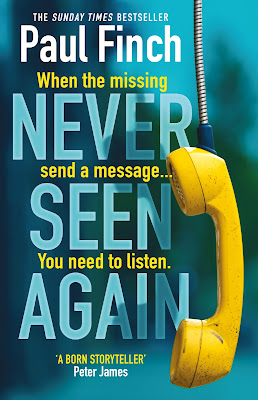
Another totally gratuitous blogpost this week I’m afraid, as this Thursday, March 17, sees publication of my next novel, NEVER SEEN AGAIN. For those who think I may be carrying this thing a bit far, that it’s all a tad self-indulgent to keep going on about this, that you’ve heard it all before, yadda yadda … I can only apologise.

The best we authors can usually hope for is to have one of our books published each year (though sometimes two … you never know), so I’m very excited. And anyway, all kinds of things are happening, so it’s not like I’ve nothing new to report.

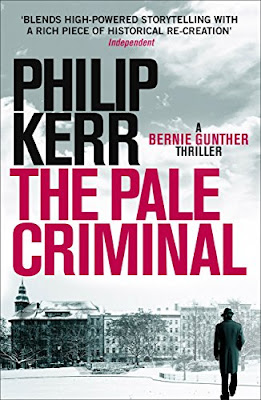
In keeping with today’s theme, exciting thrillers, I’m also pleased today to offer a detailed review and discussion of the late, great Philip Kerr’s very classy period piece, THE PALE CRIMINAL.


As usual, if the Kerr review is your main interest, you’ll find it at the lower end of today’s post in the Thrillers, Chillers section.

Almost time

Before then, we’re going to talk about the near-imminent publication of NEVER SEEN AGAIN, which, even if I say so myself, is a beautiful thing. Here is a shot of me holding in my hand the very first one off the press.

In addition to that, as you can see topside, an exciting looking blog tour commences today. 

I adore these. For those unfamiliar with the concept, in each case, on each day, a different blogger will offer a review and/or a bit of incisive chit-chat about the title in question (and this time, of course, it happens to be mine). Either way, review or gossip, these book-blogger folks do a sterling job. They really are one of the best methods we have for getting the word out these days. I always appreciate it when I’ve got a new title due, and quality book-persons like these come on board and put in a good word. Many thanks to all those involved.

Not that NEVER SEEN AGAIN hasn’t already passed through the hands of quite a few august individuals. You may have noticed that it’s accrued some great quotes from fellow authors I really rate. 

Check these out.

Exceptional crime writing. Paul Finch continues to raise the bar.
MW Craven

A spine-chilling mystery from the master of suspense.
MJ Arlidge

This might be Finch’s best yet … Grabs you by the throat and doesn’t let go.
PL Kane

A cracking crime thriller that builds to an action-packed finale. Guaranteed to elevate your heart-rate!
David Jackson

I should also say, and this is the bit where today’s post REALLY gets self-indulgent, that with three days still to go, we now have some very effusive write-ups on NETGALLEY

Here are a few choice quotes:

It is so tense that I had to keep putting it down for a breather. *****
Elaine T

The story is paced perfectly, the underlying mystery so carefully threaded throughout the book that it kept me completely engrossed in the story. *****
Jen L

One of the best thrillers I have read in a long time and in my opinion the best book I have read by this author. *****
Peggy B

Gripping and compelling with an engaging storyline and explosive characters. *****
Ariah H

I felt very honoured to read these, as the whole purpose of NETGALLEY is that reviewers participating are required to give a completely honest appraisal. It’s not in their interest to fib for the sake of the author or publisher; they would gain nothing from that. My heartfelt thanks to all, so far and still to come, who have taken a chance on NEVER SEEN AGAIN.

A bit of a bargain

I also hear, by the way, that there is a nice little bargain on the horizon.

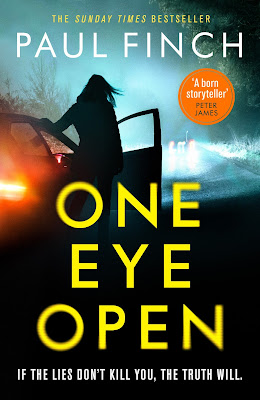
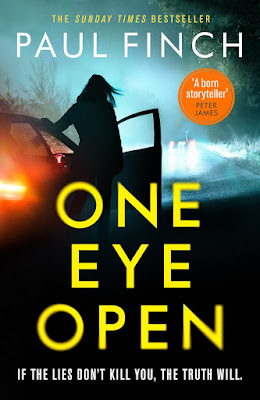
Apparently, my stand-alone crime thriller of 2020, ONE EYE OPEN, will be available on Audible for ONLY £3 as part of a special promotion this Wednesday (March 16).

Yes, you read that correctly. ONLY £3.

For those of us who like to receive our fiction while we’re out walking the dog, or working on a treadmill, or driving on the motorway, or even riding an inter-city train, that’s got to be something to consider, yeah?

For those unaware, ONE EYE OPEN features a character who, at the time, was new to my books, DS Lynda Hagen, a former detective now turned road traffic accident investigator (primarily so that she can look after her kids and deal with her neurotic husband), who attends what appears to be a routine smash on the A12 in Essex, only to find a big mystery, which soon leads her down a rabbit hole into a terrifying world of armed robberies and organised crime.

As I say, the Audible version of ONE EYE OPEN, as performed by Louise Brealey, can be yours for the remarkable sum of £3 for one day only, March 16 (no coincidence, I suspect, that this is the day before we launch NEVER SEEN AGAIN).


THRILLERS, CHILLERS, SHOCKERS AND KILLERS …

An ongoing series of reviews of dark fiction (crime, thriller, horror and sci-fi) – both old and new – that I have recently read and enjoyed. I’ll endeavour to keep the SPOILERS to a minimum; there will certainly be no given-away denouements or exposed twists-in-the-tail, but by the definition of the word ‘review’, I’m going to be talking about these books in more than just thumbnail detail, extolling the aspects that I particularly enjoyed (I’ll outline the plot first, and follow it with my opinions) … so I guess if you’d rather not know anything at all about these pieces of work in advance of reading them yourself, then these particular posts will not be your thing.

THE PALE CRIMINAL 
by Philip Kerr (1990)

Outline
Berlin, 1938. Bernie Gunther, a former homicide detective now self-employed as a private eye, is working less than inspiring cases. Though he’s recently enlisted another ex-cop, Bruno Stahlecker, as his assistant, things still aren’t too exciting. They are currently investigating an attempted blackmail against the head of a major publishing company whose homosexual son has been writing indiscreet letters to his lover, a noted scientist called Lanz Kinderman.

It all seems pretty mundane and the two detectives finally break the case when they trace the letters to Klaus Hering, one of Kinderman’s recently dismissed employees. But during the course of this fairly innocuous enquiry, the likeable Stahlecker is shot and killed and a short time later, Hering, the main suspect, found hanged, presumably by his own hand.

Almost immediately afterwards, maybe coincidentally (or maybe not), the disheartened Gunther receives an order to attend Gestapo headquarters, where he meets two people who really existed in history, Arthur Nebe, head of the Kriminalpolizei, or Kripo, the Criminal Police Force of Nazi Germany, and more unnervingly, Reinhard Heydrich, Chief of Reich Security, a senior SS member and already a figure of terror to many.

However, for the moment, neither Nebe nor Heydrich are concerned with an issue of state; for once it is something a little more mundane, though it is bothering them a great deal. It hasn’t been publicised much, but a serial killer is operating in Berlin, sexually murdering school-age girls, specifically those who fit the Aryan ideal, i.e. pretty, blonde and blue-eyed.

With the force’s current batch of detectives unable to stop the atrocities, and in fact being made a mockery of, Gunther is commanded to reorganise the enquiry and take the role of lead investigator.

Unwilling to voluntarily assist the Nazi authorities, but seeing this cause as worthy (and given little choice in the matter anyway), he is reinstated to the police at the rank of Kriminalkommissar and given a dedicated team of Gestapo officers to work underneath him, including the crude, womanising Becker and the stiff but more-useful-than-expected Korsch.

Assisted (though sometimes hindered as well) by this misaligned bunch, Gunther works his way through a plethora of leads, all of which seem promising at first.

When Joseph Kahn is brought in, a Jewish oddball, who on the face of it at least seems a very likely suspect, an investigating psychiatrist casts doubt on his guilt and in fact Kahn commits suicide in custody, only for the real killer to then strike again.

Another possibility, one that Gunther likes particularly, centres around Gottfried Bautz, an ex-military fanatic with a long track-record of sexual violence, but yet again, Bautz is in custody when the prolific killer claims another victim.

And then the case takes a turn that none of the detectives are comfortable with.

From forensic investigations carried out by skilled pathologist, Hans Illman, it is concluded that all the murder victims to this point have been hung upside down and allowed to drain of blood. The cops purposely withhold this intelligence from the public, only to have their attention drawn to a grotesque cartoon in the widely-read Nazi propaganda periodical, Der Stürmer, depicting ‘German victims of Jewish violence’, all of them young women, all of them ritually strung upside down and allowed to bleed out.

Its publisher, Julius Streicher, a rabid and violent anti-Semite (and again a real historical personality), is a man of gross sexual habits, and despised by almost everyone who knows him as a boor and a brute. So, when a witness statement places a Streicher lookalike close to several of the crime scenes, it feels as if Gunther at last has a viable suspect. However, Julius Streicher also happens to be a senior administrator in Hitler’s government and, as Gauleiter of Franconia, a virtual czar in his home town of Nuremberg, which sits in the very centre of the Nazi heartland …

Review
There are 14 Bernie Gunther novels, of which The Pale Criminal was the second, all written by the late British author, Philip Kerr, though the first three, something of an entity in themselves, were published much earlier than the rest, between 1989 and 1991. Such was their acclaim that in crime-fiction circles even now they are referred to as the ‘Berlin Noir trilogy’.

And that is completely the atmosphere that Philip Kerr sought to create. His pre-war Berlin is a maze of dark and winding backstreets, drinking holes of ill repute and seedy stairways ascending to decayed garrets wherein prostitutes and pornographers can be found. Meanwhile, in Bernie Gunther, Kerr gave us a youngish (going on middle-aged) protagonist, hardened by his previous experiences as a soldier and a cop, with no loved ones to speak of (none of whom are alive), no real talent other than his ability to catch crooks, and an outlook on life that is cynical and wry, but also relaxed. He’s a tough cookie who instinctively believes the worst of people, but he has a grim sense of humour, which manifests in regular and amusing wisecracks.

Like the Chandler-esque heroes on whom he is based, he also has a deep mistrust of authority, so much so that he’s now his own man, still chasing bad guys but mostly independently, as wary of the police and judiciary as he is the underworld.

Of course, in Gunther’s case there is a genuine, full-on reason for this. The civilian police force he joined after being demobbed from the army at the end of World War One is now under the control of the totalitarian Nazi regime. Every day, the freedoms Germans enjoyed during the Weimar Republic are being curtailed, and with Hitler’s constant provocations aimed overseas, the next war doesn’t feel very far off.

It’s ironic, therefore, that in The Pale Criminal, Gunther finds himself with no option but to assist these Swastika-clad bullies in their hunt for a monster of the street-level variety.

And to be frank, I don’t blame Kerr for taking this diversion. Because which purveyor of historical crime fiction could resist the inclusion in their latest novel of such real-life personalities as Heydrich, Himmler and Julius Streicher? And it doesn’t stop there. Much like Chris Petit with his exceptional The Butchers of Berlin (even though that was written 25 years later), Kerr revels in the opportunity to breathe life into some of the great villains of history.

To a degree, this goes exactly the way you’d expect. Top cop Arthur Nebe, for example, who though in later life he was hanged for his involvement in the plot to assassinate Hitler, was regarded by the Allies as a Holocaust facilitator who would likely have faced prosecution had he lived so long, and in this book he embodies that role, appearing as a classic fence-sitter. Otto Rahn and Karl Weisthor, meanwhile, though SS officers, were also known for their bizarre behaviour and occult obsessions, and in Kerr’s hands this is taken to new extremes, the pair of them portrayed not just as fanatics, but as individuals who are quite patently insane. Meanwhile, Julius Streicher, or ‘Jew-Baiter Number One’ as he liked to term himself, is every inch the ill-mannered cur that he was regarded as during his actual life, while with Himmler, though this book mostly concentrates on his fascination with mysticism and so depicts him in less belligerent form than usual, we still get the feeling that below his calm exterior lies a dangerous madman.

But it is Heydrich, the Butcher of Prague and chairman of the infamous Wannsee Conference, whose presence in this novel I found most intriguing. In real life, of course, Reinhard Heydrich was killed in 1942 by Czech commandos, and at the time considered no loss to humanity due to his irredeemably evil reputation. In Kerr’s version, however, we see a much more reflective character. An arch-controller who we’re in no doubt can authorise violence at the drop of a hat, but a man serious about his role as a government official, someone who doesn’t want war with the Allies and who sees it as his duty to maintain order and stability in the new Germany … even to the extent where he is concerned that pogroms against the Jewish community might damage the economy. In fact, this is the entire reason behind his hiring of Gunther, a proven homicide cop, who is separate from the main police and can be relied upon to bring in this brutal slayer of Aryan daughterhood without the blame being passed to the Jews.

This is certainly not the utterly ruthless and anti-semitic Heydrich that I thought I knew from history, but then The Pale Criminal is set in 1938, and maybe it’s the case that many of these extreme Nazi villains only grew into those roles gradually as absolute power absolutely corrupted them. (It could also be a double-bluff, I suppose, because if Heydrich genuinely was ambivalent to the Jews in his early days, his willingness to annihilate them only a few years later more than hints at a deeply disturbed personality).

But that’s The Pale Criminal and how it relates to history.

What about the story itself?

Well, like all good mysteries, it’s a page-turner. Kerr focusses tightly on the investigation, the twists coming thick and fast, many of the lesser characters simply servicing the plot though they’re all very visible and believable.

Gunther himself makes an appealing hero, though a warning in advance. This book is set in the 1930s and subsequently contains few modern attitudes. Homosexuality was illegal then even in Britain (and viciously punished in Nazi Germany), and that’s on full display here. At the same time, the police use violence routinely, both against people and property. Interrogation of suspects includes lots of roughhouse – and Gunther participates in this as much as the others. He’s also guilty of lusting after almost every woman he meets, including a high-ranking female psychologist and even Hildegard Skeininger, the beautiful but heartbroken mother of one of the child victims … though to be fair to Gunther, he’s never especially ungentlemanly.

Kerr’s writing style is always accessible and there are few complexities in the case, the story bouncing along at a jaunty pace against an ongoing atmosphere of menace provided by the Nazis but studded with occasional and welcome bouts of humour.

I earlier mentioned Chris Petit’s dark masterpiece, The Butchers of Berlin, but the tone here is far lighter than that. In The Pale Criminal, Germany has not yet descended into a fiery wartime Hell. You really get the impression that well within the living memory of almost everyone in the book, this society had once been civilised and democratic, and that many of the officials our main character encounters haven’t yet adjusted from that. Life for many goes on as normal.

All round, this is an excellent and atmospheric thriller. There are no massive surprises, but it’s a fast, compelling read, its authentic historical setting adding much more than lurid background colour.

And now my usual folly. I’m going to imagine The Pale Criminal as a movie or TV show, and cast it right in front of you. I don’t know if anyone’s ever attempted this in real life, but I’d be delighted if they did

Bernie Gunther – Tim Roth
Hildegard Skeininger – Teresa Palmer
Professor Hans Illman – Christoph Waltz
Julius Streicher – Gary Oldman
Arthur Nebe – Philip Jackson
Frau Lange – Emily Watson
Reinhard Heydrich – Hugo Weaving
Becker – Alex Høgh Andersen
Korsch – Tom Felton
Rolf Vogelman – Thomas Gabrielsson
Otto Rahn – Joseph Fiennes
Karl Weisthor – Rhys Ifans
Lanz Kinderman – Bill Nighy

Wednesday, 16 February 2022

Counting down the days with my top five


I can’t pretend that I’m not getting very excited about the publication of my next novel, NEVER SEEN AGAIN, on March 17. So excited in fact that I’ll be focussing primarily on my own writing today (so, sorry about that in advance). In short, I thought today might be the ideal opportunity to look back through my crime thriller output of the last few years, and select what I consider to be my best five novels to date, with a little bit of info attached to each one just to illustrate why and how I came to this conclusion.

It isn’t going to be totally about me, though. On the subject of hard-nosed crime thrillers, particularly those featuring journalists rather than cops (in keeping with 
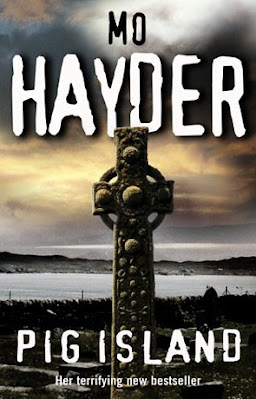
NEVER SEEN AGAIN), I thought today would also be the perfect time to review and discuss the late, great Mo Hayder’s exceptionally frightening and intriguing mystery, PIG ISLAND.

If you’re only really here to read about that, it’s no problem. You’ll find that review/discussion, as usual, at the lower end of today’s blogpost in the Thrillers, Chillers section.


Again as mentioned at the top of this page, and I’m particularly stoked about this, publication of my twelfth crime novel to date, but only my second with Orion Books, is imminent. Anyone who’s interested in this stuff will have noticed a slight change of tone since I went to Orion, though as I keep reiterating to the many readers who continue to get in touch (for which I’m very grateful, by the way), the Heck and Lucy Clayburn series are far from finished – it’s just that my focus of the last few years has been on stand-alone thrillers rather than series.

ONE EYE OPEN was the first of these, and NEVER SEEN AGAIN will follow in that tradition, though all my crime novels are set in the same universe. Throughout them, you’ll spot references to the National Crime Group, the Organised Crime Division, the Serial Crimes Unit, and so on, while characters who have background roles in some will have foreground roles in others etc.

But NEVER SEEN AGAIN brings us an entirely new investigator in the shape of David Kelman, and for once he’s not a cop.

A disgraced crime reporter, Kelman’s life has gone to pieces over the last few years. Basically, he blew a confidence, which had catastrophic results; not just for him personally and professionally, but for his newspaper and for the life of a young heiress who’d been kidnapped. Six years have rolled by since then, and David, no longer respected in the industry, can only scratch a living by writing celebrity shockers for the scandal mags. Which macho and married TV personality is currently courting male prostitutes? Which respectable film star has a criminal past that she’d rather forget? And so on.

Until, very unexpectedly, he is offered an opportunity not just to redeem himself, but to save the life of someone he thought long ago murdered. But the problem is that no one trusts him and no one will work with him. So, he’s going to have to do this all on his own, and follow a path that will take him into a dark, dangerous world of racketeering, crooked cops and professional killers.

I’ve often traded on the fact I was a cop before I became a full-time author. But I had another job between the two. I was a journalist working for a range of newspaper titles across the Northwest of England. I want to stress right now that the real me was no more a David Kelman than he was a Mark Heckenburg. In reality, journalism is a responsible job, where the onus is on you to impart the news without prejudice and to get your facts right, rather than to sensationalise every bit of tittle-tattle that comes along in an effort to sell papers.

Okay, I get it that some of our more recent media darlings seem to have forgotten this message. But that was the jist of the role, as I knew it.

But as with police officers, the life and work of a journalist can be very intense and even dangerous. The possibility is always lurking that, if you get something wrong – badly wrong – it could have dire consequences. While the big difference between a cop and a journalist is that, if you’re going to get into the guts of some very bad people, the journo has very little muscle to call on as backup. He/she going to be walking a lonely and high-risk path.

This, in a nutshell, was the thinking behind NEVER SEEN AGAIN. I’m very proud of it, even if I say so myself, but the proof is only in the eating. So, I am still eagerly awaiting March 17 and to see the first responses from neutrals.

By the way, if there’s anyone who’s really desperate to get their hands on a copy before then, the NetGalley option is open as always. Just go HERE.

And now, as promised …

My favourite five

In chronological order.

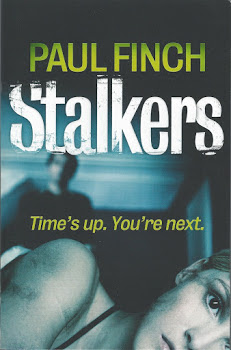
STALKERS (2013)

This was my first crime novel to hit the mass-market, courtesy of Avon at HarperCollins. STALKERS introduced my primary cop character, DS Mark Heckenburg. A loner detective working for Scotland Yard’s elite Serial Crimes Unit, Heckenburg, or Heck, a northerner displaced to London to escape a tragic past, which has left him almost friendless in his homeland, is now part of a specialist team that tracks serial offenders, mainly rapists and murderers, across all the police force areas of England and Wales. He is tough and resourceful, an habitual risk-taker and rule-bender, but in many ways he’s quite vulnerable too, not least because of the sexual chemistry he shares with Detective Superintendent Gemma Piper, a by-the-book officer but his former girlfriend when, back in the day, they were detective constables together, though now she’s his boss and someone he doesn’t see eye-to-eye with on most law-enforcement techniques.

In STALKERS, Heck’s first outing, he pieces together a confusing number of disappearances by uncovering the presence of the Nice Guys, a secretive crime syndicate whose racket, to be blunt, is a rape club. At the behest of high-paying clients, they kidnap named individuals to order and then provide a private location in which they can be sexually attacked and murdered, before undertaking to dispose of all the evidence.

STALKERS is still one of my best-selling novels, and it produced a lead character who proved to be very popular with my readership (over 260,000 copies sold thus far). Such was its success that it directed me firmly into crime-thriller territory, whereas previously I’d written widely within horror, sci-fi and historical fantasy.

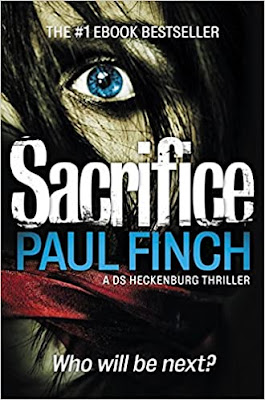
SACRIFICE
(2013)

This was the second Mark Heckenburg novel, and to date it remains Heck’s main contribution to the folk horror genre. In it, Heck, Gemma and the rest of SCU go in pursuit of a ‘calendar killer’, an unsub (or group of unsubs) nicknamed the Desecrator, who abducts people at random and sacrifices them in gruesome ways to celebrate ancient folk festivals, many of which have become little more in the 21st century than fun nights out: a drunk burned alive on a bonfire on Guy Fawkes Night, for example; a tramp dressed in a Father Christmas suit and walled into a chimney on Christmas Eve; a pair of young lovers shot through their respective hearts by a single arrow on Valentine’s Day. I think you get the drill.

A horror buff from years back, I was really delighted when the staff at Avon went for this idea. It allowed me to let rip with some truly ghastly murders and to delve deeply into the mysterious rites, some of them quite sinister, that lurk behind many of our most innocent traditions.

Funnily enough, my initial plan was to run this story from late summer, through the autumn and into the winter, but having scoured the calender for meaningful days, it soon became apparent that there were far more to choose from in the spring. The killing spree thus starts at Christmas and extends to May.

There’s quite a high body-count in this one, and I like to think some spectacularly twisted baddies. It remains my favourite Heck novel to date.

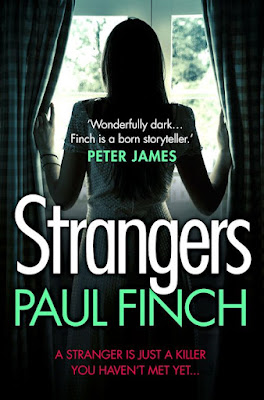
STRANGERS (2016)

This novel first appeared at the request of Avon, who, while they were happy with the Heck novels, were keen to see a parallel series featuring a female protagonist. Although Lucy Clayburn already existed, at least on paper.

Well over a decade earlier, I’d speculatively written a television drama called Dirty Work, centred around a young female police detective in Manchester, who was blue-collar in origin and highly competent but regarded with suspicion by many of her male colleagues because she’d blown the whistle on a bunch of corrupt officers early in her career. The main investigation in Dirty Work was into a series of torture-murders of underworld figures, which, it later transpired, was the response of another cadre of corrupt cops who were looking to cover up past indiscretions and avert the exposure of a significant number of miscarriages of justice.

Miscarriages of justice were big news at the time, the early/mid-1990s, but they weren’t by 2016, when HarperCollins were looking for their own Lucy Clayburn series. The story had to be changed, as did certain aspects of Lucy’s personal circumstances, owing to these having (mysteriously, in my view) appeared on another TV cop show (after Dirty Work had been touted around for quite a while). As such, the Lucy who appeared for the first time in STRANGERS was still a junior police detective in Manchester, came from a poor background, was the child of a single mother etc, but now there were additions, and these, for my money, were a huge improvement. She rode a Ducati M900 because she had a Hell’s Angel past, there were still problems with some of her colleagues, this time because she’d made a mistake during her first week in CID, which had seen her DI shot and wounded. But the real complication in her life – though it doesn’t come to the fore in STRANGERS until later in the story – is that only long after she’d joined the police did Lucy learn that she was the estranged daughter of Frank McCracken, a major organised crime figure in Northern England.

In STRANGERS, she gets the chance to redeem herself by going undercover as a streetwalker to try and snare a female serial killer known as Jill the Ripper, a deranged prostitute responsible for the sex murders of a number of her male clients.

Though a dark tale indeed, STRANGERS turned the traditonal murder mystery on its head in that men were the targets for a female slayer, and involved lots of research on my part, mainly with policewomen and ex-policewomen friends of mine who had done this very job (i.e. getting into their scanties and going out on the backstreets at night to catch bad uns). Thankfully, all these efforts seemed to pay off, as STRANGERS remains one of my most successful novels to date, having made the Sunday Times Top 10.

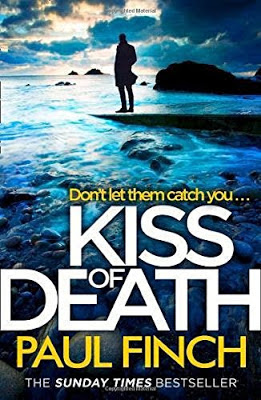
KISS OF DEATH (2018)

My latest Heck novel, though there are more coming (trust me). This one takes note of the recent wave of police cuts, and sees the Serial Crimes Unit in grave danger of being disbanded as many of the top brass consider it a luxury. Gemma Piper, in an effort to save her unit, agrees to take on Operation Sledgehammer, the pursuit of the UK’s twenty most dangerous fugitives from justice who are still believed to be in the country. These are mass murderers all, gangsters, hitmen, serial rapists and the like. Heck and his new partner, the spiky but efficient Gail Honeyford, are put on the trail of a bank robber who often kidnaps and murders, but soon find evidence that a much more terrible game is in play.

Many of these men, it seems, are not missing because they are on the run, but because they themselves have been abducted for some nefarious purpose, and straightforward vigilanteism does not seem to be the explanation. In due course, Heck breaks open a conspiracy so horrific that even the Serial Crimes Unit hasn’t seen its like before. And finds it the work of a power so fiendish that even the UK’s worst criminals are little more to it than pawns in chess.

I consider KISS OF DEATH to be the most action-packed and violent of the Heck novels, but it’s become more famous since it was published for it’s so-called WTF ending (as I hoped it would at the time), which unfortunately I wasn’t able to follow up straight away because I was in the process of changing publishers.

I can only assure my readers that this story has not ended, that Heck will return, and that the next novel following on from this one is already written and now awaiting its publication slot.

ONE EYE OPEN (2020)

My first novel for Orion, and one of my favourite pieces of work to date. It starts on a quiet road in Essex, where DS Lynda Hagen, a Serious Collision Investigation officer, enquires into a bizarre road accident in which a cloned car has veered off a highway into the woods for no apparent reason, severely injuring the two people on board, neither of whom are initially identifiable.

Lynda is a former CID officer who once dealt exclusively with crime. She only moved into Traffic because having two kids to raise and a husband struggling to recover from a nervous breakdown necessitated ordinary nine-til-five hours. But she still has well-honed detective instincts, and increasingly starts to suspect that this is no common-garden RTA. She can’t expect at this stage though, that it will lead her into a deadly world of armed robbery, organised crime and an underworld resource deemed so valuable by England’s various vying crime syndicates that they will kill and kill and kill to get their hands on it.

ONE EYE OPEN took me right out of my comfort zone. It was the first crime novel I’ve written that didn’t also double as an action thriller. It does include a heist and a police pursuit sequence that one reviewer described as ‘the best I’ve ever read’, but it’s much more of a complex mystery, involving unreliable narration and non-linear time zones. Don’t let that put you off, though. It still features moments of what I hope are extreme suspense, even terror, and finally reaches what another reader described as ‘a great ending’.

I feel a bit self-conscious singing my own praises here, but that’s what today’s blog is all about (and you were warned in advance).

Anyway, these are the five crime novels that I consider I’ve done my best work on. Hopefully more will follow, maybe starting with NEVER SEEN AGAIN, which I reiterate is published on March 17. At the end of the day, of course, only you readers can be the final judges.


THRILLERS, CHILLERS, SHOCKERS AND KILLERS …

An ongoing series of reviews of dark fiction (crime, thriller, horror and sci-fi) – both old and new – that I have recently read and enjoyed. I’ll endeavour to keep the SPOILERS to a minimum; there will certainly be no given-away denouements or exposed twists-in-the-tail, but by the definition of the word ‘review’, I’m going to be talking about these books in more than just thumbnail detail, extolling the aspects that I particularly enjoyed (I’ll outline the plot first, and follow it with my opinions) … so I guess if you’d rather not know anything at all about these pieces of work in advance of reading them yourself, then these particular posts will not be your thing.

PIG ISLAND 
by Mo Hayder (2006)

Outline
Joe Oakes is a rough-cut Liverpool-born investigative journalist, who specialises in exposing supernatural hoaxes and bringing charlatans to public ridicule. Perhaps unsurprisingly, it doesn’t pay brilliantly well, and this, along with his self-employed status, is a constant problem for his attractive, middle-class wife, Lexie, who loves her hubby in her own way, but is increasingly tempted to stray towards the good-looking Harley Street doctor for whom she works as a receptionist.

Despite Oakes’s hit-and-miss reputation, he does have one very successful job under his belt. Back in the day, he travelled to the States and blew the gaff on British-born Evangelical faith-healer, Malachi Dove, who was conning people out of millions by performing fake life-saving surgeries ‘through prayer’. But that was in the past. The pickings have been leaner since then. However, very unexpectedly, Oakes gets a chance to revisit this glory when he learns that Dove has not disappeared into complete obscurity.

When mutilated body-parts, identified as having come from pigs, wash up on Scotland’s west coast, suspicion turns towards the small community on the isolated isle of Cuagach, better known as Pig Island. Oakes gets interested when he hears that the small group, who recently set up there as the ‘Psychogenic Healing Ministries’, are a satanic cult, and even more so when he learns that their pastor is one Malachi Dove.

The mystery deepens when shoddy video evidence taken by a tourist on a fishing boat appears to depict a half-human / half-animal hybrid walking on the Pig Island beaches. Local people on shore are convinced that the cult on the island, probably having performed sacrificial ceremonies which afterwards involved disposal of the animal parts, have raised a demonic entity: Pan, or maybe the Devil himself. Oakes is not so sure about that, but very sure that if Malachi Dove is involved, it will need to be investigated.

Rather to his surprise, when he contacts the Psychogenic Healing Ministries, they invite him to the island, saying that they abhor the rumours circulating and that they hope, if he comes for a visit, he will afterwards write about their activities, showing that they are not Satanists, just ordinary people looking for a new, simpler direction in life.

Oakes arrives on the island and at first glance sees only what the community spokesmen describe: friendly villagers, small, cheaply-constructed cabins, a meeting hall, and a chapel built into the rockface of a cliff, though it seems a little odd that this chapel possesses high-level security. What he doesn’t find is Malachi Dove, and when he enquires about this, he is told that the pastor has lost his mind and now lives in seclusion on the other side of the island. Oakes wants to go over there, but is advised not to by the nervous community.

This is a red rag to a bull, and at the first opportunity, the journalist attempts to cross to the other side of Cuagach, only to find that the area where Dove allegedly lives has been barricaded off by a ditch filled with drums of toxic waste and a tall, electrified fence along the top of which pigs’ severed heads have been set as warnings.

Despite these alarming fortifications, he manages to infiltrate Dove’s domain, even entering the exile’s squalid hovel of a house. When he discovers evidence that the madman has been butchering pigs as part of a ritual, having first attempted to exorcise demonic souls into their bodies the way Jesus did with the Gadarene Swine, he thinks he’s seen it all.

But he hasn’t. Oakes doesn’t know it yet, but there is much, much worse to come …

Review
The late great Mo Hayder had a reputation for infusing her thrillers with gruesome detail, often pushing them over the dividing line into the horror genre. This is very much in evidence with Pig Island. However, appearances can be deceptive, because first and foremost this novel is a crime story, albeit a gory and disturbing one.

But you know, you have to admire an author who so fearlessly tackles the sordid realities of life on humanity’s fringes. Forget the half-human creature, forget the rumoured witch-cult, forget the flyblown pig’s head totems on the boundary fence … much of the horror to be found here is of the grimly authentic kind: the squalid interior of the dwelling where an isolated misanthrope has been eking out a solitary, embittered existence; the rundown, needle-strewn housing estate where a police safehouse allows government witnesses to hide in plain sight (and to feel lonely and cut off from the world they knew); the grotesque details of the medical procedures required to repair the body of a young woman who has not just been beaten and sexually assaulted, but also burned; the day-to-day existence of a badly disabled girl who has found herself an object of scorn, fear and twisted sexual desire.

Yes, this is Mo Hayder country for sure. No taboo is too unsettling for her to examine it in unstinting detail.

But does it work as a thriller?

Well, we’re already in the world of hybrids. We have a hybrid creature lurking on Pig Island, and as I say, a hybrid narrative. It starts out with a near-Weird Tales feel, the intrepid journalist venturing to an eerie isle where a monster allegedly roams and the locals worship Satan, but then morphs into something – dare I say it – a little more mundane: a murder mystery filled with taut investigative police detail.

Does that spoil it?

Well, it jars a little on first reading, but all in all, Pig Island remains a very satisfying story, which is filled with tension, suspense and, when necessary, violence, and which ends on a real high note if you enjoy being shaken out of your wits.

It’s a stand-alone, having no connection with Hayder’s successful Jack Caffery series, and so the author clearly felt that she had free rein with the characters in this one, and she uses it very well.

With the exception of honest copper, Danso, nobody is really good in this tale. Even the central character, Oakes, is an antihero rather than a hero: a scruffy, irreverent hardcase who doesn’t believe in anything, but knows his craft and follows his leads doggedly at the expense of everything and everyone else in his life. His married relationship inevitably suffers. Wife Lexie hails from a completely different background, but is self-centred in a different way. She wants a better life, but is not sure that Oakes will provide that, or can even be part of it, and so is gradually edging her way out. There is a bond between them, however, which we see laid bare later in the book in a tear-jerking but also horrifying moment. But again, they are both guilty of deeply selfish behaviour, which makes a nice change when it comes to the good guys.

I can’t say too much about the other characters for fear of giving things away, though Angeline is also an intriguing creation: a seemingly abused and neglected child, so reviled by the narrow minds she is used to on the edges of civilisation that she has no confidence she’ll be accepted by the broader ones at its centre. Of course, still waters run deep, and Hayder does a great job here, giving little away about Angeline’s hidden depths while at the same time hinting that she has a stronger personality than initially appears.

I enjoyed all of that. I also hugely enjoyed the descriptive work. Without overdoing it, in Pig Island, Mo Hayder demonstrates a genius for contrasting the beauty of nature (that wild Scottish coastline with its heaving seas and rugged crags,) with the physical (and spiritual) grime and garbage that accumulates at the edges of an uncaring society.

Perhaps a less appealing part of the book, but important nonetheless in terms of atmosphere, is its air of sleaziness. This isn’t thrown at us in purpose-written dollops; it arises gradually from the text, like a bad smell. And not just from the carnage and perversion on the island, or the dingy pubs, dirty houses and litter-strewn backstreets on the mainland, (though all of this helps), but from the spiritual ugliness of so many of the characters.

The one thing I didn’t especially like is the laddish tone in which so much of this novel is written. Personally, I can do without an authorial voice that is itself littered with f-words. I don’t mind it in the dialogue between characters, but when the writer swears continually as well, it starts to feel a little forced to me (in this case I understand that it’s an attempt to get into the head of streetwise Joe Oakes, though even then it feels like a clumsy device).

But that’s the only black mark I give to Pig Island.

As I say it’s an odd one – horror/murder/suspense – but don’t let that put you off. If you like well-written and uncompromising fiction concerning dark, brutish subject-matter, you’ll be well served here. As you will, of course, if you just like good quality thriller fiction (though fainter hearts might be advised to steer clear).

And now, as always, I’m going to imagine a cast on the off-chance some TV bigshot reads this review and decides to put Pig Island on TV. Just a bit of fun, of course, not that I wouldn’t love to see it done in reality, not least because it would be a monumental challenge

Joe Oakes – Leon Lopez
Lexie Oakes – MyAnna Buring
Angelina – Annalise Nicole Basso
Malachi Dove – Jeffrey Combs (in a guest-star role, adding great horror movie pedigree)
Commander Peter Danso – Ian Grieve
DS Callum Struthers – Robin Laing

Monday, 24 January 2022

Scare yourself to death with a book in 2022


As most people who read this column will already be aware, my next novel, NEVER SEEN AGAIN, is published this spring, on March 17 in fact. It’s a stand-alone crime thriller, which I spoke about in a little more detail on January 21 (so please don’t hesitate to scroll back and check, if you missed it). But of course, I’m not the only author whose new work will hit the high streets this year. A plethora of exciting looking ‘dark fiction’ titles are due out in 2022, a whole grab-bag of them in the first six months.

For that reason, as I often do when the New Year comes around, I’ll be profiling a few of them here first. These are my own personal choices of course, and I won’t be able to include all the ones I’d like to, but hopefully my selections will at least give you a favour of what’s due.

You’ll find them a little way down; as usual, I’ve divided my choices into the three main categories that make up my beloved ‘dark fiction’: CRIME, THRILLER
and HORROR.

On a not-dissimilar subject, today’s Thrillers, Chillers choice is representative of all three of those subgenres at the same time. BRIMSTONE is yet another epic actioner from the tireless pens of Doug Preston and Lincoln Child, and it ticks just about every box in the ‘dark fiction’ classification. You’ll find my detailed review, as usual, at the lower end of today’s post.

Before then though, let’s chat about some …

Top 10s for January to June

It’s only January and already I could produce a directory-thick catalogue of book titles due out in the next 12 months that I’m really looking forward to. But the truth is that I don’t have either the time or the resources. As such, I can only talk about a limited number, the top 10 works in each of the Crime, Thriller and Horror subgenres that I am most impatiently awaiting.

That’s 30 books in total, which may seem like a lot but it still means that plenty have had to miss out.

I apologise unreservedly if anyone is disappointed to find that their book, or someone else’s they really like doesn’t figure in any of the lists below. It may be that I wasn’t aware of it, or just that I didn’t find its concept quite as compelling as others. It’s also the case that we just can’t accommodate everything here, and it’s possible if not highly likely, that lots of really good books will still be published in 2022 that I never even mention on this blog … so my word is not by any means Gospel. Don’t despair just because I’ve not referred to it.

Anyway, here we go.

As I say, I’ve divided them into three categories, Crime, Thriller and Horror (the titles posted in order of expected publication). Just for your info, in today’s post I’ll only be looking as far forward as June; I’ll post similar selections for the second six months of the year in July. As I’ve obviously not read all of these books yet, I won’t be offering opinions on anything, just reprinting the jacket art and the back-cover blurbs.

Hope you find this interesting and informative.

CRIME


THE CHRISTIE AFFAIR
by Nina de Gramont
(pub in hb on Jan 20)


In 1926, Agatha Christie disappeared for 11 days. Only I know the truth of her disappearance.
I’m no Hercule Poirot.
I’m her husband’s mistress.


Agatha Christie’s world is one of glamorous society parties, country house weekends, and growing literary fame.

Nan O’Dea’s world is something very different. Her attempts to escape a tough London upbringing during the Great War led to a life in Ireland marred by a hidden tragedy.

After fighting her way back to England, she’s set her sights on Agatha. Because Agatha Christie has something Nan wants. And it’s not just her husband.

Despite their differences, the two women will become the most unlikely of allies. And during the mysterious eleven days that Agatha goes missing, they will unravel a dark secret that only Nan holds the key to ...


ONE FOR SORROW
by Helen Fields
(pub in pb on Mar 3)


One for sorrow, two for joy
Edinburgh is gripped by the greatest terror it has ever known. A lone bomber is targeting victims across the city and no one is safe.

Three for a girl, four for a boy
DCI Ava Turner and DI Luc Callanach face death every day – and not just the deaths of the people being taken hostage by the killer.

Five for silver, six for gold
When it becomes clear that with every tip-off they are walking into a trap designed to kill them too, Ava and Luc know that finding the truth could mean paying the ultimate price.

Seven for a secret never to be told…
But with the threat – and body count – rising daily, and no clue as to who’s behind it, neither Ava nor Luc know whether they will live long enough to tell the tale ...


NEVER SEEN AGAIN
by Paul Finch
(pub in pb on Mar 17)


Jodie Martindale and her boyfriend were kidnapped six years ago. Her boyfriend was found dead the next week. Jodie was never seen again.

Journalist David Kelman, once a hotshot but now washed up, illegally comes into possession of Jodie’s brother's old phone. And on that phone is an unheard voicemail from two weeks ago. The voice is unmistakeably that of Jodie Martindale.

The message begins an obsession for Kelman - which takes him down a rabbit hole of lies, to a dark and deadly truth ...


THE BLOOD TIDE
by Neil Lancaster
(pub in hb on Mar 31, pb on Jun 23)


You get away with murder.
In a remote sea loch on the west coast of Scotland, a fisherman vanishes without trace. His remains are never found.

You make people disappear.
A young man jumps from a bridge in Glasgow and falls to his death in the water below. DS Max Craigie uncovers evidence that links both victims. But if he can’t find out what cost them their lives, it won’t be long before more bodies turn up at the morgue…

You come back for revenge.
Soon cracks start to appear in the investigation, and Max’s past hurtles back to haunt him. When his loved ones are threatened, he faces a terrifying choice: let the only man he ever feared walk free, or watch his closest friend die…


THE DARK HOURS
by Michael Connelly
(pub in pb on Apr 5)


There’s chaos in Hollywood at the end of the New Year’s Eve countdown. Working her graveyard shift, LAPD detective Renée Ballard waits out the traditional rain of lead as hundreds of revellers shoot their guns into the air. Only minutes after midnight, Ballard is called to a scene where a hardworking auto shop owner has been fatally hit by a bullet in the middle of a crowded street party.

Ballard quickly concludes that the deadly bullet could not have fallen from the sky and that it is linked to another unsolved murder, a case at one time worked by Detective Harry Bosch. At the same time, Ballard hunts a fiendish pair of serial rapists, the Midnight Men, who have been terrorizing women and leaving no trace.

Determined to solve both cases, Ballard feels like she is constantly running uphill in a police department indelibly changed by the pandemic and recent social unrest. It is a department so hampered by inertia and low morale that Ballard must go outside to the one detective she can count on: Harry Bosch. But as the two inexorable detectives work together to find out where old and new cases intersect, they must constantly look over their shoulders. The brutal predators they are tracking are ready to kill to keep their secrets hidden.


THE DARK FLOOD
by Deon Meyer
(pub in hb on Apr 14)


One last chance. Almost fired for insubordination, detectives Benny Griessel and Vaughn Cupido find themselves demoted, exiled from the elite Hawks unit and dispatched to the leafy streets of Stellenbosch. Working a missing persons report on student Callie de Bruin is not the level of work they are used to, but it’s all they get. And soon, it takes a dangerous, deeply disturbing turn.

One last chance. Stellenbosch is beautiful, but its economy has been ruined by one man. Jasper Boonstra and his gigantic corporate fraud have crashed the local property market, just when estate agent Sandra Steenberg desperately needs a big sale. Bringing up twins and supporting her academic husband, she is facing disaster. Then she gets a call. From Jasper Boonstra, fraudster, sexual predator and owner of a superb property worth millions, even now.

For Sandra, the stakes are high and about to get way higher.

For Benny Griessel, clinging to sobriety and the relationship that saved his life, the truth about Callie can only lead to more trouble.


NO LESS THE DEVIL
by Stuart MacBride
(pub in hb on Apr 28)


‘We are each our own devil, and we make this world our hell.’

It’s been seventeen months since the Bloodsmith butchered his first victim and Operation Maypole is still no nearer catching him. The media is whipping up a storm, the top brass are demanding results, but the investigation is sinking fast.

Now isn’t the time to get distracted with other cases, but Detective Sergeant Lucy McVeigh doesn’t have much choice. When Benedict Strachan was just eleven, he hunted down and killed a homeless man. No one’s ever figured out why Benedict did it, but now, after sixteen years, he’s back on the streets again - battered, frightened, convinced a shadowy 'They’ are out to get him, and begging Lucy for help.

It sounds like paranoia, but what if he’s right? What if he really is caught up in something bigger and darker than Lucy’s ever dealt with before? What if the Bloodsmith isn’t the only monster out there? And what's going to happen when Lucy goes after them?


MAY GOD FORGIVE
by Alan Parks
(pub in hb on Apr 28, pb on May 3)


Glasgow is a city in mourning. An arson attack on a hairdresser’s has left five dead. Tempers are frayed and tensions running high.

When three youths are charged the city goes wild. A crowd gathers outside the courthouse but as the police drive the young men to prison, the van is rammed by a truck, and the men are grabbed and bundled into a car. The next day, the body of one of them is dumped in the city centre. A note has been sent to the newspaper: one down, two to go.

Detective Harry McCoy has twenty-four hours to find the kidnapped boys before they all turn up dead, and it is going to mean taking down some of Glasgow’s most powerful people to do it ...


THE SILENT CONVERSATION
by Caro Ramsay
(pub in pb on May 26)


When DNA evidence links a present-day murder to the disappearance of a young boy four years earlier, detectives Anderson and Costello are plunged into a baffling mystery.

It’s been four years since four-year-old Johnny Clearwater disappeared without a trace one hot summer afternoon. Now, a new TV documentary series is revisiting the case, dredging up memories perhaps best left forgotten.

On the night the TV show is broadcast, detectives Anderson and Costello are called out to investigate the murder of a female police officer. On arriving at the scene, they discover that nothing about this death is as straightforward as it would appear. What was the victim doing in the garden of the exclusive gated residence where she was found? How did she die? Why is the key witness so reluctant to speak to them? Even the off-duty police officer who was first on the scene isn’t telling them everything.

The pressure intensifies when a link is discovered between the dead woman and the disappearance of Johnny Clearwater four years earlier. What secrets are lurking behind the closed doors of this small, exclusive community ... and what really happened to little Johnny Clearwater?


THE BOTANIST
by MW Craven
(pub in hb on Jun 2)


I swear I’m one bad mood away from calling it black magic and going home ...’

Detective Sergeant Washington Poe can count on one hand the number of friends he has. And he’d still have his thumb left. There’s the insanely brilliant, guilelessly innocent civilian analyst, Tilly Bradshaw of course. He’s known his beleaguered boss, Detective Inspector Stephanie Flynn for years as he has his nearest neighbour, full-time shepherd/part-time dog sitter, Victoria.

And then there’s Estelle Doyle. It’s true the caustic pathologist has never walked down the sunny side of the street but this time has she gone too far? Shot twice in the head, her father's murder appears to be an open and shut case. Estelle has firearms discharge residue on her hands, and, in a house surrounded by fresh snow, hers are the only footprints going in. Since her arrest she’s only said three words: 'Tell Washington Poe.’

Meanwhile, a poisoner the press have dubbed the Botanist is sending high profile celebrities poems and pressed flowers. The killer seems to be able to walk through walls and, despite the advance notice he gives his victims, and regardless of the security measures the police take, he seems to be able to kill with impunity.

For a man who hates locked room mysteries, this is going to be the longest week of Washington Poe’s life …


THRILLER


OMEGA CANYON
by Dan Simmons
(pub in hb on Feb 1)


The location and mission of Omega Canyon were top secret. During World War II, it served as the most restricted area on the Los Alamos atomic-bomb research and testing grounds.

Paul Haber was a physicist banished by the Nazi party during the war. Like many academics in Germany, he came to America to help with the war effort and to avenge the loss of his wife and child to a Nazi concentration camp. But after being approached by a German spy, he is presented with proof that his family is alive. And to keep them so he must become a spy for the Nazis and betray the country that has given him asylum and purpose.

OMEGA CANYON is America's greatest war fear realized: The Los Alamos project was compromised and someone was sneaking valuable information to Nazi Germany. The race for the nuclear bomb is heating up, and Paul has to decide between the family he loves and the country who has saved his life.


TAKE YOUR BREATH AWAY
by Linwood Barclay
(pub in hb on Feb 3)


It’s always the husband, isn’t it?

One weekend, while Andrew Mason was on a fishing trip, his wife, Brie, vanished without a trace. Most people assumed Andy had got away with murder, but the police couldn’t build a strong case against him. For a while, Andy hit rock bottom – he drank too much, was abandoned by his friends, nearly lost his business and became a pariah in the place he had once called home.

Now, six years later, Andy has put his life back together. He’s sold the house he shared with Brie and moved away for a fresh start. When he hears his old house has been bulldozed and a new house built in its place, he’s not bothered. He’s settled with a new partner, Jayne, and life is good.

But Andy’s peaceful world is about to shatter. One day, a woman shows up at his old address, screaming, ‘Where’s my house? What’s happened to my house?’ And then, just as suddenly as she appeared, the woman – who bears a striking resemblance to Brie – is gone. The police are notified and old questions – and dark suspicions – resurface.

Could Brie really be alive after all these years? If so, where has she been? It soon becomes clear that Andy’s future, and the lives of those closest to him, depends on discovering what the hell is going on. The trick will be whether he can stay alive long enough to unearth the answers…


WHERE BLOOD RUNS COLD
by Giles Kristian
(pub in hb on Feb 24)


Erik Amdahl and his spirited daughter, Sofia, have embarked on a long-promised cross-country ski trip deep into Norway’s arctic circle. For Erik, it’s the chance to bond properly with his remaining daughter following a tragic accident. For Sofia, it’s the proof she needs that her father does care.

Then, far from home in this snowbound wilderness, with night falling and the mercury plummeting, an accident sends them in search of help - and shelter. Nearby is the home of a couple - members of Norway’s indigenous Sami people - who they’ve met before, and who welcome them in. Erik is relieved. He believes the worst is over. He thinks that Sofia is now safe. He could not be more wrong. He and Sofia are not the old couple’s only visitors that night - and soon he and Sofia will be running for their lives ...

Beneath the swirling light show of the Northern Lights, a desperate fight ensues - of man against man, of man against nature - a fight for survival that plays out across the snow and ice.


NINE LIVES
by Peter Swanson
(pub in pb on Mar 3)


If you’re on the list you’re marked for death.

The envelope is unremarkable. There is no return address. It contains a single, folded, sheet of white paper.

The envelope drops through the mail slot like any other piece of post. But for the nine complete strangers who receive it - each of them recognising just one name, their own, on the enclosed list - it will be the most life altering letter they ever receive. It could also be the last, as one by one, they start to meet their end.

But why?


INSOMNIA
by Sarah Pinborough
(pub in hb on Mar 31)


In the dead of night, madness lies…

Emma can’t sleep.

CHECK THE WINDOWS

It’s been like this since her big 4-0 started getting closer.

LOCK THE DOORS

Her mother stopped sleeping just before her 40th birthday too. She went mad and did the unthinkable because of it.

LOOK IN ON THE CHILDREN

Is that what’s happening to Emma?

WHY CAN’T SHE SLEEP?


THE FOOT SOLDIERS
by Gerald Seymour
(pub in hb on Mar 31)


Defectors are not always welcome. Is the information they bring worth the cost of protecting them for the rest of their lives? Is it even genuine? Might they be double agents?

These are some of the questions facing MI6 when a Russian agent hands himself in to them in Denmark.

As a team begins to assess his value, his former employers in the Kremlin develop a brutal plan to show that no defector will ever be safe.

And they know where to find him. Which means there must be a mole in MI6.

So it is that the cavaliers of Six find themselves being interrogated by nondescript Jonas Merrick of Five - the man called back from retirement and his beloved caravan, the man the young guns call the Eternal Flame because 'he never goes out’.

But while he may be grey, Jonas is also ruthless. As he quietly works through the suspects in London, and violent mayhem breaks out in Denmark, Jonas plans not just to unmask a traitor, but to hit back at the Russians with deadly force.


FIRST BORN
by Will Dean
(pub in hb on Apr 14)


THE LAST THING A TWIN EXPECTS IS TO BE ALONE ...

Molly lives a quiet, contained life in London. Naturally risk averse, she gains comfort from security and structure. Every day the same.

Her identical twin Katie is her exact opposite: gregarious and spontaneous. They used to be inseparable, until Katie moved to New York a year ago. Molly still speaks to her daily without fail.

But when Molly learns that Katie has died suddenly in New York, she is thrown into unfamiliar territory. Katie is part of her DNA. As terrifying as it is, she must go there and find out what happened. As she tracks her twin’s last movements, cracks begin to emerge. Nothing is what it seems. And a web of deceit is closing around her.


DEVIL HOUSE
by John Darnielle
(pub in pb on Apr 14)


Gage Chandler is descended from kings. That’s what his mother always told him.

Chandler is a true crime writer, with one grisly success ― and movie adaptation ― to his name, along with a series of subsequent lesser efforts that have paid the bills but not much more. But now he is being offered the chance for his big break: to move into the house ― which locals call ‘The Devil House’ ― in which a briefly notorious pair of murders occurred, apparently the work of disaffected 1980s teens. He begins his research with diligence and enthusiasm, but soon the story leads him into a puzzle he never expected ― his own work and what it means, the very core of what he does and who he is.


CITY ON FIRE
by Don Winslow
(pub in hb on Apr 26)


Providence, RI, 1986.

Twenty-nine-year-old Danny Ryan is a hard-working longshoreman, loving husband, loyal friend, and occasional “muscle’ for the Irish crime syndicate that oversees much of the city. He yearns for something more and dreams of starting over fresh, someplace far away.

But when a modern-day Helen of Troy triggers a war between rival mob factions, Danny is embroiled in a conflict he can’t escape. Now it is up to him to step into the breach to protect his family, the friends who are closer to him than brothers, and the only home he’s ever known.


by Ragnar Jonasson 
(pub in hb on Apr 28)

In the swirling snow of a deadly Icelandic storm, four friends seek shelter in a small abandoned hunting lodge. Miles from help, and knowing they will die outside in the cold, they break open the lock and make their way inside, hoping to wait out the storm until morning.

But nothing can prepare them for what they find behind the door . . .

Inside the cabin lurks a dangerous presence that chills them to their core.

Outside, certain death from exposure awaits.

So with no other option, they find themselves forced to spend a long, terrifying night in the cabin, watching as intently and silently as they are being watched themselves.

But as the evening darkens, old secrets are beginning to find their way to the light.
And as the tension escalates between the four friends, it soon becomes clear that the danger they discovered lurking in the cabin is far from the only mystery that will be uncovered tonight.

Nor the only thing to be afraid of . . .


HORROR


MESTIZA BLOOD
by V Castro
(pub in hb and pb on Jan 25)


A short story collection of nightmares, dreams, desire and visions focused on the Chicana experience. V.Castro weaves urban legend, folklore, life experience and heartache in this personal journey beginning in south Texas. 

A bar where a devil dances the night away; a street fight in a neighbourhood that may not have been a fight after all; a vengeful chola at the beginning of the apocalypse; mind swapping in the not so far future; Satan who falls and finds herself in a brothel in Amsterdam; the keys to Mictlan given to a woman after she dies during a pandemic. The collection finishes with two longer tales: The Final Porn Star is a twist on the final girl trope and slasher, with a creature from Mexican folklore; and Truck Stop is an erotic horror romance with two hearts: a video store and a truck stop.


THE ROAD OF BONES
by Christopher Golden
(pub in hb on Jan 25)


Surrounded by barren trees in a snow-covered wilderness with a dim, dusky sky forever overhead, Siberia’s Kolyma Highway is 1200 miles of gravel packed permafrost within driving distance of the Arctic Circle. A narrow path where drivers face such challenging conditions as icy surfaces, limited visibility, and an average temperature of sixty degrees below zero, fatal car accidents are common.

But motorists are not the only victims of the highway. Known as the Road of Bones, it is a massive graveyard for the former Soviet Union’s gulag prisoners. Hundreds of thousands of people worked to death and left where their bodies fell, consumed by the frozen elements and ploughed beneath the permafrost road.

Fascinated by the history, documentary producer Felix Teig’ Teigland is in Russia to drive the highway, envisioning a new series capturing Life and Death on the Road of Bones with a ride to the town of Akhust, the coldest place on Earth’, collecting ghost stories and local legends along the way. Only, when Teig and his team reach their destination, they find an abandoned town, save one catatonic nine-year-old girl - and a pack of predatory wolves, faster and smarter than any wild animals should be.

Pursued by the otherworldly beasts, Teig’s companions confront even more uncanny and inexplicable phenomena along the Road of Bones, as if the ghosts of Stalin’s victims were haunting them. It is a harrowing journey that will push Teig beyond endurance and force him to confront the sins of his past.


VALANCOURT BOOK OF WORLD HORROR STORIES #2
edited by James Jenkins and Ryan Cagle
(pub in pb on Feb 15)


The first volume of The Valancourt Book of World Horror Stories was hailed as ground-breaking’ (Publishers Weekly), stellar from top to bottom’ (Library Journal), pioneering’ (Washington Post), and a veritable feast for horror lovers’ (British Fantasy Society). The book was enthusiastically welcomed by horror readers, earned nominations for the World Fantasy and Shirley Jackson Awards, and has already been adopted as a textbook at several universities.

Now the editors have delved even deeper into the unexplored world of international horror fiction, discovering brilliant new stories from twenty countries on five continents, from Brazil to Iceland to Japan and all points in between. This volume introduces readers to award-winning authors whose work is legendary in their own countries but totally unknown in America, making it essential reading for anyone interested in horror fiction or contemporary world literature.


BEST HORROR OF THE YEAR #13
edited by Ellen Datlow
(pub in pb on Feb 17)


For more than four decades, Ellen Datlow has been at the centre of horror. Bringing you the most frightening and terrifying stories, Datlow always has her finger on the pulse of what horror readers crave. Now, with the thirteenth volume of the series, Datlow is back again to bring you the stories that will keep you up at night. Encompassed in the pages of The Best Horror of the Year have been such illustrious writers as: Neil Gaiman, Stephen King, Stephen Graham Jones, Joyce Carol Oates, Laird Barron, Mira Grant, and many others.

With each passing year, science, technology, and the march of time shine light into the craggy corners of the universe, making the fears of an earlier generation seem quaint. But this light creates its own shadows. The Best Horror of the Year chronicles these shifting shadows. It is a catalogue of terror, fear, and unpleasantness as articulated by today’s most challenging and exciting writers.


DEAD SILENCE
by SA Barnes
(pub in hb on Feb 28)


A Ghost Ship.
A Salvage Crew.
Unspeakable Horrors.


Claire Kovalik is days away from being unemployed - made obsolete - when her beacon repair crew picks up a strange distress signal. With nothing to lose and no desire to return to Earth, Claire and her team decide to investigate.

What they find at the other end of the signal is a shock: the Aurora, a famous luxury space-liner that vanished on its maiden tour of the solar system more than 20 years ago. A salvage claim like this could set Claire and her crew up for life. But a quick trip through the Aurora reveals something isn’t right.

Whispers in the dark. Flickers of movement. Words scrawled in blood. Claire must fight to hold onto her sanity and find out what really happened on the Aurora, before she and her crew meet the same ghastly fate.


FIGUREHEAD
by Carly Holmes
(pub in pb on Mar 7)


Ranging from flash fiction to novelette, these stories are in turn chilling, playful, and melancholy. The bonds of family and of community, both in their fracturing and their healing states, the uneasy relationship between living in the present and yearning for the past, are themes that thread their way through Figurehead. 

Every tale is rich with landscapes haunted by loss and longing. In this debut collection of stories Carly Holmes peers into every corner of the strange fiction genre: from rural gothic through to traditional ghost stories and the uncanny. Mothers turn into trees when the sun goes down; Russian Dolls mourn their missing sisters in rotting houses; men offer sacrifices to the monsters who embody their inner wildness; and murderous demons protect young girls’ virginity.


SUNDIAL
by Catriona Ward
(pub in hb on Mar 10)


You can’t escape the desert. You can't escape Sundial.

Rob fears for her daughters. For Callie, who collects tiny bones and whispers to imaginary friends. For Annie, because she fears what Callie might do to her. Rob sees a darkness in Callie, one that reminds her of the family she left behind. She decides to take Callie back to her childhood home, to Sundial, deep in the Mojave Desert. And there she will have to make a terrible choice.

Callie is afraid of her mother. Rob has begun to look at her strangely. To tell her secrets about her past that both disturb and excite her. And Callie is beginning to wonder if only one of them will leave Sundial alive...


THE WAY OF THE WORM #3
by Ramsey Campbell
(pub in hp and pb on Mar 22)

Book 3 in the Three Births of Daoloth trilogy.

The present day, or something very like it. Dominic Sheldrake has retired from lecturing and lives on his own. His son Toby is married with a small daughter. The occultist Noble family are more active than ever. Their cult now openly operates as the Church of the Eternal Three, and has spread worldwide. The local branch occupies the top floors of Starview Tower, a Liverpool waterfront skyscraper. To Dominic’s dismay, Toby and his wife Claudine are deeply involved in it, and he suspects they are involving their small daughter Macy too.

Dominic lets his son persuade him to attend a meeting of the church, where he encounters all three generations of the Nobles. Although Christian Noble is almost a century old, he’s more vigorous than ever – inhumanly so. The family takes turns to preach an apocalyptic sermon that hints at dark secrets masked by the Bible and at the future that lies in wait. In a bid to investigate further Dominic undergoes the rite the church offers its members, which confers the ability to travel psychically through time. Before he’s able to flee back to the present he has a vision of the monstrous fate that’s in store for the world.

Dominic discovers a secret he’s sure the Nobles won’t want to be made public. Although he has retired from the police, Jim helps him establish the truth, and Roberta publishes it on her online blog. It’s the subject of a court case, the results of which seem to defeat the Nobles, only for them to return in a dreadfully transformed shape. Now Dominic and his friends are at their mercy, and is there anywhere in the world to hide? Even if they manage somehow to deal with the Nobles, there may be no escaping or preventing the alien apocalypse that all the events of the trilogy have been bringing ever closer...


JUST LIKE MOTHER
by Anne Heltzel
(pub in hb on May 17)


A girl would be such a blessing...

The last time Maeve saw her cousin was the night she escaped the cult they were raised in. For the past two decades, Maeve has worked hard to build a normal life in New York City, where she keeps everything - and everyone - at a safe distance.

When Andrea suddenly reappears, Maeve regains the only true friend she’s ever had. Soon she’s spending more time at Andrea's remote Catskills estate than in her own cramped apartment. Maeve doesn’t even mind that her cousin’s wealthy work friends clearly disapprove of her single lifestyle. After all, Andrea has made her fortune in the fertility industry - baby fever comes with the territory.

The more Maeve immerses herself in Andrea’s world, the more disconnected she feels from her life back in the city; and the cousins’ increasing attachment triggers memories Maeve has fought hard to bury. But confronting the terrors of her childhood may be the only way for Maeve to transcend the nightmare still to come...


SCREAMS FROM THE DARK
edited by Ellen Datlow
(pub in hb on Jun 7)


From werewolves and vampires, to demons and aliens, the monster is one of the most recognizable figures in horror. But what makes something, or someone, monstrous?

In Screams From the Dark, award-winning and up-and-coming authors like Stephen Graham Jones, Richard Kadrey, Cassandra Khaw, and Gemma Files attempt to answer this question. These stories run the gamut from traditional to modern, from mainstream to literary, from familiar monsters to the unknown and unimaginable.

This bone-chilling collection has something to please - and spook - everyone, so lock your doors, turn off your lights, and try not to scream.

When it comes to HORROR, I’m going to cheat and add one extra. That’s because there doesn’t appear to be an absolutely certain publication date for this one yet, though I’ve no doubt it will be out soon and therefore will safely fall into our January-to-June category. Also, because this one deserves a special mention as, rather sadly I have to say, it’s going to be the last in what has been an exceptional horror series.

BEST NEW HORROR #31
edited by Stephen Jones
(pub SOON)

In this latest edition of THE WORLD’S LONGEST-RUNNING ANNUAL SHOWCASE OF HORROR AND DARK FANTASY you will find cutting-edge stories by such authors as Ramsey Campbell, Caitlin R. Kiernan, Alison Littlewood, Jonathan Carroll, Michael Marshall Smith, Angela Slatter, Reggie Oliver and Richard Christian Matheson, amongst many others. You'll also find the usual Introduction: Horror in 2019 and Necrology of those who have left us.


THRILLERS, CHILLERS, SHOCKERS AND KILLERS …

An ongoing series of reviews of dark fiction (crime, thriller, horror and sci-fi) – both old and new – that I have recently read and enjoyed. I’ll endeavour to keep the SPOILERS to a minimum; there will certainly be no given-away denouements or exposed twists-in-the-tail, but by the definition of the word ‘review’, I’m going to be talking about these books in more than just thumbnail detail, extolling the aspects that I particularly enjoyed (I’ll outline the plot first, and follow it with my opinions) … so I guess if you’d rather not know anything at all about these pieces of work in advance of reading them yourself, then these particular posts will not be your thing.

BRIMSTONE 
by Douglas Preston and Lincoln Child (2004)

Outline
Southampton, Long Island.
An upmarket neighbourhood is the scene of a horrific incident when Jeremy Grove, a famously rich and vicious-tongued art critic is found in a barricaded bedroom at his palatial residence, burned to a crisp seemingly from the inside out. The ghastly and inexplicable scene might be written off as a case of spontaneous human combustion, bizarre though that would be, were it not for several very baffling and unnerving details.

For one thing, a metal cross has melted into his chest, while the polished wooden floor in the bedroom bears what appears to be the charred imprint of a gigantic cloven hoof. The air in the room meanwhile is pungent with the stench of sulphur, or as it used to be known, brimstone.

The local small-town cops have rarely encountered a murder like this, especially one with such overtly Satanic tones. Even Sergeant Vincent D’Agosta, a former NYPD detective and unsuccessful crime writer, is flummoxed. He doesn’t have much religion, but this crime scene has all the hallmarks of a visitation by the Prince of Darkness himself.

Assistance arrives in the shape of FBI special agent, Aloysius Xingu Leng Pendergast, who is holidaying at the time, but gets himself assigned to what he considers a fascinating case.

D’Agosta knows Pendergast already, and likes him, and is especially grateful when the agent secures his attachment to the case as an FBI liaison, as this will get him off routine duties. Initially, however, even when Pendergast applies his outlandish intellect to the investigation, the evidence still points to some kind of dramatic supernatural event.

Apparently, Jeremy Grove spent his last few hours seeking divine intervention via the services of a semi-retired Catholic priest, who recalls the critic as a former religious-minded man but also someone who was continually angry, a guy who turned his full wrath on God in revenge for his wife’s infidelity, purposely going on to live a life of sin in order to offend Heaven. And yet shortly before his death, it seems, Grove, frantically repentant, sought out priestly assistance, clearly terrified that some kind of unstoppable demonic force was pursuing him.

Even in the 21st century, the story here seems to be that Jeremy Grove, who reputedly came by his fabulous wealth entirely fortuitously, had sold his soul to Satan, but when the time came to pay that awful price, he was less than willing.

Initially, of course, the investigators remain hard-headed and hold interviews with Grove’s immediate circle of well-to-do friends, several of whom were present at the last dinner party he hosted. One of these, a charming but corpulent and almost obscenely wealthy Italian nobleman, Count Fosco, explains that Grove seemed distracted and nervous throughout that final meal, as though something was troubling him deeply.

The case breaks open a little when a second murder occurs, this one in Manhattan, where an uber-rich record producer, Nigel Cutforth, an associate of Grove’s, dies an identical death in his penthouse apartment, though in this case the impression of an evil face is burned into the wall near the corpse.

The NYPD now join the hunt in the trim shape of tough, clever Homicide boss Laura Hayward (an old colleague of D’Agosta’s and someone with whom he still shares much unspoken chemistry), but at the same time, thanks to the efforts of ambitious tabloid hack, Bryce Harriman, word gets around that Satan is claiming the souls of those who owe him, and disparate groups of rootless people – some seeking salvation from God, some from Lucifer – pitch camp close to Cutforth’s home, causing a real headache for the cops as their numbers swell by the day. As if that isn’t difficult enough, a paroled murderer with the gift of the gab, Wayne Buck, sets himself up as a messianic preacher and slowly wins the mob over, persuading them that the End of Days is nigh and fuelling an increasingly dangerous mood.

D’Agosta meanwhile has problems of his own. Pendergast is an enigma to him. As well as being an FBI agent with an impeccable record, the guy is independently wealthy in his own right, very well-educated and has exquisite if frugal tastes, and yet, though he could live just about anywhere, he has chosen a run-down corner of Harlem, occupying a secure but decayed mansion, where he minds a vast, priceless library and looks after his pleasant but mysterious young ward, Constance. On top of that, D’Agosta’s enquiries have made him a dangerous enemy in Locke Bullard, yet another of Jeremy Grove’s circle of incredibly successful associates. On the surface, Bullard is a prominent industrialist and weapons manufacturer, though he’s clearly got many nefarious deals in place and most of the time behaves more like a mob boss. When D’Agosta gets on his case, Locke hires, firstly, a couple of goons to take care of him, and when that doesn’t work, one of the world’s deadliest hitmen, not just to kill D’Agosta now, but to kill Pendergast too.

The murders themselves might have all the trappings of Faustian pacts gone badly wrong, but there are an awful lot of verminous individuals, most of them very human and very mortal, who want to put an end to this investigation …

Review
Special Agent Aloysius Pendergast was already well-established as a character by the time Doug Preston and Lincoln Child wrote Brimstone in 2004. In fact, Brimstone is the character’s fifth outing, though previously he didn’t always play the central role. And the ‘action thriller verging on horror’ tone of this book isn’t widely different from the previous ones.

In Relic (1995), for example, he and D’Agosta tackle a cryptid beast lurking in the cellars of the New York Museum of Natural History, which turns out to be a monstrous genetic mutation. Likewise, in The Cabinet of Curiosities (2002) he finds himself investigating two separate strings of murders one hundred years apart, though he’s increasingly convinced that the same culprit is responsible. But Brimstone was published only one year after Dan Brown had his global hit with The Da Vinci Code, and so technological terror colliding head-on with antiquity was in vogue. All of a sudden, readers the world over couldn’t get enough of ancient puzzles, secret cabals, mysterious messages coded into indecipherable maps, eroded statues and the like. If Preston and Child were going to hit their cultured but secretive hero with an international mystery that spanned the centuries and included archaeology, mysticism and mass murder, this was the ideal time. But Brimstone was also, I suspect, at least partly a product of Doug Preston’s ongoing fascination with Italy, a country he would shortly move his family to, and where, along with top Italian crime reporter, Mario Spezi, he would pen his widely acclaimed ‘true crime’ investigation, The Monster of Florence (which also had much to do with secret cults, antique buildings and eerie crypts).

Of course, from the truncated synopsis I’ve given here, it might be difficult to see how any of these points can be relevant. But because I don’t want to give too much of the plot away, you’ll just have to trust me that what starts out as a straightforward double-homicide co-investigated by cops from both Long Island and New York City, soon crosses the Atlantic and spins out into an epic tale of international conspiracy, art theft, industrial espionage, weapons-smuggling, murder-for-hire and diabolism … oh yes, there is lots and lots of diabolism.

And that latter detail is the one that really marks Brimstone out as a Pendergast novel, because for much of its 752-page running time, our heroes encounter a range of unusual opponents, everything from Chinese spec-ops assassins to robot animals, from a madman armed with a futuristic ray-gun to a pack of killer dogs, while throughout the narrative the atmosphere remains firmly in the realm of the occult.

But before we get into discussing the novel’s positives in detail, I can’t pretend that there weren’t a couple of negatives too, and primarily these involve the novel’s length.

Seven-hundred plus pages is okay by me if the narrative doesn’t sag at any point, and indeed, the plot-strand concerning Pendergast and D’Agosta rarely sags at all. But there are a couple of sub-plots in Brimstone that really don’t need to be there. An elite hitman, for example, is built up enormously in the chapters leading to his arrival, but really doesn’t prove particularly special or add anything to the story other than a few moments of tension.

At the same time, Laura Hayward, who (and I hate to say this), I wasn’t entirely convinced by as the older and more grizzled D’Agosta’s love-interest, finds herself bogged down in a sub-plot that is almost completely superfluous. The apocalyptic prophecy delivered by Wayne Buck, and the apparent astrological promise that New York is due to be obliterated might have remained potent for longer had Locke Bullard’s scheme to sell super-stealth weapons to the Chinese actually gone ahead, but it peters out unsatisfyingly, which ultimately means that, while D’Agosta and Pendergast race around the Tuscan countryside, chasing a musical instrument so perfect that it surely can’t exist, being shot at by bikers in blood-red leathers, tipped into a bottomless ‘well to Hell’, invited to explore improbably Gothic castles and even getting bricked up alive, Laura’s main role in the book is crowd control in Central Park.

On top of that, while Buck is written well and has believable charisma, it eventually becomes clear to us that he’s a conman and petty criminal, which means that this whole section of the book amounts to nothing more than a time-consuming distraction with no real pay-off. (In addition, I’m not sure I bought it that a noisy gathering in the centre of the city could menace the entire NYPD to the point where they would literally be hesitant to confront it).

But that aside, I’m really not complaining. Because even though it’s a long read, Brimstone is so sweetly written that it hooked me immediately and entertained me constantly.

One thing you have to compliment Doug Preston and Lincoln Child for is the meticulousness of their style. First of all, they research everything incredibly thoroughly. Whether it be Italian opera, the craftsmanship of the great instrument-makers like Antonio Stradivari, the intricacies of Italy’s many dialects, or even the technicalities of weapons devised for the Space Age, in Brimstone you know they are speaking with absolute authority.

And this doesn’t get in the way of the story. Okay, throughout this book there are moments of exposition, but often in the form of lectures given to D’Agosta by Pendergast, but it rarely gets intrusive, and it’s all interesting anyway.

But there’s much more to Preston and Child than their encyclopaedic knowledge of all things. There’s such a richness to their writing. Their descriptive work, though succinct, is delicious, capturing time and place to perfection. Brimstone, for example, once our heroes arrive in Italy, is overwhelmingly redolent of Tuscany. You are completely enchanted by the lush countryside, by the cramped, cobble-streeted towns and villages, by the Florentine boulevards and fountains, by the elegant palazzos, by the predominance everywhere of age-old artistry. It’s astonishingly vivid. You are actually there.

The characters are equally deep. Though Pendergast comes straight from the American pulp tradition of the 1940s, a latter-day Doc Savage if you like (though without the physical attributes), a polymath rather than a superhero, but hugely competent, reliable, and almost always one step ahead, he needs to be all this and more because the opponents he routinely faces (especially so in Brimstone) are several cuts above the norm.

D’Agosta, meanwhile, is a more familiar figure for crime fans. With his broken family, his unfairly soiled reputation, and often with only his wits and his instinct to protect him against some truly vile enemies, he wouldn’t be an atypical character to find in Noir fiction. Of course, because he’s tired and underpaid and unlucky in love (and just about everything else), you root for him from the start. In many ways, he’s the polar opposite of the self-confident genius that is Pendergast, and often – dare I say it – more interesting to read about.

But perhaps the most towering personality in Brimstone belongs to neither of the two heroes.

Count Fosco, near enough a straight lift from Wilkie Collins’s The Woman in White (1859) – a device admitted to and explained by the authors in an essay at the end of the novel – is an obese but urbane Italian nobleman of fabulous wealth and unsullied aristocratic lineage. He is charming, intelligent, highly educated, exceptionally well-connected (to a range of secret societies) and of course, very, very dangerous. I’m not quite sure how I feel about him having been lifted from elsewhere, especially when he’s already a character with high standing in the world of fantastic fiction or ‘sensation novels’ (or whatever phrase you wish to use), but one thing is for certain, Fosco lights up every chapter he appears in. With his pompous style and pithy remarks, there is much humour to be had, but the understated menace is always there and it’s very effective. Preston and Child might have pinched him from somewhere else, though the admission is fully made, so it might be fairer to say that they’ve resurrected him in tribute to the original. Either way, it works.

In Brimstone, he is elevated to ‘Bond villain’ status, which rounds off this epic, continent-spanning fantasy thriller very nicely indeed.

You don’t need to have read the previous Pendergast outings to get the best out of this one; it would probably be better if you did, but even without that, Brimstone is a massive, all-in-one fusillade of intelligent, hugely enjoyable escapism. A romp of the very best sort.

Brimstone hasn’t been turned into a film or TV series yet, as far as I’m aware. However, an earlier Pendergast novel has. Relic was filmed as The Relic in 1997, and saw Tom Sizemore very neatly cast as Vincent D’Agosta, though, possibly for reasons we’ve already underlined (i.e. because he’s too good to be true), Pendergast doesn’t appear in that one at all. This was hardly the end of the world as Pendergast had a lesser role in that novel, but as he’s the star of the show in Brimstone, I think it’s safe to do my usual fantasy casting thing now, picking out the stars I reckon would be perfect fits for the lead characters in any screen adaptation for the 21st century. So here we go (and this time, because this is a big project, we go BIG budget) …

Special Agent Aloysius Pendergast – Matthew McConaughey
Sergeant Vincent D’Agosta – Joe Bernthal
Captain Laura Hayward – Emayatzy Corinealdi
Locke Bullard – Joel Edgerton
Count Fosco – Vince Colosimo
Bryce Harriman – Jesse Plemons

Wayne Buck – Cory Michael Smith