Tuesday, 27 July 2021

From neat hedgerows to man-eating plants

I’m very pleased to announce that my next stand-alone crime novel, NEVER SEEN AGAIN, is now available on Amazon for pre-order. As you can see here, it’s sitting under a holding cover at present. But hopefully that position will shortly change. Keep checking in and I’ll let you know.

I’ll tell you more about it in a sec or so, but in addition to that, because NEVER SEEN AGAIN is a British-set crime thriller and it all happens in the pastoral landscape of the Suffolk/Essex borderland, I thought it might also be fun to check out some polar opposites from that. So, today, on top of my own news, I’ve also cobbled together a list of superb thriller novels that happen to be set in (and take full advantage of) some of the most extreme environments you can imagine.

In that same mood, I’ll also be reviewing and discussing Tom Harper’s extraordinary novel of Amazon exploration, BLACK RIVER.

Now, as usual, if you’re only here for the book review, feel free to zoom on down to the lower end of today’s blogpost and the Thrillers, Chillers section, where all my reviews are posted.

However, if you’re interested in any of those other items too, then stick around here and let’s discuss …

Never Seen Again

This is my latest crime novel, and it’s due out from Orion next March. Officially, it’s a stand-alone, which means that it isn’t part of any ongoing series. However, as all my crime novels exist in the same universe, readers will notice cross-over characters, familiar police units and references to crimes and outrages committed in other books.

I make no apologies for that. I like all my writing to be as cohesive as possible.

(By the way, for anyone wondering when the next Heck or Lucy Clayburn novels will be coming out, I promise I’m not neglecting you. The next Heck novel is already written, and as soon as I have a publishing date, I will post it on here).

NEVER SEEN AGAIN meanwhile focusses around new, non-cop characters, in particular one David Kelman, a formerly ace crime reporter who six years ago blew a police confidence, which led directly to the disappearance of a kidnap gang along with their two latest victims, one of whom was later found zip-tied and shot, the other of whom has never been heard from since. 

All this time later, David is still a pariah … not just washed up in career terms, but alienated from his friends and even his family, and regarded by the Essex Police, with whom he once worked hand-in-hand, as a scumbag who’d sell his own soul for a good story.

The only work David can get these days is in the lowest levels of the gutter press, where it doesn’t matter what kind of sensationalist sleaze he writes because his name is already mud.

However, when he one day comes into the illegal possession of an old mobile phone, he hears a frantic message on it, placed by the other kidnap victim, the one who’s now been missing for six years. 

And yet the call only dates to two weeks ago!

It’s David’s chance to get back in the game. But how do you search for someone who’s been missing for so long, with no clues, no leads and no law enforcement back-up?

It’s a challenge that most folk wouldn’t even know how to start. But most folk are not David Kelman …

And that’s as much as I can give you at the moment. As I say, NEVER SEEN AGAIN is published next March, but available for pre-order right now. Just follow the link.

And now for something that in some ways is similar, but in others is …

Extremely different

At one time, there was nothing unusual in thrillers being set at the ends of the Earth. In the great days of adventure fiction, when the world seemed to centre around the Anglosphere and everywhere else was dark and unexplored, writers lured their readers into distant and fabulous lands almost routinely, pitting their square-jawed heroes against elemental forces so savage and alien to the occupants of libraries and sitting rooms in London and New York that they might as well have come from other planets, and indeed some of them did. 

For example, the steaming jungles of the world were first experienced by most white westerners through the gentlemanly but imperialistic gaze of Rudyard Kipling (The Jungle Book, 1894) and in the fantastical writings of Tarzan creator, Edgar Rice Burroughs (Tarzan of the Apes, 1914), while the snows of the South Pole came to life unforgettably in 1936 in HP Lovecraft’s At the Mountains of Madness. Jules Verne meanwhile took us deep into the ocean in Twenty Thousand Leagues Under the Sea (1870) and deep underground in Journey to the Centre of the Earth (1864).

There were many others of course. H Rider Haggard took us across Africa’s deserts and savannahs in King Solomon’s Mines (1882), while HG Wells took us to the actual Moon in The First Men in the Moon (1900). 

Ultimately, of course, all these classics were written long, long ago, when many corners of the world were unknown to western culture and were inhospitable to those not acclimatised. They are much better known now, though that doesn’t mean they’re any less of a challenge. Which is why exotic and dangerous localities still provide excellent backdrops for thrillers if for no other reason than we authors (hopefully to the delight of our readers) can never find it in us to stop dumping trouble and strife on the heads of our intrepid heroes.

Here are a few choice examples (both of the sort of places we are talking about, and the sort of books that tackle them head on) …

ICY TUNDRA ... What could be more inimical to human survival than the most frozen reaches of the world, the sort of places where mere exposure to the air can turn your very eyeballs to lumps of sightless rock?

Who Goes There?
John W Campbell (1938)

The archetypical ‘cold shock’ sci-fi horror thriller, as a bunch of scientists isolated at a research base deep in Antarctica discover what appears to be a flying saucer encased in the ice, and when they try to free it with a thermite charge, uncover the frozen body of an alien creature, which when they unintentionally thaw it out, starts to consume them one by one …

The Terror 
Dan Simmons (2007)

Real-life history meets full-blooded chiller fiction as the Royal Navy’s Captain John Franklin leads explorer vessels HMS Erebus and HMS Terror into the Arctic of 1845, where he must contend with incredible cold, starvation, unshifting pack-ice, mutiny, cannibalism, and most frightening of all, a monstrous and relentless creature unleashed against them by the Inuits …

Dark Matter

Michelle Paver (2011)

When in 1937, a band of Oxbridge scholars trek north to an isolated part of the Spitsbergen coast, odd-man-out Jack Miller is determined to prove himself as good as the others. But as illness and injury slowly decimates the party, he never bargained that on reaching their destination, a derelict cabin at the end of a frozen fjord, he’d be facing the Arctic winter alone. Especially as he gradually becomes sure that someone (or something) else is lurking close by …

SWELTERING JUNGLE ... It might look pretty on the David Attenborough films, but no one can seriously pretend that Earth’s equatorial regions aren’t deadly. There are lots of things hidden deep in that lush greenery that can kill you very nastily indeed.

Heart of Darkness
Joseph Conrad (1899)

When Marlowe, a British seaman, takes work with an African-based ivory trading company, he is sent inland via steamboat along the Congo River towards the Congo Free State, where he must make contact with a successful but unstable ivory trader called Kurtz. En route, he encounters increasing hardship and savagery, and some of the worst examples of imperialism gone mad …

Dragon of the Mangroves Yasuyuki Kasai (2006)

Fictionalised account of the real life World War II catastrophe when, in 1945, 1,000 Japanese troops, hemmed in by British forces on Burma’s Ramree Island, sought to escape via the inland mangrove swamps and found themselves battling hundreds of gigantic saltwater crocodiles. Only a handful survived, and one of them was Private Minoru Kasuga. This is his story …
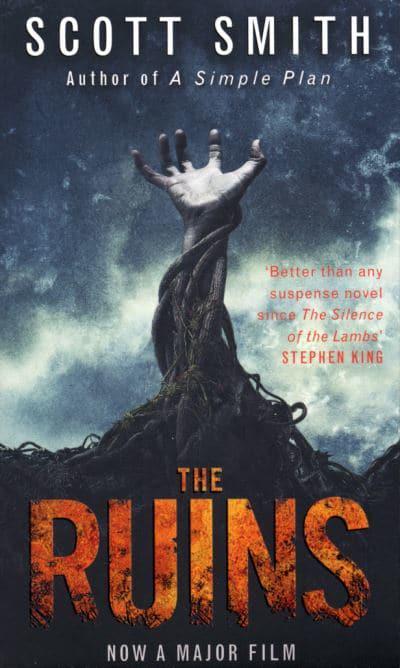
The Ruins

Scott Smith (2006)

Bored during a slow holiday in Mexico, a bunch of US tourists set off in pursuit of a friend, who took a trip down the Yucatan peninsular to investigate a semi-mythical Mayan ruin. The friends’ journey takes them deep into the rainforest, where they are ambushed by hostile locals, who imprison them in the ghostly ruins, a sacrifice to the man-eating plants that infest it … 

BURNING DESERT ... Most humans will die after only two days’ denial of water. Just think about that. Two days. That’s all the time you’d have to find yourself an oasis, never mind deal with whatever other horrors your author creator has heaped on you.

Blood Meridian
Cormac McCarthy (1985)

In the Texas/Mexican badlands of the late 1840s, a nameless youngster falls in with the real-life Glanton Gang, a mercenary posse who, under the leadership of John Glanton, a military veteran and former Texas Ranger, and the even more frightening Judge Holden, have morphed into a band of ruthless scalp-hunters, who initially kill and torture for money but eventually for fun … 

The Dry

Jane Harper (2016)

In the sun-scorched Australian outback during the midst of an even more severe drought than usual, a Federal police detective returns to his home town, a place that totally rejected him many years ago, for the funeral of an old friend who allegedly killed himself and his entire family. Once there, however, he finds that the case hasn’t been fully investigated, and thanks to a wall of silence that owes to much more than his personal unpopularity, starts to suspect a web of conspiracy …

God is a Bullet
Boston Teran (1999)

In the desert of Southern California, a peace-loving desk-cop must throw aside all he holds dear when a gang of drug-dealing Satanist freaks slaughter his ex-wife and kidnap his daughter. Accompanied only by a reformed addict who was once the cult’s sex slave, he sets out into the blistering waste determined that, if he can’t have justice, he’ll at least have revenge …

HARSH WILDERNESS ... The woods, moors and valleys of the temperate zone. Oh so scenic. And so safe, you may think. Except …, no, they aren’t. Just being away from civilisation for a day or so can be a problem for most of us. So how about being far away from it for weeks and weeks?

Deliverance

James Dickey (1970)

When four businessmen take a canoe trip along a backwoods river in deepest Georgia, they initially enjoy the break from the hustle and bustle of city life, though stresses in the group soon cause a rift, mainly because experienced but arrogant outdoor sportsman, Lewis, has automatically assumed leadership. The division gets worse, however, when members of the group are assaulted and stalked by a gang of violent hillbillies … 


The Girl Who Loved Tom Gordon
Stephen King (1999)

A nine-year old girl is separated from her unhappy family during a walk in the forest, mistakenly following a river, thinking that will take her back home. While her loved ones and the police search frantically, she draws farther and farther away, exposed to all the elements and gradually retreating into a hallucinogenic fantasy world wherein both good and evil characters abound …

The Ritual

Adam Nevill (2011)

When a bunch of old uni mates reunite for a walking holiday in the North Swedish woods, they find they have grown apart, falling out over the least little thing, including which footpaths they should take. As such, they get lost, inadvertently wandering into a dark, pagan world, and finding themselves hunted by a creature from their very worst nightmares …

DEEP OCEAN ... The intense pressure of a deep water environment starts causing physical stress to the human body at roughly 10 feet down. And yet the deepest ranges of the ocean are 36,000 feet and counting! And then there is the bizarre array of animal life that dwells there ... along with other more nameless things.

Sphere
Michael Crichton (1987)

American scientists assemble at sea when probes discover a colossal spacecraft lying on the abyssal floor of the South Pacific ocean, having apparently landed there over 300 years ago. The journey to the bottom of the sea is difficult enough, even though a deep ocean habitat has been prepared, but from there the mystery increases, the vessel displaying lettering written in English …

Goliath
Steve Alten (2002)

When the US fleet is destroyed by Goliath, a super-tech battle platform, which attacks from underneath, the world convulses. An American design now in the hands of terrorists, Goliath then takes refuge in teh deep sea. But it isn’t the madman in charge whom the US spec ops must somehow oust, it’s Goliath’s nano-brain, which is already learning the art of war for itself …

Deep Storm

Lincoln Child (2007)

A navy doctor is summoned to a North Atlantic oil rig to treat bizarre psychotic symptoms afflicting the staff. But when he learns the rig is only the surface feature of a major scientific installation, Deep Storm, the bulk of which lies far below, he journeys into the depths. And is stunned to find the team working on the ruins of an undersea city, which may even be Atlantis …

MOUNTAINS HIGH ... Soaring peaks, frozen rocky ridges, thin air, lowering cloud. Don’t go up into the mountains if you don’t know what you’re doing. Because ten to one you won’t come down again.

The Eiger Sanction
Trevanian (1972)

Hemlock, an ex-commando and skilled mountaineer who doubles as a counter-assassin for the CIA, specifically targetting threats to the USA, is put on the trail of a kill-team hunting American agents. One of the shooters is ‘sanctioned’ easily, but the second joins a team planning to climb the north face of the Eiger. Hemlock has no choice but to join the climb too …

The Hunger
Alma Katsu (2018)

An effectively fictionalised account of the fate of the Donner Party, a group of pioneers who in 1846 attempted to cross the Sierra Nevada mountain range, encountering multiple disasters and finally falling into cannibalism to survive. In this version of the tragic tale, horror follows horror, with witchcraft suspected as the root of the evil and a supernatural menace waiting just ahead …

Ararat
Christopher Golden (2017)

An avalanche on Turkey’s Mount Ararat opens the entrance to a cave, which turns out to be the hold of a gigantic boat long buried under rock and ice. Archaeologists are thrilled, assuming that the remains of Noah’s legendary Ark have at last been found. An international team braves horrific weather to get there, but once inside, they uncover much more terrifying relics …

UNDER THE EARTH ... from the ‘Hollow Earth’ theory to the ‘Well to Hell’ hoax, mankind has long refused to believe that the underworld is empty. And with good reason. So many legends tell us there are things down there. And few of them are pleasant.

The Descent
Jeff Long (1999)

A series of gruesome clues leads investigators under the Earth into a global labyrinth of unknown tunnels and caves, where they expect to find the wealth of the ages, though instead they discover the existence of another race, entirely different from mankind, hostile to all intrusion and aggressively resistant to sharing the secret and forbidden knowledge they guard …

The Luminous Dead
Caitlin Starling (2019)

A tour de force of confinement paranoia as a female adventurer lies her way onto an expedition to map mineral deposits deep in an off-world cave system, only to find herself alone and enclosed in a bio-mechanical suit under the command of a heartless controller whose prime concern is the mission. At the same time, inevitably, something else is down there …

Metro 2033

Dmiktry Glukhovskhy (2011)

In a post-nuclear future, the inhabitants of Moscow live in clan-like enclaves in the complex maze of the city’s great underground system. With the surface world no longer viable, the space below is at a premium, which leads to regular violent conflict. But now a new threat emerges, which if the survivors don’t unite in order to fight it together, will end the story for all of them …

OUTER SPACE ... No space opera here. No voyages where no man has gone before. The plain brutal reality of what travel into the star-spangled void actually means, especially when there’s some kind of horrendous crisis to deal with.

Gunpowder Moon
David Pedreira (2018)

2072, the Sea of Serenity. The boss of a lunar mining facility, charged with producing adequate material to fuel the fusion reactors vital for Earth’s survival, must hold it together when a bomb kills one of his engineers. He’s well aware that political intrigue surrounds the base, while he’s also sitting on a powder keg of worker discontent. And now he has the first ever murder in Outer Space to solve …

Project Hail Mary
Andy Weir (2021)

An astronaut awakens from prolonged unconsciousness on a small vessel heading into deep space, with only corpses for company. Something’s clearly gone wrong, as not only are his friends dead, his memory has been wiped. He has no clue who he is or why he’s here … except for vague, fuzzy recollections about some kind of mission to save mankind ...

Red Mars
Kim Stanley Robinson (1993)

The first in the author’s masterly ‘Mars’ trilogy and the first attempt by any fiction writer to seriously assess the complexities involved in terra-forming the Red Planet, not just the scientific and logistical impossibilities, but the political fall-out of any such plan, and the intense stresses and potentially fatal divisions forming even among the heroic colonists charged with the duty …

URBAN HELLSCAPE ... Dark streets, blind alleys, rotting tenements. We know these districts well and avoid them like the plague if we can. But what if we can’t? What if we work there, or even worse, must live there? Don’t dismiss the idea. Someone has to.

The Warriors
Sol Yurick (1965)

The original novel behind the movie, in which a Brooklyn street-gang attend a pow-wow in the Bronx, only to see their host assassinated, and then, unfairly blamed, must flee back the entire length of New York, fighting off challenges from many rival gangs. Unlike the movie, the novel examines gang culture deeply and delves into the tortured lives of its many protagonists, who are mostly portrayed as troubled teens rather than heroes with film star looks …


LA Confidential
James Ellroy (1990)

LA in the 1950s, as viewed through the all-seeing eye of scandal mag, Hush-Hush. It’s a sordid realm of racketeering, pornography, prostitution, murder and police and political corruption. Against this seething background, three cops gradually come together in their quest to tackle a massive and vicious conspiracy. Ultra bleak portrait of a world minus morality …

2666
Roberto Bolano (2004)

A quest to track down a reclusive author leads a group of journalists to the dingy desert city of Santa Teresa, which sits on the Mexican/Texas border, but where most of the population live in poverty and labour in appalling sweatshops. At the same time, women are being murdered in astonishing numbers. Bolano’s epic, angst-ridden assessment of the Ciudad Juárez tragedy …

And now, just for the sake of having something completely and radically different:

COSY ENGLISH VILLAGE ... Hardly an extreme environment. I’m only adding this section for a laugh, you assume. Everyone loves village green communities. Nothing bad ever happens there. You reckon? …

The Midwich Cuckoos

John Wyndham (1957)

When a Wiltshire village is briefly cut off by an unknown unconsciousness-causing agent, all the women of child-bearing age are impregnated through a bizarre form of xenogenesis. As such, 31 children are born who are virtually identical to each other, blonde-haired, golden-eyed and telepathically connected. They clearly aren’t human; nor are they especially friendly …

The Murder at the Vicarage
Agatha Christie (1930)

No list of cosy rural thrillers could ignore this first appearance in a novel by spinster detective Miss Marple, who investigates a churchwarden’s murder in her village of St Mary Mead. It isn’t long before our heroine has narrowed the suspect list down to seven candidates. Not the first village green whodunnit, but perhaps the most quintessential …

Ancient Images

Ramsey Campbell (1989)

Movie fanatic and talented film editor Sandy goes in search of The Tower of Fear, a mythical British horror film of the 1940s, which, though it allegedly starred Boris Karloff and Bela Lugosi, is now long lost, with curious rumours holding that strange events happened on set and that many of those connected to the film came to untimely ends. Increasingly stalked by unknown, scarecrow-like entities, Sandy’s search finally takes her to the deceptively benign village of Redfield …

***

THRILLERS, CHILLERS, SHOCKERS AND KILLERS …

An ongoing series of reviews of dark fiction (crime, thriller, horror and sci-fi) – both old and new – that I have recently read and enjoyed. I’ll endeavour to keep the SPOILERS to a minimum; there will certainly be no given-away denouements or exposed twists-in-the-tail, but by the definition of the word ‘review’, I’m going to be talking about these books in more than just thumbnail detail, extolling the aspects that I particularly enjoyed (I’ll outline the plot first, and follow it with my opinions) … so I guess if you’d rather not know anything at all about these pieces of work in advance of reading them yourself, then these particular posts will not be your thing.

BLACK RIVER 
by Tom Harper (2015)

Outline
Middle-class Scottish doctor Kel MacDonald is bored with comfy holidays. Though he has a wife and young daughter to think about and a responsible position as a senior consultant at a London hospital, he increasingly finds trips to luxurious resorts unchallenging, considering everything too safe and pristine. As such, during a visit to Mexico, and a day-trip to an isolated Mayan cave complex, where the bones of sacrificial victims can be viewed at the bottom of a deep underwater grotto, Kel takes it on himself to make a ill-advised dive – and immediately gets into trouble. However, on the verge of drowning, he is saved by an athletic young American called Anton and his beautiful and intelligent girlfriend, Drew.

 Later, Kel learns that Anton and Drew are professional adventurers, the former forever seeking funds to make new exploratory missions into remote and dangerous corners of the world, many of them as yet undiscovered. Their next trip, which is already past the planning stage, will take them far into the Peruvian Amazon, where they hope to locate Paititi, the fabled lost city of the Incas. Often referred to mistakenly as ‘El Dorado’, Paititi is believed to be a real location, the Incas’ last redoubt as they fled from the Conquistadors, and the final resting place of their nation’s vast wealth. Though abandoned now and overgrown for centuries by the jungle, it is sought continually by the world’s treasure-hunters, but still, in the whole of history, has only ever been seen by one or two westerners.

Kel is desperate to accompany Anton and Drew, but they initially resist his involvement until they learn that he is a doctor. The mission, thus far, is lacking medical expertise, and so, all of a sudden, Kel is invited along. His wife, Cate, doesn’t like the idea, but he is deadset on going.

However, his first reality checks arrive before he even sets off, Cate drawing his attention to several past expeditions to find Paititi that ended in disaster, some of them wiped out by wild Indians, others simply vanishing into the unexplored realm, none of their participants ever heard from again. The most recent, the Menendez Expedition, was a medical mission, but this too disappeared into the depths of the Peruvian jungle, never to re-emerge, and this catastrophe occurred only six months previously.

The next shock to Kel’s ‘wealthy white westerner’ system comes when he actually arrives in South America. The journey in-country from Lima to the expedition’s unofficial base camp of Puerto Tordoya is long, difficult and exhausting, the quality of the facilities deteriorating the further inland he travels. When he arrives at Tordoya, he finds it a tangle of dirt streets and shacks. No one he meets is especially friendly, particularly not the local police, who immediately have the air of violence and corruption about them.

Even his fellow explorers are a motley crew. Drew and Anton are as welcoming as they were before (Drew seems even more alluring now that Cate is not present), but there is also Tillman, Anton’s enforcer and a guy cut from the roughest cloth imaginable, Howie, who’s even more a fish out of water than Kel, but has the air of wealth and possesses several bags that no one may look inside, and Fabio, their official guide, who evidently knows his stuff but is vaguely untrustworthy. Already it is dawning on Kel that he isn’t here for anything that might resemble a holiday, Tillman spending their first night antagonising a gang of local criminals while haggling to buy guns, and Kel and Nolberto, the expedition’s cook, caught up in a drive-by shooting, the latter severely wounded and subsequently needing to be replaced by the taciturn Zia, who is connected in some way to the ill-fated Menendez expedition but says little and displays constant hostility to everyone.

 When the voyage upriver gets underway, the conditions in the boat are extremely primitive, but Kel remains excited. This is everything he’s ever dreamed of, the rainforest exactly the way he imagined it: dense, steamy, filled with the cries of mysterious animals and birds. For all the very real dangers that he is continually reminded lie just ahead, he considers that at last he is really living.

 Kel MacDonald is a doctor, of course. So, he’s seen death and agony up close many times. Which is a good thing. Because in due course he’s going to be seeing it all over again, this time in abundance …


Review
I was first drawn to reading Black River because I’m a sucker for adventure stories, particularly those set in exotic and dangerous locations. As a youngster, growing up on classic movies like Green Hell and reading books like Tarzan of the Apes and The Lost World, I was captivated by tales of derring-do in untamed lands where Europeans had rarely ventured before and were exposed to everything from cannibals to volcanoes to dinosaurs.

Well, Black River doesn’t go quite as far as any of those, set firmly in the 21st century. Tom Harper is a fine exponent of the modern-day adventure novel, but that’s the key phrase here: ‘modern-day’. Though Kel MacDonald and co end up hacking their way through an equatorial jungle in order to find a fabled lost city, the skies overhead are often crisscrossed by American predator drones on the lookout for drugs traffickers. Though we learn at an early stage that wild Indians may pose a threat, we are informed in no uncertain terms that the natives of this gorgeous land are usually the victims when outsiders arrive; there is much illegal logging, deforestation and pollution, while simple and even friendly contact with the outside world can lead to deadly pandemics among tribes who are out of reach of routine health care. In Black River, our bold band are more likely to die from the machine guns of narcos, bandits or terrorist guerrillas than the blowpipe darts of unknown peoples.

There are wild animals of course. Some of the wildest imaginable in this perilous place: jaguars, alligators, 30-foot anacondas. But in Black River, as in the real world, the wild animals are mostly frightened of human intruders (though they do pose a danger, and a memorable one at that in certain parts of this novel). Of course, some things about jungle adventures will never change: the stultifying heat and humidity, the poisonous plants, the swarms of biting insects, the torrential downpours that can cause flash-flooding, the vast, intractable nature of a primeval landscape, which, once you’re out in the middle of it, if you lose your kit – and you can guarantee this will happen at some point – will quickly become the most inhospitable place on Earth, and where rescuers are concerned, the most unreachable.

All that and more is crammed into Black River’s eminently readable 338 pages, as well as an excellent, pulse-pounding storyline, which twists and turns like the Amazon itself as Kel Macdonald, the ultimate innocent abroad, faces ever-mounting (sometimes near impossible) hardships.

The idea of pitching an ordinary man into this crucible of pain and endurance was a stroke of genius by Tom Harper. Kel might be an accomplished doctor, but out there in the impenetrable forest none of that really means anything. He’s a reasonably fit guy, but he’s no athlete and that in itself becomes a problem as he must dig deeper and deeper just to withstand the elements, never mind to keep forging on against soul-destroying odds. None of which is helped by the shifting pattern of alliances within the group itself, Kel never sure whom to trust as the motivations of his colleagues become progressively more mysterious.

The final third of the book is a particularly vivid piece of writing by Harper. I won’t go into the details for fear of spoiling it, but put it this way: it’s a modern man reduced to his most basic level in his battle to survive a primordial world, and it’s all done so intensely and utterly believably that you find yourself hanging on every page. I wasn’t surprised to learn that Tom Harper has visited the Amazon personally, because this novel, while a great feat of action-adventure imagination, is also a lesson in how to perfectly recreate a unique environment on the written page.

 I’ve seen other reviews that have taken issue with the lesser characters, calling them a mixed bag, not convinced they’re all as well-drawn as they might be. It’s certainly the case that nearly all of them lack the depth of Kel MacDonald (who is not just a hero; he makes some bad mistakes and shows very poor judgement at times!), but none of that mattered to me because as the narrative progresses, it picks up so much pace and plunges its participants through so many horrors, pitting them against each other constantly, that it literally flowed by. In addition to that, I never felt that any of the other characters were invisible to me, and this is especially the case later on when their individual agendas are laid bare.

Black River is not an old-fashioned novel, even at first glance when it might sound like it: yes, it concerns white westerners hacking through unexplored jungles; yes, they are seeking a lost city of gold; yes, they are mostly greedy and amoral. But this is not the colonial age; this book is very much of the now, its issues and subtext scrupulously updated to the 21st century.

Tom Harper has here given us a thoroughly grown-up actioner, which shouldn’t just entertain those with a specific interest in this kind of adventure fiction, but ought to appeal to all thriller fans in general. As always, Man is the main adversary of Man. Only, on this occasion, it’s happening in one of the most fascinating and farthest flung places on Earth.

And as usual, I’m now going to try and cast this beast. I don’t know if it’s been optioned for movie or TV development, but it definitely should be. In case that happens, but just for a bit of fun, here is my opinion on who should play who.

Kel – Hans Matheson
Anton – Daniel Webber
Drew – Dakota Johnson
Tillman – Wes Chatham
Zia – Mia Maestro
Fabio – Yancey Arias
Howie – Domhnall Gleeson

Thursday, 24 June 2021

Carquake! How to write high-speed action!


This week I’m going to be talking car chases. Not real ones of course. Fictional ones.

It’s mainly in response to a question that was put to me recently by a good friend and fellow writer: How do you write a car chase sequence?

I can only describe my own method. Whether it works or doesn’t is a decision that rests with my readers.

In addition this week, because we’re essentially talking action-thrillers, I’ll be reviewing and discussing US author Boston Terran’s ultra-compelling combo of crime, horror and gut-thumping action, GOD IS A BULLET.

If you fancy seeing the most fiendish elements in society – Satanist / rapist / mass murdering drug-dealers, no less – dealt with in the harshest way possible, this one could definitely be for you.

You’ll find that review, as always, at the lower end of today’s blog, in the Thrillers, Chillers section. Scroll straight down there if you wish. However, if you want to know how to compose an on-page car chase first, perhaps hang around a tad and we’ll discuss …

Run, rabbit, run

     ‘Heck!’ she all but shouted. ‘You know we have rules up here about police pursuits?’ 
      ‘I have a rule too … I pursue the bastards till I catch them.’

A brief extract from my sixth Mark Heckenburg novel, ASHES TO ASHES. It’s taken out of context here because, despite appearances, it doesn’t mean that Heck will always engage in wildly reckless car chases. It actually means that he’ll never stop investigating until certain crimes are solved. But I guess it does sit comfortably with today’s theme.

And it’s not as if characters in my books have not indulged in high-speed pursuits. The chase sequence in HUNTED, which occurs after an armed robbery in South London, was described by a review in one of the tabloids as ‘the mother of all car chases’ … which was very nice.

There is also an extensive pursuit sequence in the non-Heck novel, ONE EYE OPEN, this time across the Suffolk countryside on a deep-frozen Christmas Eve. Again, I’m pleased to say that it attracted some positive commentary online.

But the question still stands. How do you go about composing a car chase on the written page, and making it exciting but also believable?

Well, the car chase as an entity has been nailed multiple times by Hollywood, but two occasions in particular stand out over all the others. And it might be instructive to look at them.

In 1968, Steve McQueen played San Francisco cop, Frank Bullitt (in the movie of the same name, Bullitt), whose incredible pursuit of two Mafia hitmen took in just about every scenic spot on the Frisco tourist trail and left cinema audiences agog as they’d literally never seen anything like it before. 

But it was topped three years later in 1971’s The French Connection, when Gene Hackman, played Detective Jimmy ‘Popeye’ Doyle, a New York narcotics cop out to thwart a major international drugs deal. The scene in which he chases a hijacked train into the heart of the city is one of the most eye-popping I’ve ever seen. It’s a staggering feat of action movie-making for which the term ‘high octane’ could actually have been invented.

Of course, in both the above cases, they have the advantage of being all about the visual (and of having Peter Yates and William Friedkin respectively at the directorial helms), though as prose writers, there are definitely things we can learn from these two sequences.

Before we get onto that, a caveat for those writing in the 21st century. 

It’s important to remember that both these movies were made at a time when rebels were in vogue. Even the cops were buccaneering bad boys, earning cheers from the cinema-going public and only mild censure from their bosses no matter how much of a risk their antics posed to everyday citizens.

And British screen cops aped their American counterparts well into the 1970s. The Sweeney, one of our paciest homegrown crime shows, gave us heroes who were hardworking detectives but also violent, heavy-drinking chauvinists who regularly indulged in car chase sequences that were virtual demolition derbies. I remember one classic episode in which a Rolls Royce got smashed to pieces. 

When I was writing for The Bill in the late 1990s / early 2000s, the cops were better behaved, but we still loved our ruthless heroes and our all-out action scenes. In fact, the only thing limiting fast pursuits was each episode’s budget for stunt drivers and spare cars.

But times have changed firmly since then, in reality as well as on-screen.

In the 21st century, we are a lot more po-faced (quite rightly) about what might constitute reckless police activity. Even in the 1980s, when I was a serving officer myself, chases did happen, but it was more a case by then of keeping tabs on the offending vehicle rather than trying to run it off the road. Staying in touch with it until it either ran out of petrol, crashed, or the offender reached his/her destination (though even then it could get pretty hairy and involve very high speeds).

It’s much the same thing now, in the UK certainly. However, writers seeking action shouldn’t despair. Hard-stops sometimes need to happen. Perhaps in the event of an offender driving like a total maniac and leaving a trail of carnage, or someone being held captive in his/her vehicle, or if intel indicates that he/she is en route to kill someone or maybe deliver vital information to a high-level suspect. In those cases, tailing police cars may have no option but to try and pull the target vehicle over.

So, never fear. There are still reasons to put your fictional heroes and heroines into police cars and send them at speed after the bad guys.

And this is how you do it …

Reality or legend?  

Having partaken in real high-speed pursuits, I can assure you that it’s a very different experience from the one you see on the big screen.

Think of it in terms of reality as oppose to legend.

As a police pursuit driver, you tend to be focussed on three things primarily: a) the vehicle you are following; b) your own driving (even when you’re only seeking to stay in touch with the target, you’ll be called on to do extreme things, but you’ve got to ensure that this doesn’t entail too much law-breaking on your part and more important still, that you don’t cause damage either to people or property); and c) messaging, because no police pursuit is ever successfully concluded when it’s one on one – you’ll need to maintain constant communication with other units and with your Comms Suite or CAD (Computer-aided dispatch) office.

So there are the basic authenticity boxes that you need to tick. They are mainly about responsibility and needless to say, do NOT include taking short cuts down flights of steps, along sewers, across crowded markets and so forth.

However, this can’t be the whole story. Because the reading public are also the viewing public and they think they’ll know about car chases from seeing films, and they’ll expect a lot more from you. So you’re going to have to throw in some of the legend as well. And that’s where we refer back to our two classic movies, Bullitt and The French Connection, both of whose seminal car chase sequences were assaults on the senses.

Sensory overload

Just consider what that means literally.

Sound …


Engines cranked to the max, whining with such protracted intensity you’re sure the gaskets are going to burst. Tyres screeching when you swing around bends so fiercely that the rubber shreds from the ply-cord. Gears crunching abominably. Those endless collisions you aren’t supposed to have: with traffic cones and waste-bins and ‘Keep Left’ signs and – yes, it can happen – with other vehicles too, which means thunderous, explosive impacts, bodywork crumpling, glass shattering.

And this is only scraping the surface, as I’m sure you’ll realise.

Touch …

Well, this is one of two advantages we have over the William Friedkins and Peter Yateses of the world. Our audience can actually feel what’s going on. Again, think about it. The pressure of your nerves strained to breaking point, your whole body numb, your forehead pounding. The sweat seething down your body, the gearstick and steering wheel greasy as hell. You’re also going to feel that glass when it showers in on you in a billion fragments. It’s safety-glass these days, so it’s not going to slice you into slivers, but you always wonder when it first happens. And you’re still going to get hurt in other ways. Your torso wrenching and twisting as you’re thrown violently back and forth in your seatbelt. Being knocked dizzy as you bounce up and down, your cranium impacting on the car ceiling, and knocked sick as your backside impacts on the thinly-cushioned steel under-structure of your seat.

It’s only in your head, of course, this torture ride. It’s not actually happening. But if you do your job properly, your readers will still feel battered and bruised by the end.

Smell …

Our second advantage over the cinema audience. Because we can smell it too. The melting rubber, the overcooked engine, the stink of sweat, of petrol, of an air conditioning unit gone kaput and reeking like rotten fish, the choking fog of exhaust from the car in front as it pours through your broken windshield, the foulness of spattering rubbish as bins go flying.

And last but not least, of course …

Vision …


This one takes us into the most familiar territory of all, and this is where we simply must take lessons from those great movies we keep citing.

Of course, those films had the advantage of multiple camera angles and visual perspectives, whereas we, as prose writers, only really have two: the interior of the car, and the exterior. But believe me, that’s adequate. And in my view, to really get the best out of this sequence, you need more of the former and less of the latter.

Allow me to explain.

You can easily describe two cars as they chase each other. In effect, telling your readers what happens blow by blow in straightforward fashion. Which corners they spin around, which level crossings they chance. This can certainly suffice, but if you take this route, you’re denuding yourself of all those other plusses we’ve already discussed.

The sensory overload isn’t going to happen.

However, if you go from the perspective of the driver (or his front seat passenger), which they did a lot of in Bullitt and The French Connection, you are literally turning it into a funfair ride, your heroes encased in this metal box, travelling at breakneck speed, the world whipping by in a blur, all sorts of obstacles coming at them at a hundred miles an hour.

‘All right,’ you say. ‘I see that. But we still have to know what’s going on. We have to witness the chase from a grander viewpoint.’

Okay, well there’s no reason why you can’t do a bit of that if you’ve got other characters involved in the sequence who are not engaged in the chase. But in my view, the personal experience is the more immersive one. This is the one that has your reader cringing, flinching, even ducking for safety, because if you can really get under the skin of this, he’s literally in the car with you.

Location location location

You may think that choosing whereabouts to locate your hot pursuit is not hugely important. And I’d agree that it isn’t essential. There’s no reason why your chase can’t just take place along nondescript streets that suit your situation. The time of year doesn’t always matter that much either. In fact it can get in the way if all you want is a straightforward pursuit with no variations on the main theme.

But consider this: every conceivable environment offers its own advantages to the writer.

Which was the better chariot race, 1959’s Ben Hur or 1964’s Fall of the Roman Empire

The former took place in the sun-baked racing arena at Antioch, the latter through a German forest in midwinter. The jury’s out and is likely to remain so, because each in its own way is a spectacular thrill-ride, and each works its unique environment for everything it can. And let’s be honest, returning to the modern age, hasn’t 007 indulged in turbocharged chase sequences on just about every landscape imaginable? And they’re all pretty interchangeable in terms of how exhilarating they are for the viewer.

Therefore, for all that in action scenes like this, where pace is everything (so you use the shortest sentences possible, you avoid thought processes and keep the descriptive work to a minimum!), I firmly believe that adding splashes of this kind of background colour can enrich the scenario.

For example, if your chase is taking place in an urban setting, make sure your readers see the pedestrians scuttling out of the way, make sure they hear other cars slamming on, shunting each other or skidding sideways through crowded intersections. Ensure the engines reverberate deafeningly as they tear through tunnels and subways. Underline the claustrophobic atmosphere of narrow alleyways, sheer brick walls standing only inches to either side of the speeding vehicle, buildings towering to giddy heights overhead.

If it happens in a rural setting, of course, it’s different again. Out in the sticks, there are many more open roads. You can even go off-road, and that throws up a whole new level of opportunity. Thinly spread woods, so that your hero needs to slalom between the trees. Rolling, undulating moors to jolt and bounce (and flip!) across. Even gentle, quilt-work farmland can hit your readers with kaleidoscopic visuals: animals milling about in crazy, panicked confusion, fences collapsing as you rocket through them, tangling your wheels in barbed wire, riddling your driver’s flesh with flying splinters.

See what I mean? It’s limitless.

And if background colour doesn’t round your chase sequence off sufficiently, how about adding some local colour too?

Down our street

In my view there’s always a risk using real life locations in thriller fiction. Mainly because some of your readers might actually live there and could get jumpy seeing their own roads and parks earmarked for annihilation. My policy is to go half and half.

I love using real counties and real towns. But if I’m going to turn a quiet suburb into a war zone, as in STOLEN, or shoot up a pub as in KISS OF DEATH, I tend to make that part of the landscape fictional. The idea is to excite my readers, not upset them. However, I have occasionally made exceptions to this rule. I’ve found (to my delight, I must admit) that when it comes to chases, either on foot or by vehicle, readers seem to respond positively if they recognise the route.

I remember a very pleasing post on Amazon, in response to a pursuit across Greater Manchester in SACRIFICE, which said, and I quote directly: ‘It’s really great. They’ve just gone past the end of our street’.

Of course, if you go for the real life route, it tends to involve a bit more work than if it’s all fictional. I’ll use my own favourite chase sequence to date (that ‘mother of them all’ I mentioned before), as an example.

It was in HUNTED. It occurred after a pub robbery, and it saw DS Mark Heckenburg climb aboard the rear of a hijacked lorry as it sped from the scene, with a single police officer, his occasional sidekick, DC Gail Honeyford, pursuing alone in a CID car. The robbery happened in South London, and as this was going to be the climactic action sequence in the first half of the book, I chose to go at it all bells and whistles.

I decided that the pursuit would commence in Catford and finish at the mouth of the Blackwall Tunnel,
five miles away. 

But this wasn’t going to be straightforward. Though I’d lived in that part of the capital for three years, my geographic memory had faded somewhat, plus the London landscape had changed dramatically, and this was long before Google Maps.

I was still plotting the possible route between these two points when I had a huge stroke of fortune. I was at a police function, where my wife and I got into a chat with two Metropolitan Police officers. The subject of my next book, and the proposed car chase, came up, and it turned out that both these guys were London Traffic. At their suggestion, we went to a side room, a map was produced and the ‘best route for a chase’ (i.e. the route that would cause maximum thrills and spills) was revealed to me.

I’ve always been indebted to these two officers, though they both made it quite clear that they would not appreciate it if I ever named them. But it was a fantastic bonus for me. A week later, I was in London and I drove the route, just to be sure that it was as I imagined it. And it really couldn’t have worked out better. Everything was where I needed it to be.

(I was lucky on this occasion, of course, but this hopefully shows the level of research you need to do to create effective high-speed action in real-life locations).

A few days later, I’d completed the scene, which was complex for all the reasons I’ve given so far, and which then had to be judiciously cut (I say it again, pace is everything!). After two weeks’ work, I had the finished article, but I was rather surprised to see that it was only two pages in length. But listen … we mentioned The French Connection when we started this thing today, and I’m going to mention it again now. Because in TFC it took William Friedkin six weeks to film that epic chase sequence, and it occupied only six minutes of film. In that regard, two weeks for two pages felt as if it was somehow preordained.

Ultimately, as with all these things, your car chase sequence, if you opt to include one, is going to take whatever form you wish it to. Nothing here is set in stone. This is purely my advisory guide, something I apply to my own writing, which wouldn’t necessarily work in yours.

But a good friend asked. So, this is my honest response.

If you go along with it, all well and good. If not, no problem.

Either way, happy (fictional) fast driving.


THRILLERS, CHILLERS, SHOCKERS AND KILLERS …

An ongoing series of reviews of dark fiction (crime, thriller, horror and sci-fi) – both old and new – that I have recently read and enjoyed. I’ll endeavour to keep the SPOILERS to a minimum; there will certainly be no given-away denouements or exposed twists-in-the-tail, but by the definition of the word ‘review’, I’m going to be talking about these books in more than just thumbnail detail, extolling the aspects that I particularly enjoyed (I’ll outline the plot first, and follow it with my opinions) … so I guess if you’d rather not know anything at all about these pieces of work in advance of reading them yourself, then these particular posts will not be your thing.

GOD IS A BULLET 
by Boston Teran (1999)

Outline
Death Valley. The Salton Sea. El Centro.Evocative names from the sun-scorched badlands of California’s deepest south, a picture postcard landscape of barren cliffs, dry scrubthorn, parched desert and windblown clapboard towns, and, in this novel, weird drifters, gun-toting drug dealers and roving Satanist death-cults who scatter corpses behind them the way the rest of us leave litter.

However, before God is a Bullet really kicks off, we roll back the years to 1970, and the brutal murder of an elderly woman in an isolated caravan on the appropriately named Furnace Creek. Investigating cops have nothing much to go on except that signs of cult activity are found in the area, while Cyrus, a strange and troubled homeless boy whom the victim adopted when he was young, and who is now 17 years old, has mysteriously vanished.

Did the disturbed kid do it? If so, why? And will he commit similar crimes elsewhere? Only time will tell.

And it does.

Moving forward now to the Christmas of 1996, we’re in the small California town of Clay, where clean-living desk cop, Bob Hightower, makes a festive call at the semi-rural home of his ex-wife and beloved daughter, and is appalled to find their pleasant house ransacked, his ex and her new husband slaughtered alongside their dogs and horses, and his daughter, Gabi, missing.

Bob hasn’t seen much action in recent years and so can’t get officially involved, but his captain, John Lee Bacon, a seedy and strangely obstructive figure where the resulting investigation is concerned, doesn’t encourage him that they’ll make an arrest any time soon.

Of course, the shellshocked Bob isn’t prepared to give up, and when he gets a lead from a recovering heroin addict, the strung-out but spirited Case ‘Headcase’ Hardin, he opts to take a leave of absence in order to investigate the case himself.

Hardin names the culprits as a band of thrill-killing Devil-worshippers called the Left-Hand Path, who are led by a charismatic, Mansonesque guru known simply as Cyrus, and who finance their operations through control of the desert drug-trade. Hardin, a former member of the cult, who was used by Cyrus for years as his personal sex-slave, explains that the cult are clever, ruthless and elusive, and protected by layers of acolytes, associates and secret Satanist collaborators, and warns Bob that to catch up with them will be the most difficult and dangerous thing he has ever done.

However, when she adds the harrowing addendum that Gabi will by now be part of Cyrus’s harem, and is already likely to have been raped, beaten and forcibly addicted to smack, he determines to pursue them whatever it takes. Hardin, who also yearns to get even with Cyrus but is also very scared of him, reluctantly agrees to guide Bob into that sleazy wilderness of addicts, bikers, trailer park hellholes and ramshackle whorehouses, though the twosome remain antagonistic to each other for all kinds of reasons.

Hardin is totally of that world, a self-proclaimed former lowlife who believed in and worshipped Satan, caring nothing for anyone else, including herself, while Bob is a genuine church-going Christian, though he soon realises that if he’s any hope of infiltrating this marauding pack, he must change every aspect of his life; not just harden his appearance by sporting cheap and nasty tattoos and raggedy facial hair, but also his attitude to his fellow men. He’s a cop, but he’s got too used to the quiet life of the report-writing room.

As Case Hardin says, how long he will last out here if he isn’t prepared to meet his enemies with extreme and repeated violence is entirely open to question … 

Review
On first picking up God is a Bullet, I wasn’t sure what to expect. Hearing that it was a literary thriller, I wondered if I was about to be exposed to a shedload of philosophising rather than a hi-octane desert actioner in which the good guys and bad guys are poles apart and the bullets fly as thick as dust.

I needn’t have.

That’s not to say that there isn’t some philosophising in here. A few reviewers have complained that there is still too much for them, though from my POV, it was quite tolerable. This is because most of it is to be found in the interplay between Bob Hightower and Case Hardin, which is mostly very compelling, and the dynamic between them hugely enjoyable, the former an honest cop who believes in the rule of law, but a practising Christian too, who finds the mere idea that he’s come to rely on the help of an ex-Satanist junkie freak – in fact, that he’s actually taking orders from her! – utterly abhorrent, Hardin herself going through similar anxieties, at one time hugely enthralled to the mesmeric personality of Cyrus and now appalled by his utter lack of humanity and stunned that she could ever have been fooled by him.

God is a Bullet doesn’t speak too highly of modern Man. For all that we now have education, industry and medicine (all, to one extent or another broken, misused and flipped on their heads in this book), it still boils down to a life-and-death struggle between good and evil fought out amid the sun-bleached bones of a failed society.

In truth, given that this book was sold as an ‘occult thriller’, there are very few ruminations on the nature of either God or the Devil, both these characters taking backseats while their representatives on Earth engage each other, though even then we don’t talk much about the potency of either Satanism or Christianity. These are lifestyles the respective parties have consciously opted for, though there are hints throughout that prayer and meditation is in short supply on either side, Cyrus and his ragtag band paying lip service to ritual and sacrifice though more interested in the success, or otherwise, of their drug distribution network, Hightower driven primarily by a desire to rescue and avenge his daughter rather than some innate wish to take down devilry.

In that regard, God is a Bullet, while literary, is not what you’d call a horror novel, even though it contains some truly graphic violence (in some parts against children, which admittedly is a bit stomach-turning, even though it’s the villains doing it.) But it is unashamedly a thriller, drenching us with menace throughout, and hitting us with some bone-jarring action sequences, all of them vividly depicted on the written page by an author who, given that this was his debut novel, seems to have really hit the ground running.

I don’t know much about Boston Teran, except that this is a pseudonym and that he’s now written thirteen novels centred around moral lassitude and social tumult in American society both past and present, and that they’ve nearly all won acclaim.

In this, his first outing, the standard of his prose is already of the highest order, by turns poetic and hard-bitten, very reminiscent of powerful American stylists like McMurty, Ellroy and Burke, though not 100% in that topmost league at this stage. I certainly can’t pretend that it’s all perfect; this was Teran’s first book, so at times the descriptive work gets a little too fulsome for its own good, though for the most part it’s a darkly picturesque read.

For example, a weird loner known simply as ‘the Ferryman’, lives out of town in a dark tangle of slatboard and tin and cinder blocks stolen from a thousand piles of refuse along the road.

A roadside motel is described as having been a whorehouse that catered to Anglos who preferred their stuff with a little color in it. Now it’s a roach hole for factory workers stacked sixteen to a room.

It’s tight, effective, muscular stuff, a tone ideally suited to the hardscrabble storyline.

In terms of the characters, I’m less blown away.

Hightower makes an interesting lead, a real desk-jockey of a cop who having previously led a peaceful life, is now forced to journey across the plains of Hell and back in order to find justice. This is an odyssey of sorrow and suffering, which at times bleeds off the page. By the end of the book, the Bob Hightower we met at the beginning is no more than a myth. It’s astonishingly well done.

The problem only really arises with Case Hardin, who, while she is easily identifiable in the early stages as a traumatised survivor of repeated sexual assaults, plus a former addict and cult-member desperately struggling to readjust back to normal life, later makes a somewhat unconvincing shift into La Femme Nikita territory, suddenly proving quick with her guns and wits and more than capable of leading ‘ordinary Joe’ (and long-serving cop!) Bob through the twists and turns of a no-holds-barred war against a gang of sadistic killers.

This brings me onto Cyrus and his team. The back-up units – the eerily-named Granny Boy, drug-addled Lena and the cruel psychopath, Wood (among many others) – are all nicely and scarily realised. Be warned, this part of the book is reminiscent of Manson in name only; these antagonists are not some bunch of coked-out hippies, more like the verminous rabble from Mad Max or The Hills Have Eyes. Okay, they aren’t mutant cannibals, but that’s about the only difference. They certainly make for serious opposition when it comes to the book’s gripping shoot-out scenes, and thanks to their proudly tattooing their bodies with the death-dates of their many victims (including women and children, who have usually also been raped) elicit no sympathy at all when they die.

Cyrus himself doesn’t appear ‘on camera’ as much as you might expect. I presume this is deliberate, a purposeful attempt to intensify those few big moments when he actually shows. Does this device work? Not as much as I’d perhaps like, but Cyrus’s twisted shadow lies across the entire narrative, turning him into such an edifice of controlling, narcissistic evil that not many fictional villains would be able to live up to the hype when we finally meet them. All that said, he’s an instantly recognisable figure; we’ve had so many mass-murdering cult leaders in real life, from Manson to Koresh to Jim Jones, that much of the work was already done for Boston Teran before he even started to write God is a Bullet.

This is a tense, highly visual thriller, for the most part exquisitely written, but filled with grot and human debris, and pulling no punches when it comes to the, at times, very nasty violence. Perhaps for all these reasons, it’s flown under a few genre fans’ radars in the past. If so, and you’re up for something dark, I advise you to check this one out. But be warned. This fight is to the death, and Boston Teran doesn’t hold back.

I’m not sure whether this one will ever get made into either a film or TV series, but it certainly should in my view. I’d be first in the queue to watch it, so long as I don’t start manifesting squeamishness before then. Just in case it does, as usual when it comes to one of these reviews, I’ll get my own cast-list suggestions in first. Just a bit of fun, of course. Who would listen to me anyway (and who would be able to afford an ensemble like this? LOL!)? 

Bob Hightower – Adam Driver
Case Hardin – Brie Larson
Cyrus – Ed Skrein
John Lee Bacon – Willem Dafoe